

Carrier neutral moving is defined as a logistics approach where shippers access multiple independent carriers rather than committing to a single provider, selecting the best option for each shipment based on cost, speed, and reliability. This model removes the bias that comes when a logistics provider owns trucks or earns commissions from specific carriers. For businesses and individuals planning complex relocations in the NYC metro area, Westchester County, or across state lines, understanding carrier neutrality is the first step toward a more resilient move. Atlanticstargroup applies this principle directly in its logistics coordination services, managing carrier selection on behalf of clients without favoring any single provider.
What is carrier neutral moving and how does it work?
Carrier neutral moving is built on a non-asset-based logistics model. Non-asset-based providers coordinate freight across a network of carriers without owning trucks or warehouses themselves. That independence is what makes neutrality possible. A provider that owns its own fleet has a financial reason to fill those trucks first, even when a different carrier would serve you better.
The operational engine behind carrier neutrality is decisioning software. This technology compares carrier rates, transit times, and reliability scores in real time, then selects the best match for each shipment. Automated decisioning software enables instant rate shopping and route selection, saving costs especially during capacity spikes or emergency surcharges. That means your move does not get locked into a bad rate just because it was the only option your provider bothered to check.

Dynamic routing replaces static contracts. Instead of committing shipment volume to one carrier months in advance, a carrier neutral provider re-evaluates options per shipment or per leg of a multi-stop move. For a corporate relocation from Manhattan to Westchester with multiple delivery points, that flexibility produces measurably better outcomes.
Here is what the operational flow looks like in practice:
- The logistics coordinator receives your move requirements, including timeline, volume, and destination.
- Decisioning software queries multiple carriers simultaneously for rates and availability.
- The best carrier is selected based on your priorities, not the provider's financial relationships.
- Tracking and billing data from all carriers consolidates into one platform for your visibility.
- If a disruption occurs, an alternative carrier is activated without restarting the process from scratch.
Pro Tip: Ask any logistics provider directly whether they earn commissions or rebates from specific carriers. A truly neutral provider earns nothing from carrier relationships and will say so clearly.
What are the key benefits of carrier neutral moving?
The most immediate benefit is cost control. Rate shopping across carriers happens automatically, which means you are not paying a premium because your provider defaulted to a familiar name. When air cargo rates spiked significantly in april 2026, carrier neutral platforms identified better alternatives instantly. That kind of real-time response is not possible with a locked carrier contract.
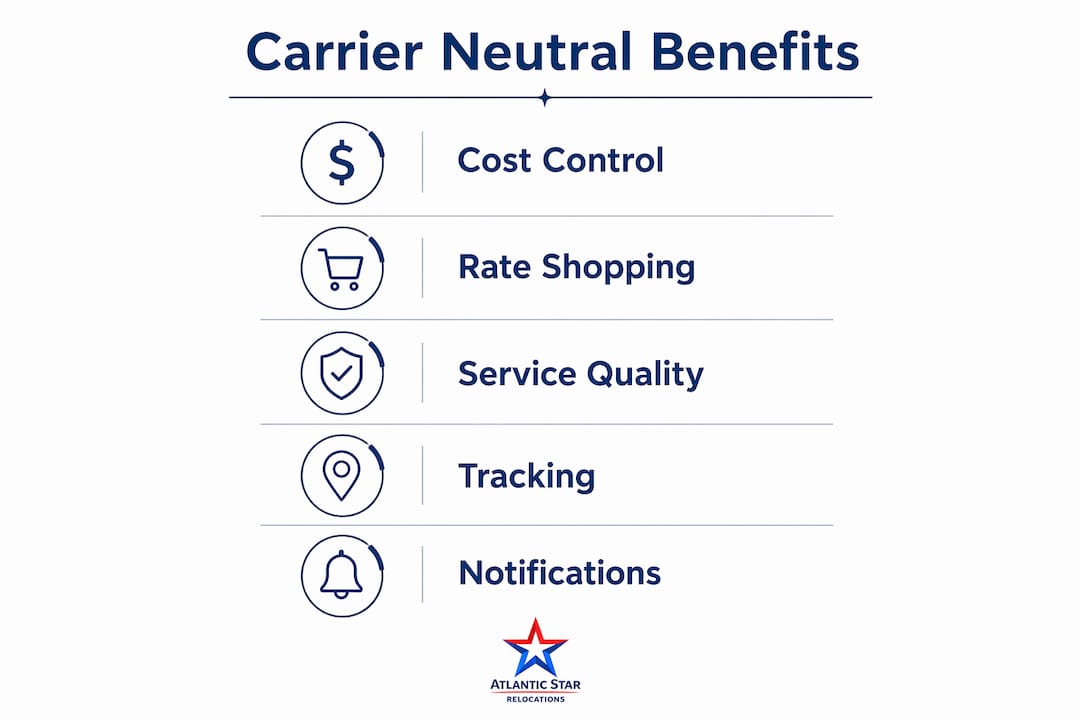
The second major benefit is risk distribution. Carrier neutral models eliminate single-carrier dependency, protecting shippers from disruptions like strikes, capacity shortages, or regional weather events. If one carrier cannot perform, the coordinator activates another without delay. For a business moving office equipment across multiple NYC boroughs or from New Jersey to Connecticut, that backup capacity is not a luxury. It is a requirement.
The third benefit is unbiased guidance. True carrier neutrality requires that providers earn no commissions or prioritize specific carriers, ensuring routing decisions are based solely on your needs. Many logistics providers claim neutrality but earn hidden rebates that quietly skew their recommendations.
Carrier neutrality is not just a cost strategy. It is a risk management framework that removes the single biggest failure point in traditional logistics: the assumption that one carrier will always perform. When that assumption breaks, shippers with a neutral model adapt in hours. Shippers locked into a single contract adapt in weeks.
The fourth benefit is service quality. Carrier neutral technology enables proactive tracking and real-time notifications when disruptions occur, improving transparency throughout the move. Clients in Westchester and Manhattan consistently report that visibility into their shipment status reduces stress more than almost any other factor.
What operational challenges come with carrier neutrality?
Carrier neutrality is not the right fit for every situation. The model introduces real complexity that requires either strong internal resources or a capable logistics partner to manage.
Billing and claims handling multiply when multiple carriers are involved. Each carrier issues its own invoices, tracks claims separately, and operates under its own terms. Without a platform that consolidates these workflows, the administrative overhead can erode the cost savings the model was supposed to deliver.
Businesses with steady, high-volume shipments may find carrier neutrality less beneficial. When your shipping profile is predictable and uniform, a direct carrier contract often delivers better rates and simpler operations. Carrier neutrality earns its value in variable, complex, or geographically diverse moves.
| Scenario | Carrier neutral fit |
|---|---|
| Multi-location corporate relocation | Strong fit |
| Predictable, high-volume single-route freight | Weak fit |
| Long distance move with variable timing | Strong fit |
| Recurring same-day local deliveries | Weak fit |
| Complex multi-leg logistics project | Strong fit |
Pro Tip: If you are managing a multi-leg logistics project, carrier neutrality almost always outperforms a single-carrier arrangement. The more legs and locations involved, the more value the model generates.
How to determine if carrier neutral moving suits your needs
The right starting point is an honest assessment of your move's complexity. Carrier neutrality delivers the most value when at least two of the following conditions apply:
- Your move involves multiple pickup or delivery locations across different regions.
- Your timeline has flexibility that allows for dynamic carrier selection.
- You lack internal logistics staff to manage carrier relationships directly.
- Your past moves have been disrupted by carrier capacity issues or price spikes.
- You are relocating a business with sensitive equipment or time-critical assets.
Geographic complexity is a strong signal. A multi-location move from a Bronx office to a Westchester headquarters with satellite deliveries to New Jersey and Connecticut is exactly the scenario where carrier neutrality pays off. A single carrier rarely covers all those lanes at competitive rates.
Transparent fee structures matter as much as the model itself. A logistics partner who charges a flat coordination fee with no carrier commissions is genuinely neutral. One who earns per-carrier rebates is not, regardless of what they call themselves. Ask for a written breakdown of how your coordinator is compensated before signing anything.
Choosing the right carrier also depends on whether you need technology integration. A carrier neutral model without a consolidating platform is just manual rate shopping, which is slow and error-prone. The platform is not optional. It is the mechanism that makes neutrality work at scale.
Key Takeaways
Carrier neutral moving delivers the most value when paired with experienced coordination and the right technology platform to manage complexity without adding overhead.
| Point | Details |
|---|---|
| Core definition | Carrier neutral moving uses multiple independent carriers selected by real-time data, not provider bias. |
| Technology requirement | Decisioning software is not optional. It automates rate comparison and carrier selection per shipment. |
| Risk mitigation | Eliminating single-carrier dependency protects moves from strikes, capacity gaps, and price spikes. |
| When it fits best | Complex, multi-location, or variable-volume moves benefit most from carrier neutral coordination. |
| Neutrality verification | Confirm your provider earns no carrier commissions. Hidden rebates undermine the entire model. |
Why carrier neutrality matters more in the NYC market
The NYC and Westchester moving market is one of the most operationally demanding in the country. Traffic patterns, building access restrictions, union labor requirements, and seasonal capacity swings all create conditions where single-carrier dependency fails regularly. I have seen corporate clients locked into carrier contracts scramble for weeks after a disruption that a neutral model would have resolved in a day.
The deeper issue is that most clients do not know to ask about carrier neutrality until something goes wrong. They assume their mover handles everything optimally. In reality, many traditional movers route through the same two or three carriers out of habit or financial incentive, not because those carriers are the best fit for that specific move.
Carrier neutrality is not a premium feature. It is the baseline standard for any logistics provider serious about accountability. At Atlanticstargroup, the entire coordination model is built around this principle. Clients get carrier selection driven by their priorities, not by the provider's relationships. That distinction matters most when a move gets complicated, which in the NYC metro area, it often does.
— Admin
Atlanticstargroup's approach to carrier neutral coordination
Atlanticstargroup applies carrier neutral principles across every type of relocation it manages, from residential moves in Westchester to corporate office relocations across Manhattan and the outer boroughs. The company acts as a single point of accountability, selecting carriers based on your timeline, budget, and service requirements rather than pre-existing financial relationships.

Every engagement includes consolidated billing, real-time tracking visibility, and active issue resolution if a carrier falls short. For clients with storage needs during a transition, short-term storage options integrate directly into the coordination plan. Whether you are moving a household, a warehouse, or a multi-site corporate operation, Atlanticstargroup manages the carrier layer so you do not have to. Contact the team for a consultation and a clear, flat-rate quote with no hidden carrier fees.
FAQ
What does carrier neutral mean in moving?
Carrier neutral means a logistics provider selects carriers based on cost, speed, and reliability data rather than financial relationships with specific carriers. True neutrality requires the provider to earn no commissions or rebates from any carrier they recommend.
Is carrier neutral moving more expensive?
Carrier neutral moving typically costs less over time because automatic rate shopping prevents overpaying during capacity spikes and eliminates the markups that come with locked carrier contracts.
When should I use a carrier neutral mover?
Carrier neutral coordination is the right choice for complex, multi-location, or long distance moves where a single carrier cannot cover all legs competitively. It is especially valuable for corporate relocations across multiple sites or regions.
How do I verify a mover is truly carrier neutral?
Ask directly whether the provider earns commissions, rebates, or volume bonuses from any carrier. A genuinely neutral provider charges a flat coordination fee and discloses all carrier relationships in writing.
Does Atlanticstargroup use carrier neutral logistics?
Atlanticstargroup coordinates all moves using a carrier neutral model, selecting providers based on client priorities rather than internal financial incentives. The company manages carrier relationships, billing, and tracking as a single point of accountability.