
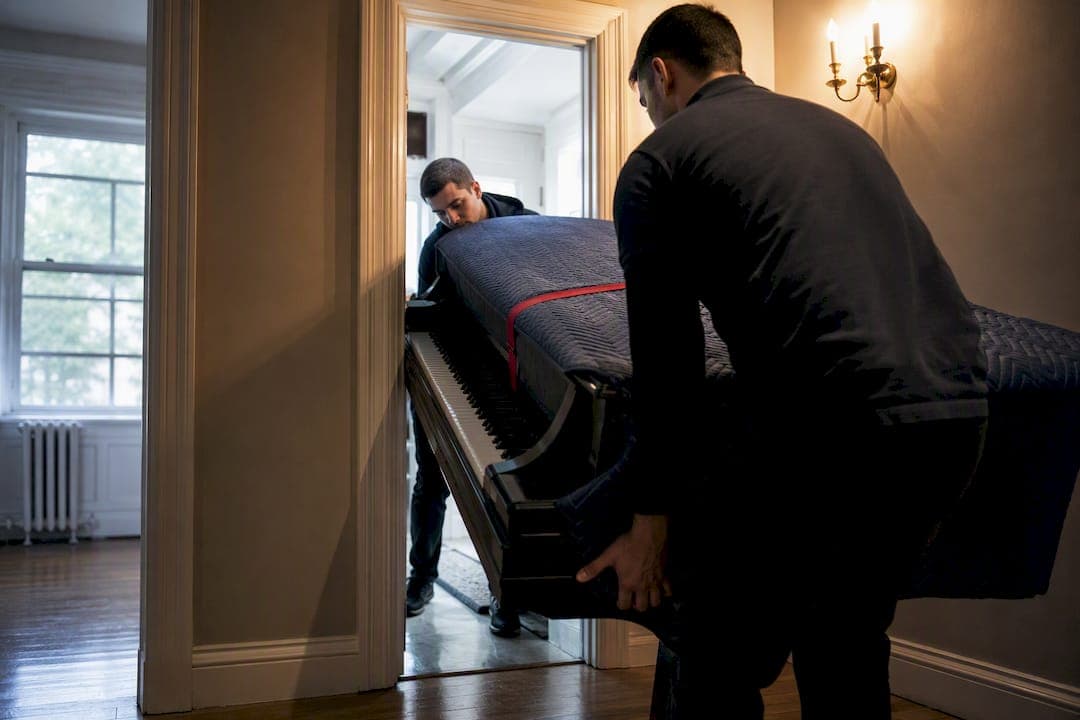
Moving a piano in New York City typically runs from several hundred dollars for a spinet on a ground floor to well over a thousand dollars for a concert grand that needs a hoist off a fourth-floor walkup. Upright pianos generally cost a few hundred dollars, baby grands more, and concert grands often cost significantly more once rigging is involved. The three factors that move the number most are stairs, elevator access, and whether the building demands a certificate of insurance. Before booking, get a detailed on-site or virtual estimate that accounts for your specific building.
TL;DR:
- Most NYC piano moves cost between a few hundred to over a thousand dollars, heavily influenced by stairs, elevator access, and building insurance requirements.
- Access issues like stairs, elevator dimensions, and building rules often impact labor needs, disassembly, and whether rigs or hoists are necessary.
- Extra fees such as per-floor stair costs, long-carry surcharges, disassembly, and crane rentals can add several hundred dollars to the original estimate.
- Accurate quotes require detailed measurements, high-quality photos, and early submission of building paperwork like certificates of insurance and elevator reservations.
- Securing NYC permits and completing building paperwork early can prevent delays, additional charges, or move-day cancellations.
Table of Contents
- How Much Does It Cost to Move a Piano in NYC?
- What Actually Drives the Price of a Piano Move?
- What Extra Fees Should You Expect on a Piano Moving Quote?
- How Do You Get an Accurate Piano Moving Quote?
- How Do NYC Permits and Building Rules Affect Piano Moving Costs?
- What a Coordinator Sees on Piano Moving Day
- How Atlantic Star Relocations Handles Piano Moves in NYC
- Where to Check NYC Rules and Get More Planning Help
- Sources
- FAQ
How Much Does It Cost to Move a Piano in NYC?
Piano movers price by size, weight, and how hard the piano is to get out the door. That last part matters more in New York than almost anywhere else, because so many buildings involve stairs, narrow hallways, and elevators that were clearly not designed with a 700-pound instrument in mind.
Here's what a straightforward move typically looks like, assuming ground-level or elevator access and a reasonable travel distance within the city:
- Smaller pianos often cost in the lower hundreds for a local move with easy access
- Upright pianos can cost several hundred dollars, moving up toward the higher end with stairs
- Baby grands may cost more depending on disassembly needs and stair count
- Medium to full grands usually require a larger crew and cost more
- Concert grands frequently cost significantly more, especially when rigging or hoisting is required
Access changes these numbers fast. An upright moved out of a Brooklyn walk-up with two flights of stairs and no elevator generally costs more, since it usually needs a larger crew. Compare that to the same upright rolling out of a Midtown Manhattan doorman building with a freight elevator: fewer stairs, less physical strain, and often a faster job, even though doorman buildings frequently add their own certificate of insurance requirements that affect scheduling rather than price. A baby grand moved between two ground-floor homes, in Westchester County, typically costs less, while the same piano coming down from a fourth-floor Queens apartment without elevator access could need crating and a specialized crew.
Atlantic Star Relocations' borough-by-borough pricing breakdown shows how these access differences play out across Manhattan, Brooklyn, Queens, and the Bronx, since each borough carries its own mix of walk-ups, prewar buildings, and modern high-rises.
What Actually Drives the Price of a Piano Move?
Piano movers aren't pricing the instrument so much as pricing the obstacle course around it. Four categories decide most of the final number.
Access comes first. Stair flights, narrow doorways, tight stairwell turns, and elevator interior dimensions all factor into whether a piano moves easily or needs to be partially disassembled. A grand piano's legs and lyre often come off for tight elevators, which adds labor time and, in some cases, a disassembly fee.
Building rules come second, and they trip up more New Yorkers than any pricing variable. Doorman buildings frequently restrict move hours, require advance elevator reservations, and demand a certificate of insurance from the moving company before granting access.
Labor and equipment make up the third piece. Crew size scales with piano type and stair count, and specialized gear like piano boards, skid straps, and rigging systems for hoisting through windows all add to the bill.
Distance and timing round it out: cross-town moves in heavy traffic, tight loading windows, and rush or weekend scheduling all push hourly and flat rates upward.
- Stair flights and elevator interior clearance
- Doorman schedules and elevator reservation windows
- Crew size and specialized rigging equipment
- Travel distance and loading/unloading time restrictions
Pro Tip: Measure your elevator's interior dimensions, not just the door width, before requesting a quote. A baby grand can clear a wide elevator door but still get stuck if the cab itself is too shallow.
What Extra Fees Should You Expect on a Piano Moving Quote?
A clean flat-rate quote should already account for known access issues, but several add-ons commonly appear once a mover sees your building's specifics.
- Per-floor stair fees typically range from $25 to $75 per flight above the ground level, scaled by piano size and crew requirements.
- Long-carry fees apply when the truck can't park close to the entrance, often adding $50 to $150 for the extra distance and time.
- Disassembly and crating charges for grand pianos that need legs, pedals, or lids removed can add $100 to $300 depending on complexity.
- Hoist or crane rental, used when a piano must go through a window or balcony, can add $500 or more depending on the equipment and crew needed.
- Short-term storage runs on a monthly rate if your new space isn't ready, and cancellation or rescheduling fees can apply if a building denies access on move day.
- Post-move piano tuning typically costs $100 to $200 and should be budgeted separately, since temperature and humidity changes during transport almost always shift the tuning.
How Do You Get an Accurate Piano Moving Quote?
The single biggest driver of quote accuracy is how much detail you hand the mover before they show up. Photos of the piano, the stairwell, the elevator interior, and every doorway it needs to pass through let a company give you a real flat rate instead of a padded estimate built on guesswork.
Before requesting quotes, gather exact measurements of doorways and elevator cabs, count stair flights, and note any building-specific access rules. When you call movers, ask about insurance coverage limits, who handles the certificate of insurance submission, expected crew size, and what triggers a cancellation or rescheduling fee.
Flat-rate quotes tend to be more reliable for piano jobs because the mover commits to a number once they see your access details. Hourly bids can look cheaper upfront but often balloon once a crew discovers a piano that needs disassembly or a stairwell tighter than described. Atlantic Star's NYC pricing guide breaks down when each pricing model tends to favor the customer.
- Send clear photos and exact measurements before requesting a bid
- Ask directly about insurance limits, COI handling, and cancellation fees
- Compare flat-rate and hourly bids side by side for the same access details
Pro Tip: A quote that's far below every other bid you've received usually means the mover didn't account for stairs or building rules, and you'll hear about it on move day.
How Do NYC Permits and Building Rules Affect Piano Moving Costs?
New York City requires curb use control for many moving trucks, and securing that access in advance through the NYC parking permits portal prevents delays that add crew hours to your bill. The NYC DOT's curb use guidance outlines when trucks need designated space and how blocked curb access can slow down a move.
Luxury and doorman buildings across Manhattan often require a certificate of insurance submitted one to two weeks ahead and elevator reservations booked two to four weeks in advance. Missing either deadline can mean a denied entry and a dry-run fee for the mover's wasted trip.
- Confirm curb or parking permit needs with your building or the city portal early
- Submit COI paperwork as soon as your building's management provides requirements
- Book elevator reservations well ahead of your target move date
What a Coordinator Sees on Piano Moving Day
Most cost surprises trace back to the same three things: a certificate of insurance submitted too late, an elevator reservation nobody confirmed, and a crew sized for a piano that turned out to need disassembly. Managed coordination catches these before they become rescheduling fees. Vendor-neutral oversight means someone is tracking building paperwork and access windows instead of hoping they align. Atlantic Star Relocations' building requirements guide covers the documentation that trips up most first-time movers.
— Admin
How Atlantic Star Relocations Handles Piano Moves in NYC
Atlantic Star Relocations manages the parts of a piano move that usually cause the most stress: submitting your certificate of insurance on your building's timeline, coordinating elevator reservations, and lining up a crew sized correctly for your piano and stair count before move day arrives.

Here's what Atlantic Star coordinates for a piano relocation:
- Vendor-neutral crew and equipment selection matched to your piano type and access conditions
- COI submission and building compliance handled ahead of your building's deadline
- Protective packing and crating for grands, baby grands, and uprights alike
- Short-term storage coordination if your new space isn't ready on move day
For a virtual estimate, have your piano's dimensions, stair count, and elevator measurements ready, along with any building rules you already know about. If you're coordinating a larger move alongside the piano, whether residential or a full office relocation, Atlantic Star's corporate relocation services apply the same structured oversight to multi-item moves. Reach out through Atlantic Star's request a quote page to get a detailed estimate built around your building's actual access conditions rather than a generic average.
Where to Check NYC Rules and Get More Planning Help

For truck placement and curb access, review the NYC DOT's parkway restrictions before routing a heavy-truck move. For building-specific compliance, Atlantic Star's NYC building move requirements guide walks through COI and elevator paperwork. For packing questions specific to fragile instruments, Atlantic Star's packing services page covers protective materials used for pianos and similarly delicate items.
Sources
FAQ
How much do piano movers usually charge?
Piano movers in NYC typically charge between $250 and $1,200 or more for a single piano, depending on type, stair access, and whether a hoist or crane is needed.
How much are piano movers usually for an upright versus a grand?
Uprights generally run $250 to $550, while baby grands run $400 to $1,200 and concert grands often exceed $1,200 once rigging or disassembly is required.
What is the cheapest way to move a piano in NYC?
Ground-floor or elevator-accessible moves with flexible scheduling and full access details provided upfront tend to produce the lowest, most accurate flat-rate quotes.
How much do NYC movers charge overall?
General NYC moving rates vary by hourly and flat-rate models and depend heavily on building access, as detailed in Atlantic Star's NYC pricing guide.
Do I need a certificate of insurance to move a piano in my building?
Many Manhattan doorman and luxury buildings require a certificate of insurance from your moving company, often submitted one to two weeks before the move date.