

NYC apartment moves are complex because they force renters through multiple formal checkpoints, building access rules, elevator and truck logistics, narrow prewar layouts, and insurance requirements, before a single box gets carried. Miss one, and moving day stalls in a lobby or a loading zone, not on the highway. The most common blockers include:
- No Certificate of Insurance (COI), or one with the wrong wording
- No elevator reservation, or one booked for the wrong window
- Missing co-op or condo board approval
- No legal parking or loading zone near the building
- Narrow stairwells or doorways that don't fit standard furniture
- Alternate-side parking and traffic rules that shrink the usable moving window
Atlantic Star Relocations handles this checklist daily, and city agencies like the New York Department of Transportation set some of the rules governing street access. The sections below break down each category and end with a practical timeline you can follow.
Key Takeaways
NYC apartment moves are complex because they stack building approvals, elevator scheduling, street access rules, and tight physical layouts into a single day with almost no room for error.
| Point | Details |
|---|---|
| COI wording matters most | Buildings reject certificates that don't name management and owner exactly as required. |
| Elevator windows run 3-6 hours | Confirm the reservation in writing, not verbally, before move day. |
| Curb access is scarce citywide | Reserve a legal loading zone in advance instead of hoping one's open. |
| Measure before you quote | Send video of doorways, stairs, and elevators to avoid day-of repricing. |
| Managed relocation reduces risk | Atlantic Star Relocations coordinates COIs, elevators, and parking as one accountable service. |
Table of Contents
- Why NYC Apartment Moves Are Harder Than Moves Almost Anywhere Else
- Building Rules and Approvals You Need to Clear Before Move Day
- Getting a Truck Curbside Is Its Own Battle
- Physical Layout Problems That Slow Down Every Move
- What Actually Drives Up Cost and Schedule Risk
- Why Most Renters Hire Professionals for NYC Moves
- Your NYC Apartment Move Timeline, Step by Step
- What Movers Actually See Go Wrong on Move Day
- How Atlantic Star Relocations Simplifies a Complicated Move
- Sources
- FAQ
Why NYC Apartment Moves Are Harder Than Moves Almost Anywhere Else
New York's housing stock is the root of the problem. A five-story prewar walk-up in Astoria, a 1960s elevator building in Kips Bay, and a doorman high-rise on Central Park West all handle moving day completely differently, and none of them work like a suburban house with a driveway. Walk-ups mean carrying everything up narrow stairs by hand. Mid-century elevator buildings often have one small service elevator shared by dozens of units. Luxury high-rises add doormen, freight schedules, and paperwork requirements that a single-family home never sees.
Density makes it worse. New York County packs an enormous number of people and housing units into a small footprint, and that population density is exactly why curb space and legal parking near a building are so scarce on moving day. There's rarely a driveway to back into. There's a hydrant, a bus stop, a loading zone that expires at 10am, or another moving truck already parked there.
An Atlantic Star Relocations crew once arrived on time for a Murray Hill move only to find the building's freight elevator reserved by a renovation crew that ran long. The tenant hadn't confirmed the reservation in writing, so the building had no obligation to bump the other job. The move started four hours late, and the client paid for hours the crew spent waiting in the lobby instead of loading the truck.
That single missed confirmation is a small thing that turns into a very expensive afternoon. Seasonal timing compounds it. Moves booked around the first of the month, especially June through September, run into tighter elevator windows, higher demand for trucks, and more competition for legal parking, all of which push costs and lead times upward. Building type, density, and timing together explain why the same move that takes three hours in a suburban neighborhood can take a full day in Manhattan. The next sections break down exactly which rules and approvals cause that gap.
Building Rules and Approvals You Need to Clear Before Move Day
Every NYC building has its own version of a moving policy, and almost none of them let you show up unannounced. Before a truck can even double-park outside, you typically need to satisfy a list of building-specific requirements:
- A confirmed elevator reservation, usually in a 3 to 6 hour window, per the Movd NYC elevator reservation guide
- A signed acknowledgment of move-in or move-out hours (many buildings restrict moves to weekdays, 9am to 5pm)
- Hallway and elevator padding installed by the building or the moving crew before anything moves
- A pre-move inspection of existing damage, so you're not blamed for a scuff that predates your lease
- A Certificate of Insurance filed with management, often several business days ahead
- Co-op or condo board sign-off, where applicable, sometimes weeks in advance
The COI is the single most misunderstood requirement in the entire process. Buildings ask for it because they want proof that if your movers scratch a wall or dent an elevator door, someone's insurance, not the building's, pays for it. The catch is the wording: most management companies require the certificate to name the building, the management company, and sometimes the owner as additional insured, with specific liability minimums as required by the building. A generic COI from a mover's insurer, without the right entities listed by name, gets rejected at the front desk, often the morning of the move.
Co-op boards add another layer entirely. Many require a written move-in application submitted two to four weeks ahead, sometimes with a refundable deposit against damage. Condos are usually faster, but managed rental buildings with doormen still expect advance notice and their own COI template.
Pro Tip: Ask your mover to send the COI directly to building management at the time of booking, not the week before. Then call the building yourself to confirm they received it and that the elevator window is logged, in writing, on their calendar, not just verbally promised by the super.
According to industry guidance on NYC moves, buildings routinely turn away movers who show up without a matching COI or confirmed reservation, regardless of how far in advance the move itself was scheduled. That single mismatch, a name spelled differently or a liability limit set too low, is enough to lose your slot for the day. Atlantic Star Relocations' guide to NYC building move requirements walks through the exact documentation most buildings expect, and it's worth reading before you book anything.
Getting a Truck Curbside Is Its Own Battle
Even after a building clears you to move, getting a truck legally parked outside is a separate fight. Loading zones in most residential neighborhoods are limited, frequently metered, and often occupied by delivery vans or other movers by mid-morning. Alternate-side parking rules, which exist to let street sweepers through, can make an entire block illegal to park on for hours at a specific time, and violating that isn't just inconvenient, it risks a ticket or a tow mid-move.
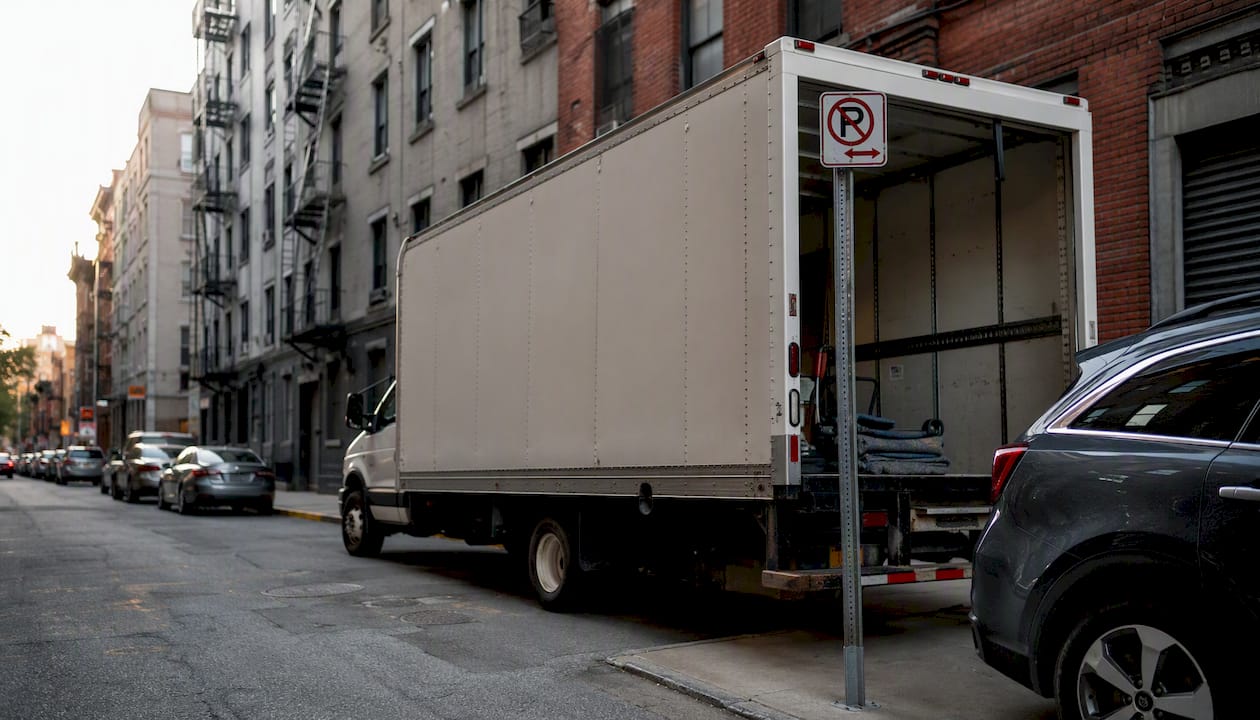
Some larger moves, particularly commercial relocations or jobs requiring a full street closure, need coordination through the New York Department of Transportation or a municipal permit process. A DOT-registered mover understands which situations call for that extra step and which don't, which saves renters from guessing.
Traffic timing matters just as much as parking. Crosstown routes in Manhattan and bridge or tunnel access from the outer boroughs slow down dramatically during the morning and evening rush, and transit-time mapping data shows just how unpredictable travel windows can get across boroughs depending on time of day. A truck stuck in Midtown gridlock for 45 minutes isn't just late, it's burning paid labor hours while parked in traffic instead of loading boxes.
A few things help:
- Reserve a single legal loading zone in advance rather than hoping one opens up
- Match truck size to the block, a 26-foot box truck can't maneuver on some narrow one-way streets
- Check for scheduled construction, street fairs, or closures near both addresses before locking in a date
Pro Tip: Schedule truck arrival for 8am or right after the morning rush clears, generally after 10am in Manhattan. Avoid 4pm to 7pm entirely if you can help it.
One detail renters consistently underestimate: every extra 30 feet between the truck and your door multiplies labor time, because crews are carrying furniture farther by hand instead of using a dolly on a ramp. A no-parking building on a narrow block can quietly add an hour or more to a job that would otherwise take half that.
Physical Layout Problems That Slow Down Every Move
Prewar apartments were not built with modern furniture in mind, and that mismatch causes more move-day delays than most renters expect. Before movers arrive, it's worth measuring both the old and new apartment against a short checklist:
- Door height and width at every threshold, including bathroom and closet doors
- Interior elevator dimensions, not just the doorway, some cabs are barely large enough for a queen mattress
- Stairwell width and the angle of any landings or turns
- Hallway clearance, especially in prewar buildings with narrow, angled corridors
- Any obstruction along the carrying route, radiators, light fixtures, low ceilings
Railroad apartments and walk-ups tend to cause the most trouble, since furniture has to travel through multiple rooms or up several flights with no landing wide enough to reposition a couch. A housing profile of Manhattan shows just how common these older, narrower layouts still are across the borough, particularly outside the newest luxury developments.
When a sofa won't clear a doorway, experienced crews disassemble legs and frames, use furniture skates for tight turns, and wrap items in padded boards to protect walls on both ends. Fragile pieces, artwork, mirrors, glass tabletops, need specialized handling that a rented truck and a few friends usually can't provide safely; Atlantic Star Relocations' fragile and artwork moving services exist specifically for that gap.

Pro Tip: Walk through your full apartment with your phone camera, recording doorways, stairs, and tight corners, and send that video to your mover before you get a quote. It prevents day-of repricing when a couch turns out not to fit the way everyone assumed.
What Actually Drives Up Cost and Schedule Risk
Most quotes fall into two categories: hourly billing or a binding flat rate. Hourly pricing can work for small, simple moves with easy access on both ends. But in a city where elevator waits, long carries, and traffic delays are common, hourly billing punishes exactly the situations most NYC renters face. A binding flat-rate quote, priced against a full and accurate inventory, protects you from a slow elevator turning into a bigger bill.
Extra fees show up in predictable places:
- Building fines for moving outside approved hours or without a COI on file
- Overtime labor charges when a job runs past the elevator reservation window
- Elevator or hallway damage charges if protective padding wasn't installed
- Storage fees if your new apartment isn't ready on move-out day
- Rebooking fees if a board approval or COI delay forces a schedule change
Timing adds its own risk. Elevator reservations, COI submissions, and co-op board approvals each carry their own lead time, and they don't run on the same clock. A board that takes three weeks to approve your move-in application can blow past a moving date you already booked and paid a deposit on. According to reporting on real NYC moving costs, day-of surprises, an unbooked elevator, a rejected COI, an undercounted number of boxes, are consistently the biggest drivers of final cost overruns, more than distance or apartment size.
Costs also shift with the calendar. Late spring through early fall sees the highest demand for movers in New York, when leases most commonly turn over, which tightens truck and crew availability and pushes prices up. Booking a month out from that window, when possible, usually means more flexibility on both price and timing. Atlantic Star Relocations' cost and planning guide breaks down seasonal pricing patterns in more detail.
The safest move is to get itemized, binding estimates from multiple movers against the exact same inventory list, and to ask directly whether the quote includes a contingency for a longer carry, a slow elevator, or extra flights of stairs.
Why Most Renters Hire Professionals for NYC Moves
A managed crew earns its cost by absorbing the exact problems this article has walked through. Experienced movers handle COI paperwork correctly the first time, confirm elevator windows directly with building staff, bring the right equipment for long carries and tight turns, and carry liability coverage that protects you if something does go wrong in a shared hallway.
One recurring scenario: a Brooklyn co-op move where the board required proof of insurance with specific wording just two days before move-in. A crew that handles this daily can turn around a corrected COI same-day; a renter navigating it alone, without knowing what "additional insured" even means, often can't.
Beyond a standard crew, a managed relocation service adds a layer most people don't know to ask for: carrier-neutral oversight, vendor coordination, and a single point of contact if something needs fixing mid-move. That's the difference between hoping everything goes right and having someone accountable if it doesn't.
- COI handling and building coordination done correctly the first time
- Elevator scheduling confirmed directly with management, not left to chance
- Equipment and technique suited to walk-ups, tight turns, and long carries
- One accountable contact if a delay, dispute, or damage claim comes up
Pro Tip: If your move involves a board approval, a walk-up above the third floor, or a building you've never dealt with before, get an in-home or video assessment from a mover like Atlantic Star Relocations before you commit to a date. It surfaces problems while there's still time to fix them.
Your NYC Apartment Move Timeline, Step by Step
Working backward from move day keeps every approval and reservation on schedule instead of colliding at the last minute.
- 6+ weeks out: Research movers and request binding quotes based on a full inventory. Ask each one directly what their COI process looks like.
- 4 to 6 weeks out: Submit any co-op or condo board application now, since approval can take two to four weeks on its own.
- 2 to 4 weeks out: Confirm your COI is filed with both the old and new building, matching their exact wording requirements.
- 2 weeks out: Reserve your elevator window in writing and lock in your loading zone or parking plan for the truck.
- 1 to 2 weeks out: Measure doorways, stairwells, and elevator cabs at both addresses, and flag anything that won't fit standard-size furniture.
- 1 week out: Declutter, finish packing non-essentials, and confirm final logistics with your building superintendent, including exact arrival time.
- 48 hours out: Reconfirm the elevator reservation, COI receipt, and truck parking with the building and your mover directly.
- Move day: Communicate arrival time to your doorman or super, keep hallways clear, and stage boxes near the door to minimize time spent propping elevators open.
Documents to have ready before any of this starts:
- Certificate of Insurance for both buildings
- Signed building move-in/move-out forms
- Co-op or condo board approval letter, if applicable
- A complete, itemized inventory for your binding quote
The single highest-leverage hour in this entire process is spent comparing binding quotes side by side against the exact same inventory. That's where hidden hourly overages and vague "estimates" get exposed before they become a surprise bill.
What Movers Actually See Go Wrong on Move Day
The mistakes an Atlantic Star Relocations crew runs into aren't exotic. They're the same handful, repeated on different streets: a COI missing the building's exact legal name, an elevator reservation that was never confirmed in writing, an inventory that quietly grew from "two bedrooms" to a storage unit's worth of extra boxes.
Forty-eight to seventy-two hours before your move, confirm three things directly with your building: the elevator window, the COI receipt, and your exact arrival time. Have a printed copy of your COI and board approval letter on hand the morning of, even if you already emailed them, since front desk staff change and paperwork gets misplaced.
On tipping, the informal norm in New York runs $20 to $40 per mover for a standard local move, more for a physically demanding job with stairs or long carries. A little courtesy toward your doorman and neighbors, giving notice, keeping hallways clear between trips, goes a long way toward a smoother day for everyone in the building.
How Atlantic Star Relocations Simplifies a Complicated Move
Atlantic Star Relocations is built around the exact friction points covered above: the COI a building rejects, the elevator window nobody confirmed, the parking permit nobody thought to check. Rather than handing you a truck and a crew and hoping the building cooperates, Atlantic Star manages building coordination, insurance paperwork, and elevator or parking reservations as part of the job itself, so you're not the one on the phone with a co-op board two days before your lease starts.

Services relevant to a New York City apartment move include full-service apartment moving, professional packing, short-term storage for gaps between leases, and broader logistics coordination for moves with multiple stops or tight scheduling windows. Every job runs through single-point accountability, meaning one team owns the paperwork, the truck, and the timeline, instead of you piecing it together yourself across three different vendors.
If you're planning a move anywhere in Westchester County, New York City, Connecticut, or New Jersey, request a quote from Atlantic Star Relocations and get a straight answer on cost, timeline, and what your building will require before moving day arrives.
Sources
Confirm building-specific rules directly with management before assuming any general guidance applies to your address; every building writes its own COI wording and move-window policy.
Atlantic Star Relocations can also assist directly with building or municipal paperwork if you'd rather not chase it down yourself.
FAQ
Why is finding an apartment in NYC so hard?
Low vacancy rates and intense competition for units mean apartments get leased quickly, often within days, which compresses the time renters have to plan a compliant, well-organized move.
Can I live in NYC on $3,000 a month?
It depends heavily on borough and apartment size, since rents vary enormously between neighborhoods; that budget stretches further outside Manhattan but still requires careful planning around move-in costs like deposits and moving fees.
Why is moving so overwhelming?
Moving involves many moving parts at once, packing, scheduling, paperwork, and physical labor, and in New York City that list grows to include COIs, elevator reservations, and board approvals that don't exist in most other markets.
Why are New York apartments so tiny?
Land scarcity and high density push developers and landlords to maximize the number of units per building, which is also why narrow hallways, small elevators, and tight doorways are so common during moves.
Do I really need a Certificate of Insurance to move in NYC?
Most elevator and doorman buildings require a COI naming building management and ownership as additional insured before they'll allow movers on-site, and a mismatched or missing COI is one of the most common reasons a move gets turned away.
Is it worth hiring a managed relocation service instead of a standard moving crew?
For moves involving board approval, elevator coordination, or tight physical layouts, a managed provider like Atlantic Star Relocations handles the paperwork and scheduling that typically cause the most delays.