

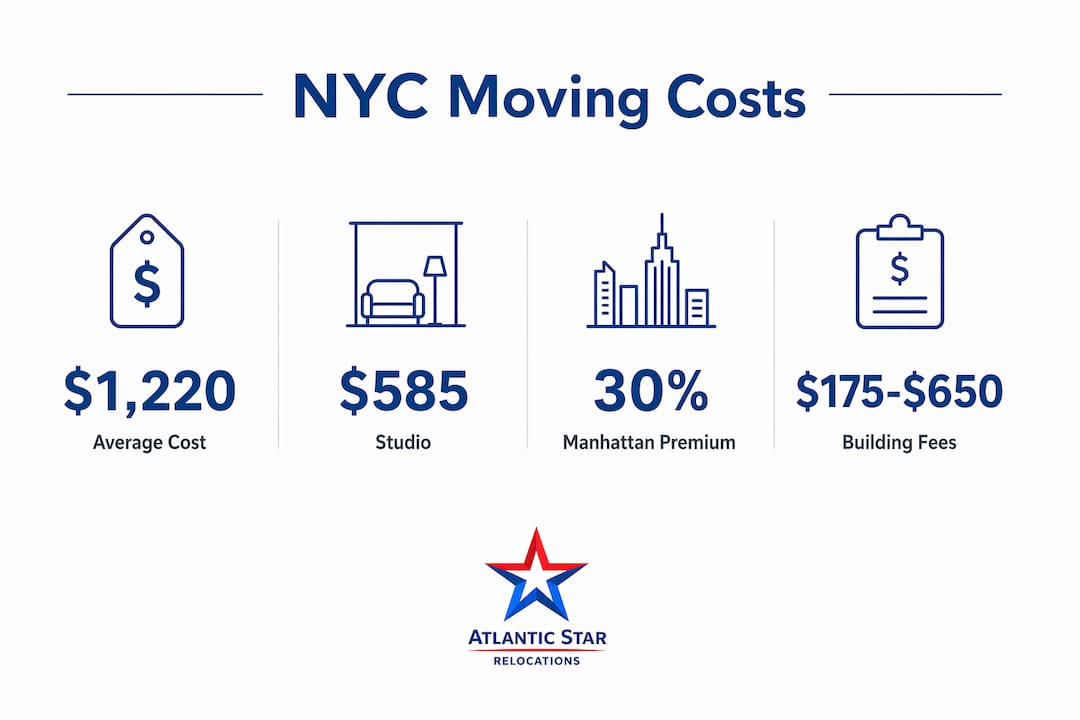
The average moving cost in NYC for a local move is approximately $1,220 in 2026, according to the NYC Moving Cost Index 2026. That number shifts dramatically based on your apartment size, your borough, and fees your building may require before movers can set foot in the lobby. A studio move can run as low as $585, while a three-bedroom apartment can reach $1,845 or more before any extras. Families and individuals planning a move in the New York City metro area need a realistic budget, not a ballpark guess. This guide breaks down what you will actually pay and why.
What is the average moving cost in NYC by apartment size?
Apartment size is the single biggest driver of your moving bill. Larger homes require more movers, more hours, and more truck space. The table below reflects 2026 market pricing for local moves within New York City.
| Apartment size | Estimated cost range | Typical crew | Estimated duration |
|---|---|---|---|
| Studio | $585–$850 | 2 movers | 2–4 hours |
| 1-bedroom | $850–$1,200 | 2 movers | 3–5 hours |
| 2-bedroom | $1,200–$1,600 | 3 movers | 4–7 hours |
| 3-bedroom | $1,600–$1,845+ | 3–4 movers | 6–9 hours |
| 4+ bedrooms | $2,000–$3,636 | 4–5 movers | 8+ hours |

NYC moving crews charge $85–$155 per hour per mover, with most billing starting at a two-hour minimum. That minimum charge matters for studio moves, where the actual labor time may be short but the clock starts the moment the truck leaves the depot.
Pro Tip: Book a flat-rate quote for larger apartments whenever possible. Hourly billing on a 3-bedroom move can spiral if elevators are slow or parking is difficult.
The crew size scales with the job. A studio typically needs two movers, while a four-bedroom home requires four to five. Each additional mover adds to the hourly rate, so a larger apartment does not just take longer. It costs more per hour too.
How do NYC boroughs affect your moving bill?
Geography inside New York City creates real price differences. Manhattan moves cost 25–30% more than moves in other boroughs. That premium reflects stricter building access rules, limited parking, and building management policies that add time and complexity to every job.
The cost gap across boroughs comes down to logistics, not distance:
- Manhattan: Highest costs due to building restrictions, no-parking zones, and COI requirements from almost every doorman building.
- Brooklyn: Mid-range costs. Neighborhoods like Park Slope and DUMBO have building requirements similar to Manhattan.
- Queens: Generally lower costs than Manhattan, though high-rise buildings in Long Island City carry similar access fees.
- Bronx: Among the more affordable boroughs for moving, with fewer high-rise access restrictions in many neighborhoods.
- Staten Island: Lowest average moving costs in the five boroughs, largely due to suburban-style housing and easier truck access.
Geographic price disparities within New York City reflect not just the physical move but the complexity of regulations unique to each borough. A move from a Bronx walk-up to a Queens apartment is a fundamentally different logistical operation than a Manhattan high-rise move, even if the distance is similar.
Parking is a cost most people forget to factor in. Movers who cannot park near your building may need to carry items farther, which adds time and raises your hourly bill. In Manhattan, this is not an exception. It is the norm.
What hidden fees catch NYC movers off guard?
Building-related fees are the most common budget surprise in New York City moves. Most people budget for the movers. Few budget for what the building charges before the movers can start.
Here are the fees you need to plan for:
-
Certificate of Insurance (COI). Most NYC buildings require movers to carry a COI before entering the property. The cost to obtain one ranges from $75 to $300 depending on the building's requirements. Reputable movers carry standard COIs, but some buildings require custom coverage amounts, which adds cost.
-
Elevator reservation fees. Buildings with service elevators often charge a reservation fee. These fees range from $100 to $500+ depending on the building and the time slot. Weekend reservations typically cost more than weekday slots.
-
Security deposits. Some buildings require a refundable deposit to cover potential damage to hallways or elevators during the move. These deposits can range from $200 to $500 and are returned after inspection.
-
Cancellation penalties. Failing to secure required permits like a COI or elevator reservation in advance can result in the moving crew being turned away. You may still owe the crew for their time, plus a cancellation fee.
Building-related fees can add $175–$650 to your total moving cost. That is a meaningful addition to a $1,200 base quote. Atlanticstargroup handles NYC building access requirements as part of its coordination process, which removes this risk from the client's plate entirely.
Pro Tip: Call your building management office at least two weeks before your move date. Ask specifically about COI requirements, elevator reservation windows, and any deposits. Get the answers in writing.
Full-service movers, labor-only help, or DIY: which costs less in NYC?
The right moving arrangement depends on your budget, your schedule, and how much you want to handle yourself. Each option carries a different cost structure in the NYC market.
Full-service movers handle packing, loading, transport, and unloading. Local NYC full-service moves cost between $387 and $3,636 depending on home size. This is the highest-cost option but the lowest-effort one. For families with young children or tight timelines, the time savings often justify the price.
Labor-only help covers loading and unloading only. You rent the truck and drive it yourself. Hourly rates are lower, but you absorb the truck rental cost and the driving stress. This works well for studio and one-bedroom moves where the volume is manageable. Atlanticstargroup offers labor-only moving help in New York, New Jersey, and Connecticut for clients who want professional muscle without the full-service price tag.
DIY truck rental and moving containers are the lowest-cost options on paper. Moving containers in NYC cost between $271 and $2,545 for local moves. The catch is that NYC parking restrictions make container placement difficult in dense neighborhoods. Truck rentals carry similar access challenges, plus the physical labor falls entirely on you.
NYC hourly rates average around $110 per mover with a two-hour minimum charge. That rate is actually about 21% below the national average, but total bills stay high because of the access fees, longer job times, and building requirements that are unique to this city.
Key Takeaways
The average moving cost in NYC in 2026 is approximately $1,220 for a local move, but building fees, borough location, and apartment size can push that number significantly higher.
| Point | Details |
|---|---|
| Baseline local move cost | The 2026 average is $1,220, ranging from $585 for studios to $1,845+ for three-bedroom apartments. |
| Manhattan premium | Manhattan moves cost 25–30% more than other boroughs due to access rules and building policies. |
| Hidden building fees | COI and elevator reservation fees can add $175–$650 to your total moving bill. |
| Service type affects cost | Full-service moves cost the most; labor-only and DIY options reduce cost but increase personal effort. |
| Book early and confirm permits | Failing to secure COI or elevator reservations in advance can result in cancellation fees and delays. |
What I have learned from watching NYC moves go wrong
Most NYC moving budgets fail at the same point. People get a quote from a mover, feel good about the number, and then get blindsided by the building. A $1,200 move becomes a $1,700 move because nobody called the management office about the elevator reservation. That is not the mover's fault. It is a planning gap.
The second mistake I see constantly is booking too late. NYC buildings have limited move-in windows, often just a few hours on weekdays. If you book a mover without first confirming your building's available slots, you may find yourself paying for a crew that cannot legally start until 10 a.m. and must stop by 5 p.m. That window disappears fast in a large apartment.
My honest advice: hire movers who know NYC buildings, not just NYC streets. A crew that has worked Manhattan high-rises before knows to call ahead about COI requirements, knows which buildings have freight elevator quirks, and knows how to handle a parking situation without losing an hour of your time. That local knowledge is worth more than saving $50 on an hourly rate. Atlanticstargroup's apartment moving services are built around exactly this kind of operational familiarity with New York City's building environment.
— Admin
Planning your NYC move with Atlanticstargroup
Atlanticstargroup manages the full scope of NYC residential moves, from coordinating building permits and COI requirements to scheduling crews and handling logistics across all five boroughs and Westchester County.

Whether you need full-service house moving or targeted labor-only support, Atlanticstargroup brings the local knowledge that prevents the costly surprises this article covers. The team handles elevator reservations, COI coordination, and building communication directly, so you are not chasing paperwork while also managing a move. Get a quote at atlanticstargroup.com and know your real costs before moving day.
FAQ
What is the average cost to move within NYC in 2026?
The average moving cost for a local NYC move is approximately $1,220 in 2026. Costs range from $585 for a studio to $1,845 or more for a three-bedroom apartment.
Why are Manhattan moves more expensive than other boroughs?
Manhattan moves cost 25–30% more than moves in other NYC boroughs. Stricter building access rules, limited parking, and COI requirements from most doorman buildings drive up the total bill.
What is a Certificate of Insurance and do I need one?
A Certificate of Insurance (COI) is a document proving your movers carry adequate liability coverage. Most NYC buildings require one before allowing movers inside, and obtaining it costs $75–$300 depending on the building's requirements.
How much do elevator reservation fees cost in NYC?
Elevator reservation fees in NYC buildings typically range from $100 to $500 or more. Weekend slots cost more than weekday bookings, and some buildings require reservations weeks in advance.
Is labor-only moving cheaper than hiring full-service movers in NYC?
Labor-only moving reduces your cost by eliminating the truck and driver from the mover's bill. It works well for smaller apartments, but you take on the truck rental cost and driving responsibility yourself.