

Moving in New York is defined by three realities: high upfront costs, a fiercely competitive rental market, and local logistics that catch most newcomers off guard. Whether you are relocating from another state or moving between boroughs, the process demands financial preparation, organized documentation, and a clear timeline. Families moving to Manhattan, Brooklyn, or Westchester County face different challenges than those arriving from out of state, but the core principle holds across all scenarios. Plan early, budget honestly, and get professional support where the complexity warrants it.
How much does moving in New York cost?
New York relocation costs are higher than almost any other U.S. city, and the gap between expectation and reality is where most moves go wrong. Individuals with a job offer should prepare $8,000 to $12,000 in savings before moving, while those without employment lined up should target $15,000 to $20,000. That range accounts for first month's rent, a security deposit, broker fees, and moving expenses. It does not include furniture, utility deposits, or the first few weeks of groceries and transit.
The 40x income rule governs most NYC rental approvals. Your annual gross income must equal at least 40 times the monthly rent. On a $2,800 apartment in Queens, that means demonstrating $112,000 in annual income. If your income falls short, landlords typically require a guarantor or a co-signer with qualifying income, which adds paperwork and sometimes additional fees.
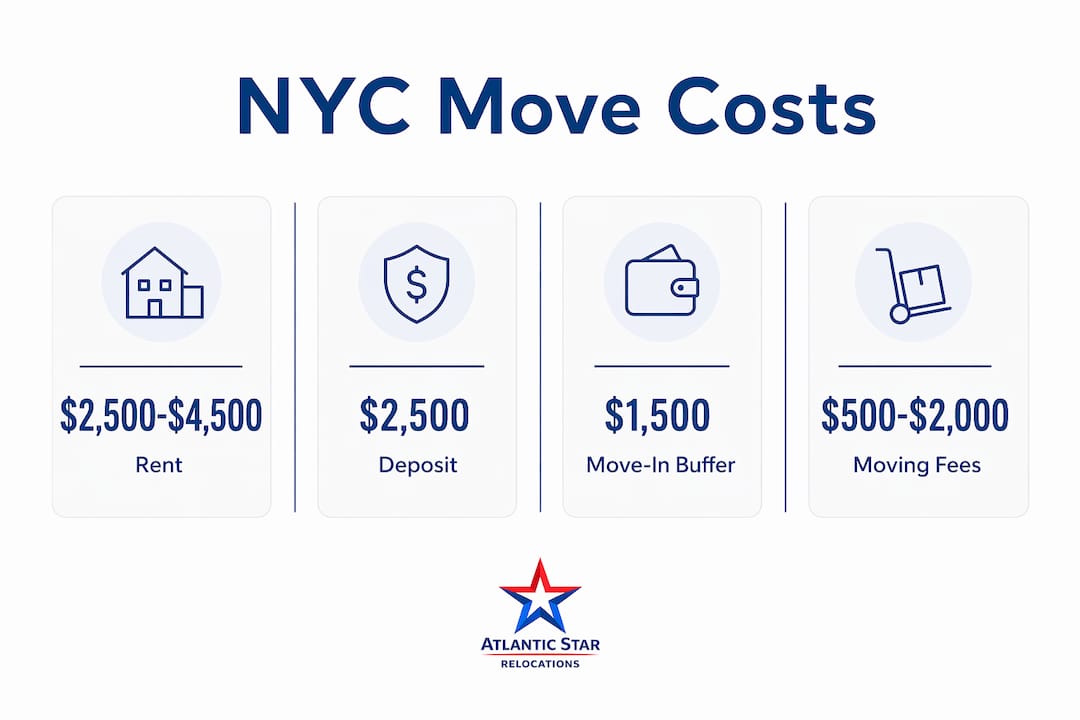
| Expense | Estimated Cost |
|---|---|
| First month's rent (NYC average) | $2,500 to $4,500 |
| Security deposit | One month's rent |
| Broker fee (if applicable) | Up to 15% of annual rent |
| Professional moving services | $800 to $2,500 |
| Utility deposits and setup | $200 to $500 |
Moving upstate to Westchester County or areas like White Plains or Yonkers reduces rent significantly compared to Manhattan, but moving service costs and commuter rail passes offset some of those savings.
Pro Tip: Build a separate "move-in buffer" fund of at least $1,500 beyond your calculated costs. Unexpected fees like elevator reservation charges, certificate of insurance requirements from buildings, and parking permits for moving trucks appear regularly in NYC and Westchester moves.
What should you know about NYC's rental market?
The NYC rental market moves faster than almost any other in the country, and being unprepared costs you apartments. Broker fees are now often the landlord's responsibility under 2024 regulations, but some listings still pass them to tenants. Always confirm fee status before scheduling a viewing. Searching specifically for "no-fee" listings on platforms like StreetEasy or Apartments.com saves thousands of dollars upfront.
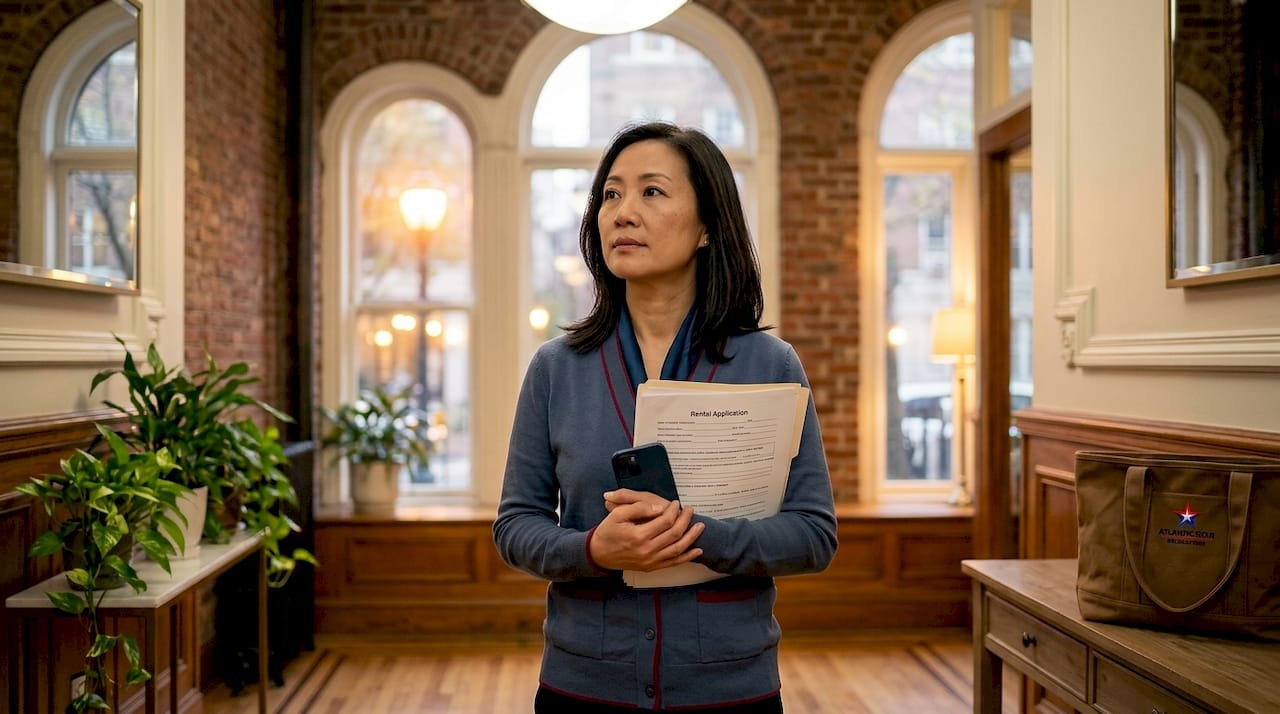
Documentation is the difference between getting an apartment and losing it to another applicant. NYC landlords require pay stubs, tax returns, bank statements, landlord references, and employment letters as standard. Assemble this file before you start searching so you can submit same-day when a strong listing appears.
Key strategies for apartment hunting in New York:
- Schedule four to six viewings per day when actively searching. Listings disappear within 24 to 48 hours in competitive neighborhoods.
- Consider short-term sublets or furnished rentals for your first 30 to 60 days. This gives you time to learn neighborhoods before committing to a 12-month lease.
- Roommate arrangements in neighborhoods like Astoria, Crown Heights, or Riverdale can cut monthly costs by 30 to 40 percent compared to solo renting.
- Ask about heat inclusion, noise levels, and cell phone signal during tours. These details prevent post-move discomfort that no amount of negotiation fixes after signing.
Pro Tip: If you are relocating from out of state, use a trusted local contact or a licensed real estate agent to do in-person tours on your behalf. Remote apartment hunting without eyes on the ground leads to costly surprises.
What local logistics and legal requirements apply after moving?
The administrative checklist after arriving in New York is longer than most people expect, and missing deadlines carries real penalties. New residents must transfer their license and register vehicles within 30 days of establishing residency. License transfer fees run approximately $64, while vehicle registration fees range from $26 to over $200 depending on vehicle weight and county.
Here is the post-move administrative sequence to follow:
- Transfer your driver's license at a New York DMV office within 30 days. Bring proof of identity, your Social Security number, and two documents proving NY residency.
- Set up utilities through Con Edison for electric and gas service in New York City. Internet options include Optimum, Spectrum, and Verizon Fios depending on your building and borough.
- Get your OMNY card or MetroCard. A monthly unlimited transit pass costs $132 and covers all subway and local bus rides. For commuters traveling into the city from Westchester or New Jersey, commuter rail passes range from $200 to $400 per month.
- Purchase renters insurance before your move-in date. Many NYC buildings require proof of coverage, and policies typically run $15 to $25 per month.
- Update your address with the USPS, your bank, the IRS, and your employer. Register to vote at your new address through the New York State Board of Elections website.
What moving services are available in New York?
Professional moving services in New York range from full-service operations to targeted labor-only help, and the right choice depends on your budget, timeline, and how much of the work you want to manage yourself.
| Service Type | Best For | Typical Cost Range |
|---|---|---|
| Full-service moving | Families, large apartments, complex logistics | $1,500 to $4,000+ |
| Labor-only help | Budget movers who own a rental truck | $400 to $900 |
| Packing and unpacking only | Time-pressed professionals | $300 to $800 |
| Short-term storage | Moves with timing gaps between leases | $150 to $400/month |
NYC buildings add layers of complexity that out-of-state movers rarely anticipate. Required building move-in appointments, elevator padding, certificates of insurance from movers, and weekday-only move windows are standard in Manhattan co-ops and many Brooklyn condos. A mover unfamiliar with these requirements can cause delays that cost you your move date entirely.
Atlanticstargroup's Atlantic Star Relocations handles apartment moves across NYC and Westchester County with the building coordination already built into the process. Their team manages certificate of insurance requests, elevator reservations, and scheduling so clients do not have to negotiate those details independently. For moves with storage gaps, Atlantic Star's short-term storage solutions bridge the time between lease end and new move-in without requiring clients to find a separate vendor.
Pro Tip: Book your movers at least three to four weeks in advance for NYC moves. The best crews fill up fast, especially on weekends and at month-end when most leases turn over.
How to plan your New York move from start to finish
A well-structured moving checklist for New York starts two to three months before your move date, not two weeks. Here is how to sequence the preparation:
- 8 to 12 weeks out: Set your total budget including rent, deposits, moving costs, and a buffer. Gather all rental application documents into one folder. Research neighborhoods based on commute, schools, and lifestyle priorities.
- 4 to 6 weeks out: Begin active apartment hunting. Book your moving company. Notify your current landlord and begin the USPS change of address process.
- 1 to 2 weeks out: Confirm all moving day logistics including elevator reservations and parking permits. Set up utilities at your new address before arrival. Pack an essentials box with items you will need on day one.
- Move week: Do a final walkthrough of your old space. Confirm your mover's certificate of insurance is on file with the new building. Unpack critical rooms first: bedroom, bathroom, kitchen.
- First month: Explore your new neighborhood on foot. Join a local community board, gym, or neighborhood group. Building community connections during the first month significantly reduces the isolation that high-density urban living can create.
Key takeaways
Successful relocation to New York requires honest budgeting, organized documentation, and professional moving support that understands local building requirements.
| Point | Details |
|---|---|
| Budget realistically | Prepare $8,000 to $20,000 upfront depending on employment status and NYC neighborhood. |
| Build your renter file early | Gather pay stubs, tax returns, bank statements, and references before apartment hunting begins. |
| Handle admin within 30 days | Transfer your license, register your vehicle, and set up utilities immediately after arriving. |
| Book movers in advance | Reserve professional movers three to four weeks out to secure availability and avoid last-minute costs. |
| Plan your timeline in phases | Start the process two to three months before move day to avoid rushed decisions and missed details. |
What I've learned from watching hundreds of New York moves
Most people underestimate this move. Not the physical part. The financial and administrative part. I have seen clients arrive in New York with what felt like a solid budget, only to discover the broker fee alone consumed two months of savings they had not accounted for. The 2024 regulatory changes shifted broker fee responsibility toward landlords in many cases, but the market has not fully adjusted, and plenty of listings still operate under the old model.
The other thing I consistently see is social isolation in the first 60 days. NYC's density can feel isolating rather than energizing if you do not make deliberate moves to connect. Joining a neighborhood Facebook group, attending a local community board meeting, or simply introducing yourself to neighbors sounds basic. It makes a real difference in how quickly New York starts to feel like home rather than a place you are surviving.
The clients who move well are the ones who treat this as a project with phases, not a single event. They budget for the unexpected, they hire professionals for the parts that require local knowledge, and they give themselves permission to settle in gradually rather than expecting everything to click in week one.
— Admin
Move smarter with Atlantic Star Relocations
Planning a New York relocation means managing more variables than most moves. Atlantic Star Relocations handles the parts that trip people up: building coordination, certificate of insurance requests, elevator scheduling, and the physical logistics of getting your belongings from point A to point B without delays.

Whether you need labor-only moving help to load and unload a rental truck, full professional packing services for a complete apartment, or logistics coordination for a multi-stop or long-distance move, Atlanticstargroup's team brings the local expertise that makes New York moves work. Serving Manhattan, Brooklyn, Queens, the Bronx, Westchester County, New Jersey, and Connecticut, Atlantic Star Relocations is built for exactly this kind of move. Request a quote today and get a clear plan before your move date arrives.
FAQ
How much should I budget for moving in New York?
Budget $8,000 to $12,000 if you have a job lined up, or $15,000 to $20,000 if you do not. Upfront costs typically include first month's rent, a security deposit, and a potential broker fee of up to 15% of annual rent.
What documents do I need to rent an apartment in NYC?
NYC landlords require pay stubs, recent tax returns, bank statements, an employment letter, and landlord references. Having these ready before you start searching speeds up the approval process significantly.
How long do I have to transfer my driver's license after moving to New York?
New residents must transfer their out-of-state license and register their vehicle within 30 days of establishing New York residency, with license fees around $64 and registration fees ranging from $26 to over $200.
What is the cheapest way to get around New York City?
A monthly unlimited OMNY or MetroCard pass costs $132 and covers all subway and local bus rides, making it the most cost-effective transit option for daily commuters in the five boroughs.
When should I book a moving company for an NYC move?
Book at least three to four weeks in advance. NYC buildings require advance scheduling for elevator access and certificates of insurance from movers, and the best crews fill their calendars quickly around month-end lease turnovers.