

December through mid January is the best time to move in NYC if cost is your priority, with rents running roughly 4% below summer averages and landlords more willing to negotiate. June through August wins if you need the widest selection of apartments, but expect to pay a premium and book movers six or more weeks out. Winter also brings shorter daylight and weather risks, so factor that into any moving checklist NYC renters use to plan the day itself.
TL;DR:
- Moving in December offers the best chance for rent discounts, with leases averaging 4.2% cheaper than in July, but weather and operational risks increase.
- The summer months of June and July provide the largest selection of available apartments, although rents are 6.5% to 8% higher than the annual average, and demand for movers peaks.
- Fall (September to November) balances moderate prices with better weather and leasing flexibility, especially with landlords more willing to offer concessions starting mid-September.
- Booking movers at least six weeks in advance is essential during summer, while winter moves often need just two to three weeks' notice due to lower demand.
- Coordinate all move logistics early, including elevator reservations, insurance certificates, and building policies, to avoid delays and extra costs on moving day.
Table of Contents
- Best Months to Move in NYC, Ranked by Priority
- How Do the Seasons Compare for an NYC Move?
- What Does Timing Actually Cost You in Dollars?
- When Should You Book Movers and Sign the Lease?
- Which Move Timing Fits Your Situation?
- What Atlantic Star Relocations Sees on the Ground in NYC
- Reduce Your Moving Timing Risk with Atlantic Star Relocations
- Sources
- FAQ
Best Months to Move in NYC, Ranked by Priority
The right month depends on what you're optimizing for: your wallet, the weather, or your options. Here's how the calendar breaks down when you rank NYC's best months to relocate by what actually matters to most renters.
- Cheapest / best negotiating leverage: Mid-October through mid-January, with December standing out as the strongest month for concessions and lower asking rents.
- Best selection of apartments: June through August, when listing volume peaks and turnover is fastest. Start browsing in May so you're not scrambling.
- Best balance of price and weather: September and October. Landlords start getting motivated, and you're not fighting summer heat or winter ice.
- Months to avoid if you care about cost or logistics: Late May through August, and especially the last weekend of any month, when lease turnovers and mover demand collide.
If you're weighing the cheapest time to move NYC has to offer against the ideal moving season NYC apartment hunters chase for options, this ranking provides some guidance. The sections below unpack why each window behaves the way it does.
How Do the Seasons Compare for an NYC Move?
Each season in New York plays by different rules, and the season you pick changes your budget, your options, and how much stress you'll deal with on move day.
Spring (March–May): the trap season
Spring feels like the natural time to move. Weather's improving, everyone's motivated to "start fresh." That instinct is exactly why spring is a trap. Demand climbs steadily from March into May, rents rise with it, and you don't get the payoff of summer's massive inventory to compensate. You're paying more without getting more choice. RentReboot's seasonality research backs this up: spring sits in a pricing no-man's-land between winter's bargains and summer's selection.
Summer (June–August): maximum choice, maximum price
This is peak moving season in New York, full stop. College leases turn over, corporate relocations spike, and landlords know it. Leaseswap's 2026 apartment-hunting data puts summer rents 6.5% to 8% above the yearly average, and that's before you add in mover pricing, which climbs right alongside rent.
The upside: you'll never see more listings than you do in June and July. If you need options, especially for a family move where school timing forces your hand, summer delivers volume you won't find any other time of year.
- Pro: widest inventory, fastest apartment turnover
- Pro: easier to compare multiple units in one search
- Con: highest rent premiums of the year
- Con: movers booked solid, premium pricing across the board
Fall (September–November): the negotiation window
September through November is when the market cools and landlords start feeling it. Leases signed in summer are wrapping up, apartments that didn't rent in July are still sitting empty, and owners get motivated. Combine that with mild weather and you get one of the more underrated windows in the ideal moving season NYC calendar.
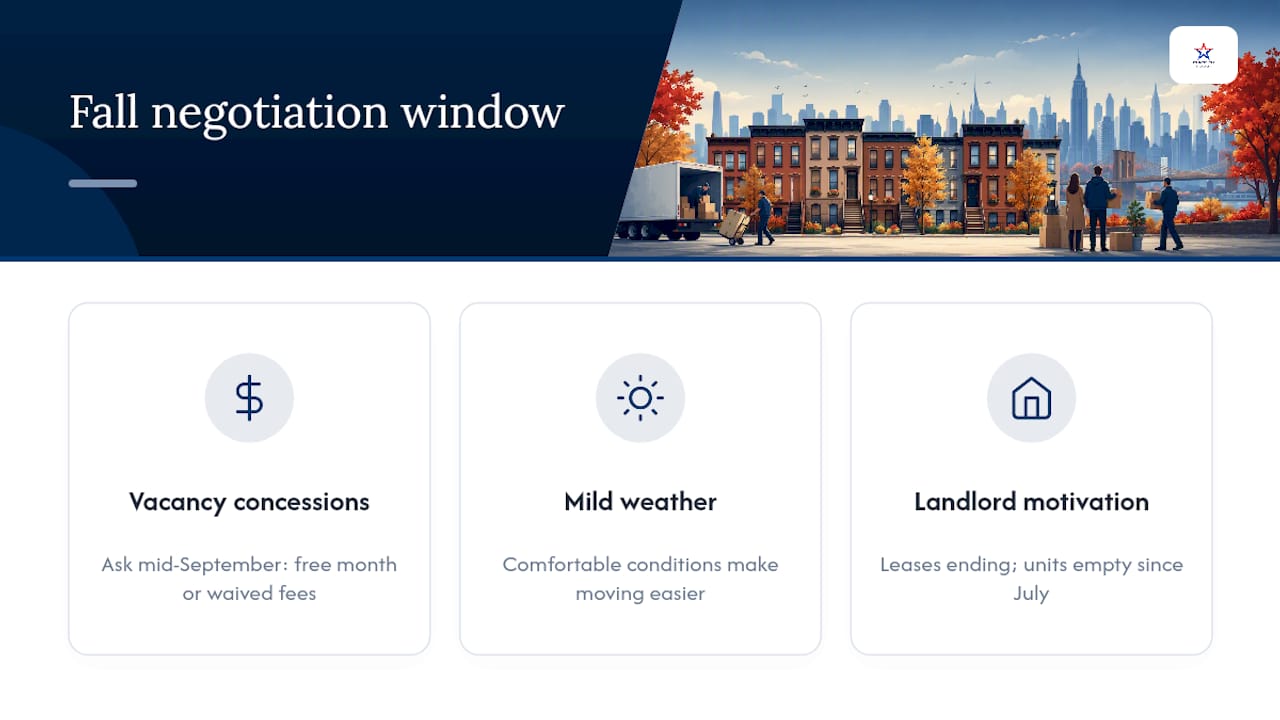
Pro Tip: Ask about "vacancy concessions" starting in mid-September. Landlords sitting on an empty unit since July are often more flexible on a free month or waived fees than they let on in the listing.
Winter (December–February): the bargain window, with a catch
December is the single strongest month for negotiating leverage. RentReboot's analysis of more than 820,000 NYC apartments found leases signed in December ran 4.2% cheaper on average than the identical unit rented in July. Fewer people want to move around the holidays, so the ones who do get real bargaining power.
The catch is operational, not financial. Daylight shrinks fast in December and January, cutting into safe loading and unloading windows, and winter storms create genuine safety and scheduling risk for a heavy-lift move. Inventory is also thinner, so if you need a specific layout or neighborhood, winter narrows your choices even as it widens your negotiating room.
What Does Timing Actually Cost You in Dollars?
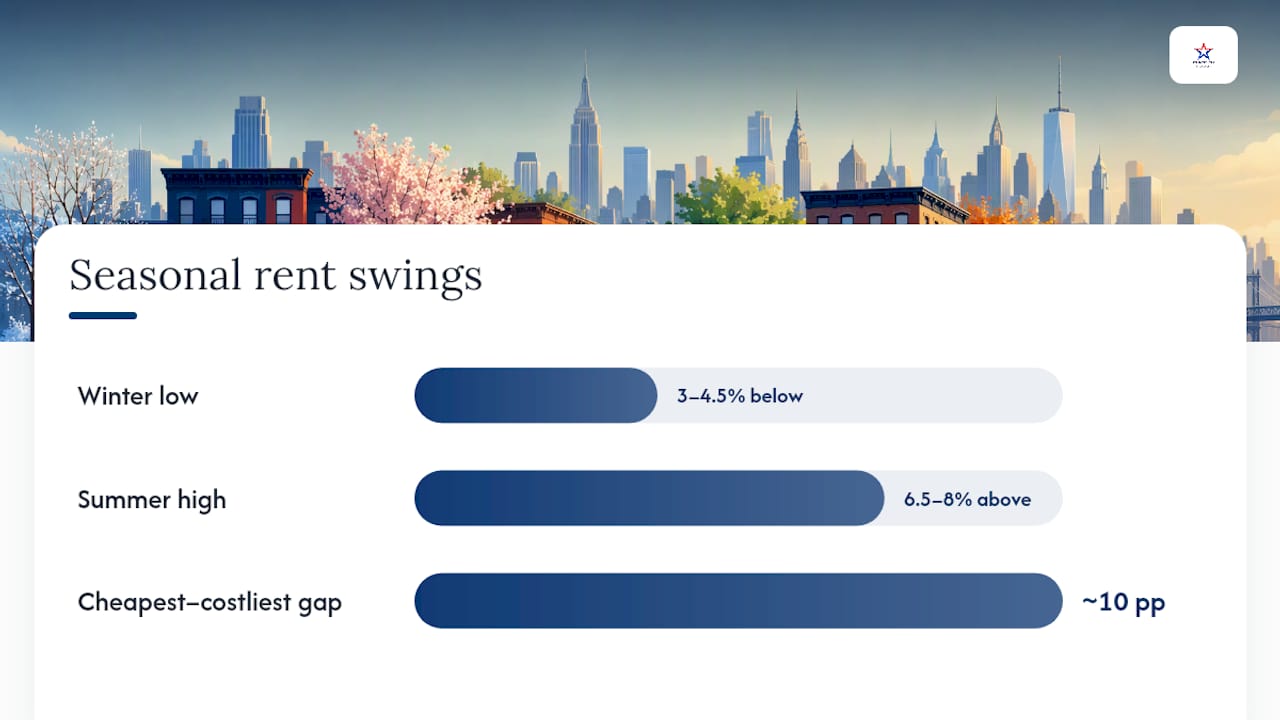
The percentage swings between seasons aren't abstract. They translate directly into what you'll pay in rent and what you'll pay to move.
On a median NYC one-bedroom, a 4% seasonal swing is a real number, not a rounding error. Leaseswap's data shows winter rents run 3% to 4.5% below average with more landlord concessions, while summer rents run 6.5% to 8% above average. That's a gap of roughly 10 percentage points between the cheapest and most expensive months to sign a lease. Over a 12-month term, that difference compounds into real annual savings, not just a one-time discount.
Moving companies treat summer as their true peak season, booking crews out six or more weeks in advance, while winter openings can often be secured with far shorter notice.
That mover-side pricing gap stacks directly on top of the rent gap. Budget accordingly:
- Set aside a moving cost buffer if you're relocating in June, July, or August, since crew rates run higher during peak demand.
- Compare a few weeks of short-term storage against a rushed peak-season move; sometimes storing your things and waiting three weeks for a cheaper mover slot saves more than it costs.
- If you're chasing December's rent discount, book your mover early anyway. Fewer crews work the holiday stretch, even though demand is lower overall.
When Should You Book Movers and Sign the Lease?
Timing your lease signature and your moving truck are two separate decisions, and treating them as one is where a lot of NYC moves go sideways.
Mid-month and midweek moves are almost always cheaper and easier to schedule than end-of-month weekend moves. Nearly every NYC lease turns over on the first, so the last weekend of any month, and especially the last weekend of August, is the single most congested and expensive stretch movers deal with all year.
Recommended lead times:
- Summer moves (June–August): book your crew at least 6 weeks out.
- Fall or spring moves: 4 to 6 weeks gives you a solid buffer.
- Winter moves (excluding the week around Christmas and New Year's): 2 to 3 weeks is usually enough.
Building coordination is where most timing plans fall apart. Most NYC co-ops and rentals require a certificate of insurance and an elevator reservation booked in advance, often with a strict loading-dock window. Before you book a mover, confirm your building's move-in rules, request your COI early, and reserve your elevator slot the moment you have a date. Our moving checklist for NYC and Westchester walks through the documents and deadlines in order, so nothing gets missed the week before your move.
Which Move Timing Fits Your Situation?
Three factors decide your ideal window: how sensitive you are to cost, how much you need to compare options, and how flexible your actual move date can be.
- Budget-first movers: Target late fall into December. Expect a smaller pool of listings, but real leverage on rent and fees, especially if you're willing to sign quickly once you find a fit.
- Selection-first movers (families, roommate groups): Plan around summer, but start searching in May. Apartments move fast in June and July, so early scouting matters more than the price you'll pay.
- Fixed-date movers (new job, lease expiration): You can't always pick your season, so control what you can. Book mid-week and mid-month, and keep short-term storage on standby if your old lease ends before your new one starts.
What Atlantic Star Relocations Sees on the Ground in NYC
After coordinating enough New York moves, a pattern shows up every year: the moves that go smoothly aren't the lucky ones, they're the ones booked with a real contingency plan. Atlantic Star Relocations manages vendor scheduling and building access together, so an elevator reservation and a crew arrival never conflict on move day.
Before booking any mover, ask three questions: What's your actual availability for my date? Who handles the COI and elevator paperwork? What's your cancellation and rescheduling policy if weather or a building delay hits? NYC apartment moves get complicated fast, and the answers to those three questions tell you more than any online review.
— Admin
Reduce Your Moving Timing Risk with Atlantic Star Relocations
Atlantic Star Relocations turns the timing decisions above into a managed plan instead of a gamble. If you're locking in a December rent discount but worried about a winter storm derailing your move, or chasing a summer apartment and can't get a crew booked in time, that's exactly the risk we manage every day across Westchester County, NYC, Connecticut, and New Jersey.

Our apartment moving services handle the elevator reservations, COI paperwork, and building coordination that trip up DIY movers, and our short-term storage options let you shift your move-in date without paying rent on two places at once. If a peak summer date is your only option, our labor-only moving help and packing services can fill the gaps when full-service crews book solid. For anyone relocating into the city from out of state, our interstate moving services coordinate the whole route, not just the local leg. Ready to lock in a date before your window closes? Request a quote and we'll build the timeline around your move, not the other way around.
Sources
Rent-seasonality figures come from RentReboot's NYC rent report, Leaseswap's apartment-hunting guide, and StreetSmart's rent calendar. Mover-season data draws on the Moving Company Hustle industry report, and tenant-rights context comes from NYC.gov's housing facts. For general apartment-hunting groundwork, Guestly Homes' rental apartment guide is a useful companion resource.
- NYC rent seasonality data report 2026 | RentReboot
- How to Find an Apartment in NYC (2026 Guide) | Leaseswap
- Nyc
FAQ
What is the best month to move in NYC?
December is generally the strongest month for cost savings, with rents running about 4.2% below summer levels and landlords more open to concessions. If selection matters more than price, June through August gives you the most listings to choose from.
Is $10,000 enough to move to New York?
For most single renters, moving during a lower-demand window like winter can make covering a security deposit, broker fee, moving costs, and a cash buffer for the first month or two more feasible. It gets tighter fast in summer, when both rent and mover pricing peak.
Can I live in NYC on $3,000 a month?
It's workable outside Manhattan's core, particularly in parts of Brooklyn, Queens, or the Bronx, but it requires disciplined budgeting since rent alone can consume half or more of that income. Timing your lease during a negotiation-friendly month like October or November stretches that budget further.
Is $60,000 enough to live in NYC?
A modest, shared-living lifestyle is more affordable in most boroughs outside prime Manhattan, though a solo one-bedroom in a high-demand neighborhood may strain budgets. Moving during the fall or winter negotiation window, rather than summer's peak pricing, gives that income more room to work with.