

What are the main types of commercial moving services?
Commercial moving services fall into several distinct categories, and knowing which one fits your situation is the difference between a smooth transition and a costly disruption. Unlike residential moves, commercial relocations are built around maintaining operational continuity, not personal comfort. The stakes are higher, the coordination is more complex, and the wrong service choice can cost you days of productivity.
Here is a clear breakdown of the primary service types available to businesses in the US:
- Full-service commercial moving: The moving company handles everything, from packing and labeling through transportation, unloading, and unpacking. Minimal effort required from your team, but it carries the highest cost.
- Partial-service moving: You handle some tasks, such as packing your own files or disconnecting equipment, while the movers manage transport and heavy lifting.
- Self-service moving: Your team packs and prepares everything; the moving company provides the truck and labor only. Best for businesses with tight budgets and available internal resources.
- Specialty commercial moving: Covers data center relocations, laboratory equipment moves, warehouse inventory transfers, and sensitive IT infrastructure. Requires specialized packaging and certified handling.
- Local commercial moves: Typically within the same metro area, such as moving an office within New York City or from Manhattan to Westchester County. Shorter timelines, lower transport costs.
- Long-distance commercial moves: Cross-state or nationwide relocations involving extended transport coordination, regulatory compliance, and higher budgets.
- Office and corporate relocations: Focused on moving workstations, conference rooms, server rooms, and employee assets with minimal downtime.
- Warehouse and inventory moves: Large-scale logistics involving shelving systems, palletized goods, and heavy equipment, often requiring phased execution.
Atlantic Star Relocations covers all of these categories across the New York metro area, New Jersey, Connecticut, and beyond, acting as a single point of accountability from the first planning call through final delivery.
Table of Contents
- How do different types of commercial moving companies compare?
- What specific services do commercial movers actually provide?
- What do businesses need to plan before a commercial move?
- How Atlantic Star Relocations manages complex commercial moves
- Atlantic Star Relocations handles the complexity so your team does not have to
- FAQ
- Key takeaways
How do different types of commercial moving companies compare?
Not every commercial mover is built the same way, and the category of company you hire shapes the entire experience. Understanding the differences before you sign anything saves time, money, and headaches.
Local and regional movers operate within a defined geographic footprint, typically a metro area or a cluster of states. They know local building regulations, elevator reservation requirements, and traffic patterns. For a business moving from Brooklyn to the Bronx or from White Plains to Stamford, a regional specialist often delivers faster scheduling and more flexible pricing.

Long-distance and interstate movers are licensed by the Federal Motor Carrier Safety Administration (FMCSA) to transport goods across state lines. These companies must carry a USDOT number and meet federal insurance requirements. For businesses relocating from New York to Florida or across multiple states, verifying FMCSA registration is a non-negotiable first step.
Specialty movers focus on specific equipment types or industries. A data center relocation, for example, requires anti-static packaging, climate-controlled transport, and technicians who understand server rack configurations. Laboratory and medical equipment movers bring similar depth. These providers are not interchangeable with general commercial movers.
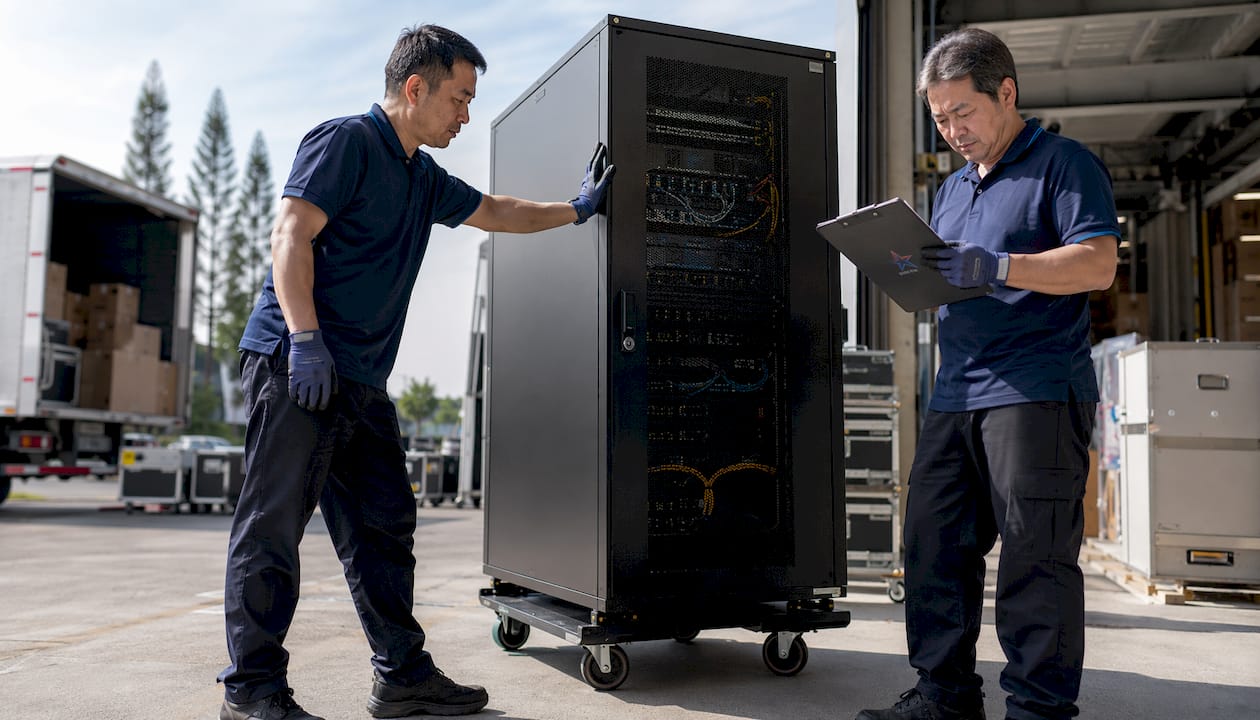
Managed relocation companies sit in a different category entirely. Rather than simply providing trucks and labor, they coordinate the entire project: vendor selection, scheduling, asset tracking, stakeholder communication, and issue resolution. Atlantic Star Relocations operates in this category, offering vendor-neutral coordination that keeps every moving part accountable to a single project manager.
Key capabilities to evaluate when comparing providers:
- FMCSA licensing and insurance coverage levels
- Experience with your specific industry or equipment type
- Asset management and inventory tracking systems
- Availability for off-hours or weekend moves to reduce business disruption
- Geographic coverage matching your origin and destination
What specific services do commercial movers actually provide?
The range of services within commercial moving is wider than most businesses expect. Choosing the right combination, rather than defaulting to full-service or self-service, often produces the best balance of cost and control.
Packing and unpacking
Professional packing services for commercial moves go well beyond wrapping furniture in blankets. Specialty packing for electronics, server equipment, and fragile lab instruments uses anti-static materials, custom crating, and clearly labeled chain-of-custody documentation. Unpacking services, handled by the same crew, ensure items arrive at the correct workstation or department without your staff spending half a day sorting boxes.
Loading, transport, and unloading
This is the core of any commercial move. The difference between providers shows up in the equipment they bring: lift gates for heavy machinery, air-ride suspension trucks for sensitive electronics, and climate-controlled vehicles for temperature-sensitive inventory. For warehouse moves, forklifts and pallet jacks are standard; for office moves, furniture dollies and stair-climbing equipment matter more.
IT and data center relocation
Moving a server room or data center is one of the highest-risk commercial moves a business can undertake. Downtime during an IT migration can affect every department simultaneously. Specialty providers use asset tagging, inventory management software, and anti-static packaging to reduce damage risk. Coordination with your internal IT team must begin weeks before move day, not the morning of.
Warehouse and inventory moves
Warehouse relocations involve more than moving shelving units. Inventory counts, SKU mapping, and chain-of-custody documentation protect against loss and misplacement. A phased execution, where sections of the warehouse move in sequence while operations continue, is common for businesses that cannot afford a full shutdown.
Storage coordination
Businesses often need temporary storage between lease end dates and new space availability. Short-term storage options, including climate-controlled units in Westchester County and NYC, bridge that gap without forcing rushed delivery timelines.
Service level comparison
| Service feature | Full-service | Partial-service | Self-service |
|---|---|---|---|
| Packing handled by mover | Yes | Partial | No |
| Loading and transport | Yes | Yes | Yes |
| Unpacking at destination | Yes | Optional | No |
| IT/specialty handling | Available | Available | Not included |
| Asset tracking | Yes | Yes | Limited |
| Cost level | Highest | Mid-range | Lowest |
| Best for | Complex, large moves | Mid-size offices | Budget-conscious, simple moves |
Insurance and liability
Commercial moves carry cargo insurance as a baseline, but coverage limits vary widely. Businesses moving sensitive IT equipment or high-value inventory should ask specifically about declared-value coverage and whether the policy covers consequential losses from downtime. General liability coverage protects against property damage at the origin or destination building. Review exclusions carefully before signing.
What do businesses need to plan before a commercial move?
The most common failure in commercial relocations is treating them like a larger version of a home move. Office moves require coordinated planning across IT, HR, facilities, and building management, often months in advance. A family can recover from a rushed move with a few tiring days. A business pays for poor planning in lost revenue and damaged credibility.
Scheduling and timeline
Commercial moves typically run on longer timelines than residential ones. Phased planning covers inventory audits, vendor coordination, system preparation, move-day execution, and post-move activation. Off-hours and weekend scheduling is standard practice for minimizing disruption to employees and clients. For large offices in Manhattan or Brooklyn, building management often requires advance elevator reservations and certificate-of-insurance submissions weeks ahead.
Stakeholder coordination
A business move touches more people than most leaders initially account for. Employees need seating and access information before day one at the new location. Vendors need updated delivery addresses. Clients may need formal notification. IT providers must align on connectivity timelines. Effective communication across all parties reduces errors and prevents the kind of first-day chaos that damages team morale and client confidence.
Budget and cost factors
Commercial move budgets differ structurally from residential ones. Beyond the base moving cost, businesses typically account for off-hours labor premiums, IT setup fees, furniture reconfiguration, signage, and the cost of any downtime that cannot be avoided. Long-distance commercial moves add regulatory compliance costs and extended transport coordination. Getting itemized quotes from providers, rather than flat estimates, gives you a clearer picture of where the money actually goes.
Packaging and labeling
Asset accountability starts with how items are packed and labeled before the truck arrives. Color-coded labeling by department, numbered box inventories, and QR-code asset tags all reduce the risk of misplaced equipment. For warehouse moves, a chain-of-custody system that tracks every item from origin shelf to destination shelf is the difference between a clean handoff and a weeks-long reconciliation process.
Equipment and technology
Modern commercial movers use asset tagging systems, inventory management software, and specialized physical equipment including air bearings for heavy machinery and toe jacks for precision placement. These tools reduce damage risk and give project managers real-time visibility into what has moved and what has not. For businesses with high-value or irreplaceable equipment, asking a provider about their specific technology stack before hiring is worth the conversation.
Pro Tip: Start IT infrastructure preparation at least four to six weeks before move day. Coordinate with your internet provider, IT team, and the moving company simultaneously. Waiting until after the physical move to address connectivity is the single most common cause of extended downtime in office relocations.
Insurance and liability planning
Understanding your coverage before the move, not after a claim, protects the business. Cargo insurance covers physical damage in transit. Declared-value coverage lets you set a higher protection level for specific assets. General liability covers building damage during the move. For specialty equipment like servers or medical devices, ask whether the mover carries additional coverage or whether you need a rider on your own commercial policy.
How Atlantic Star Relocations manages complex commercial moves
Atlantic Star Relocations approaches commercial moves as project management challenges, not just logistics jobs. The company acts as a single point of accountability, coordinating vendors, carriers, and crews while keeping the client informed at every stage. That structure matters most when the move involves multiple departments, sensitive equipment, or tight operational deadlines.
The core of Atlantic Star's approach is carrier-neutral coordination. Rather than defaulting to in-house crews for every task, the team selects the best-fit vendors for each component of the move, whether that means a specialty IT mover for the server room or a certified warehouse crew for pallet-level inventory. This model keeps quality consistent across every phase without locking clients into a single provider's limitations.
Atlantic Star Relocations serves businesses across Westchester County, New York City, Manhattan, Brooklyn, Queens, the Bronx, New Jersey, Connecticut, and Florida. For multi-location moves or phased corporate relocations, the team's multi-location coordination experience prevents the scheduling conflicts and communication gaps that derail complex projects.
Key elements of Atlantic Star's commercial move management:
- End-to-end project oversight from initial planning through post-move activation
- Real-time problem-solving when building access, elevator schedules, or vendor timelines shift
- Vendor selection and scheduling managed by a dedicated move coordinator
- Asset tracking and accountability documentation throughout the move
- Client communication architecture that keeps employees, vendors, and leadership aligned
- Coverage across the full New York metro area and surrounding states
For businesses planning a corporate relocation in the tri-state area, the managed approach reduces the internal burden on operations teams who are already running day-to-day business while the move happens around them.
Atlantic Star Relocations handles the complexity so your team does not have to
When a business is relocating its office, warehouse, or data center in the New York metro area, the gap between a managed move and a self-coordinated one shows up fast. Missed elevator reservations, delayed IT setup, and mislabeled boxes are not just inconveniences. They cost real money and real time.

Atlantic Star Relocations gives businesses in Westchester, Manhattan, Brooklyn, New Jersey, and Connecticut a single point of contact who owns the entire process. From the first site assessment through the last box placed, the team coordinates vendors, manages scheduling, and resolves issues before they reach the client. Whether you need labor-only moving help for a straightforward office shift or full project management for a multi-floor corporate relocation, Atlantic Star builds the plan around your operational timeline, not a standard template.
Get a quote from Atlantic Star Relocations and find out exactly what a managed commercial move looks like for your specific situation.
FAQ
What is a commercial moving company?
A commercial moving company specializes in relocating businesses, offices, warehouses, and organizations rather than households. These providers manage the physical move of office furniture, equipment, and inventory while prioritizing operational continuity and minimal downtime.
What are the main types of commercial moving services?
The primary types of commercial moving services include full-service, partial-service, and self-service moves, along with specialty services for data centers, warehouses, and sensitive IT equipment, and local versus long-distance options depending on the destination.
What are red flags when hiring a commercial mover?
Watch for providers who cannot supply a USDOT number, offer unusually low flat-rate estimates without a site visit, lack cargo insurance documentation, or cannot provide references from comparable commercial projects. Vague contracts with no itemized scope are another warning sign.
How far in advance should a business plan a commercial move?
Most commercial relocations require planning three to six months ahead, depending on the size and complexity of the move. Large office or warehouse moves in dense markets like New York City often need even longer lead times to secure building access, elevator reservations, and vendor availability.
How does Atlantic Star Relocations handle commercial relocations?
Atlantic Star Relocations manages commercial moves as end-to-end projects, coordinating vendors, carriers, and crews under a single point of accountability across Westchester County, New York City, New Jersey, Connecticut, and Florida.
Key takeaways
Choosing the right type of commercial moving service requires matching the service level, provider category, and operational timeline to your specific business needs, not defaulting to the cheapest or most familiar option.
| Point | Details |
|---|---|
| Service type determines effort and cost | Full-service moves minimize internal effort; self-service options reduce cost but require significant internal coordination. |
| Provider category shapes the outcome | Managed relocation companies offer end-to-end accountability; general movers provide labor and transport only. |
| Planning timeline is longer than most expect | Commercial moves typically require several months of advance planning to coordinate vendors, IT, and building access. |
| Labeling and asset tracking prevent losses | Color-coded labels, numbered inventories, and chain-of-custody documentation protect assets throughout the move. |
| Atlantic Star Relocations | Provides carrier-neutral, managed commercial relocation services across the New York metro area, New Jersey, Connecticut, and Florida. |