
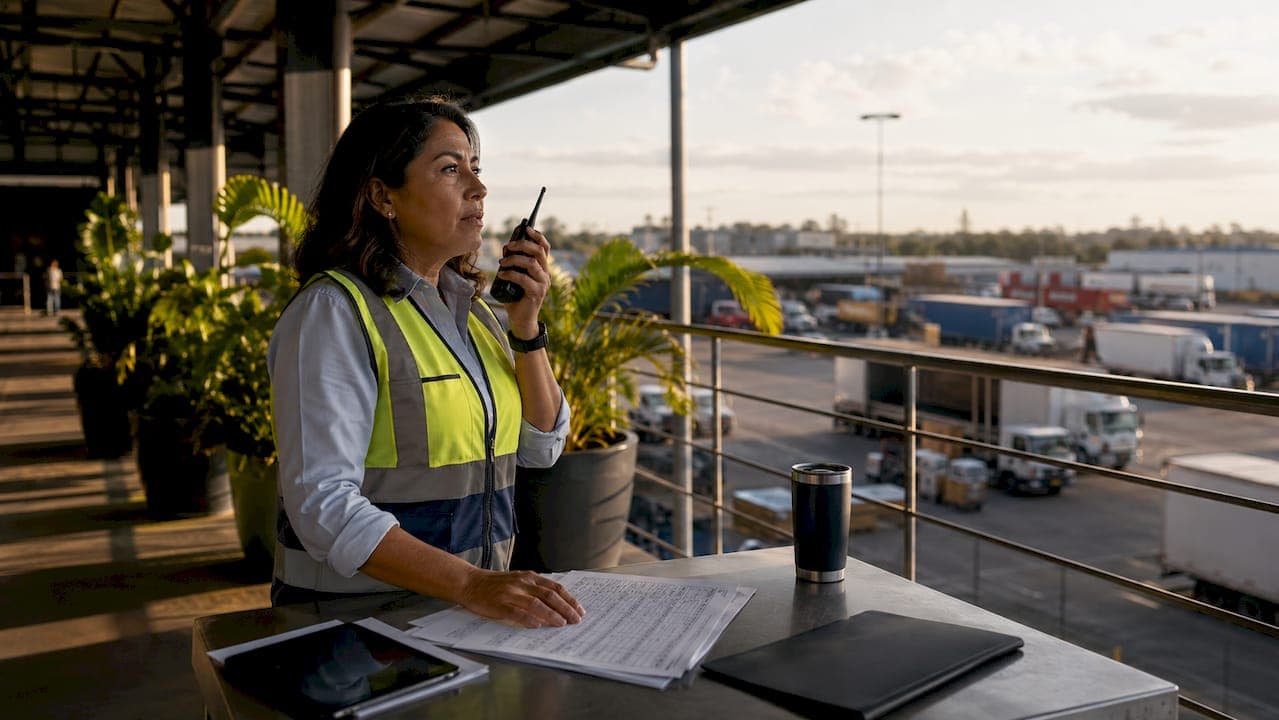
Logistics coordination warehousing is defined as the strategic synchronization of inventory, transportation, and labor within warehouse operations to deliver goods accurately, on time, and at controlled cost. This discipline sits at the intersection of logistics management basics and physical operations, acting as the connective tissue that prevents breakdowns between planning and execution. Three core systems power this work: Warehouse Management Systems (WMS), Warehouse Execution Systems (WES), and Warehouse Control Systems (WCS). Performance is measured through metrics like On-Time-In-Full (OTIF) rates and exception volume. When coordination fails, businesses absorb detention fees, premium freight charges, and unstable lead times.
What is logistics coordination warehousing, and what systems drive it?
Warehousing coordination is not a single function. It is a layered architecture of systems, people, and processes that must operate in real time. Each layer handles a distinct job, and warehouse operations break down when any layer falls out of sync with the others.
The three core systems work as follows:
- WMS (Warehouse Management System): Tracks inventory positions, manages order fulfillment, and maintains the digital record of what is where. This is the system of record for stock levels and order status.
- WES (Warehouse Execution System): Directs labor and automation tasks in real time. It decides which picker goes where and how automated equipment is sequenced to meet outbound priorities.
- WCS (Warehouse Control System): Manages the physical machinery, including conveyors, sorters, and automated storage units. It translates high-level instructions from WES into machine-level commands.
Warehouse orchestration is the term for the intelligent, continuous alignment of all three systems. AI-enabled orchestration aligns labor, inbound and outbound priorities, work sequencing, and automation for proactive disruption management. That matters because a warehouse reacting to problems is always behind. A warehouse anticipating them stays ahead.
Pro Tip: If your WMS and WES operate on separate data refresh cycles, you will always have a lag between what the system shows and what is physically happening on the floor. Synchronize refresh rates before adding more automation.

How does logistics coordination improve efficiency and reduce costs?
Coordination, not infrastructure, delivers the biggest performance gains in warehouse operations. Integrating planning across suppliers and business units produces efficiency gains without requiring major capital investment. That is a critical insight for logistics managers working under budget constraints.
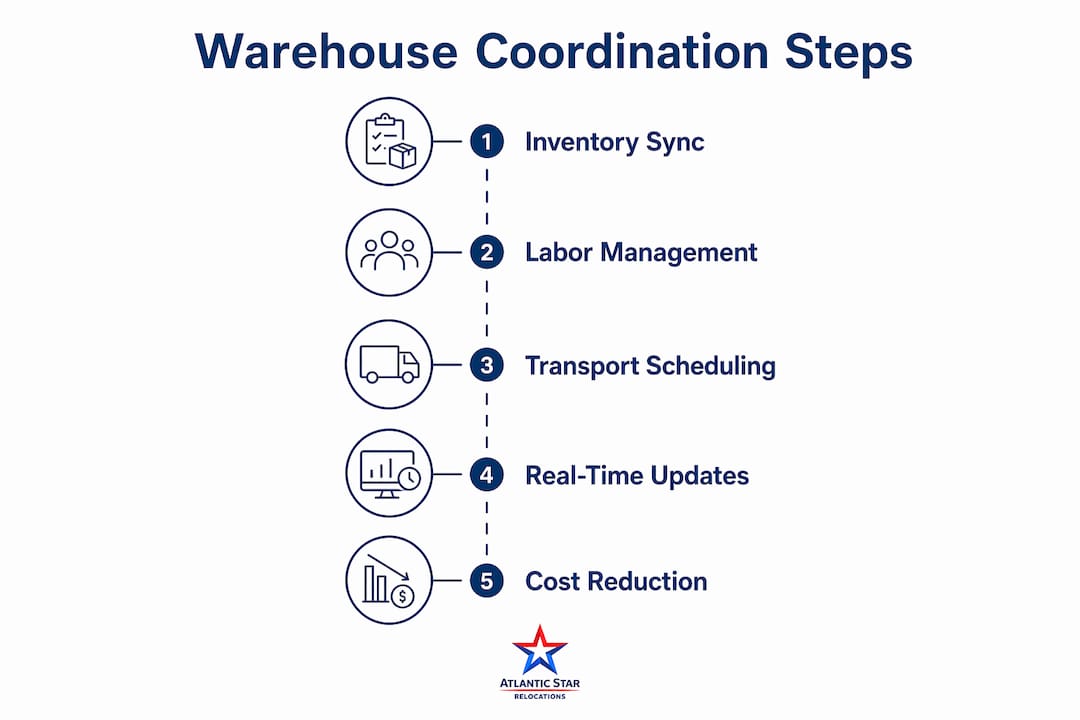
The practical gains show up in five measurable areas:
- Detention fee reduction: Aligning dock schedules with carrier arrival windows prevents trucks from waiting. Waiting trucks generate detention fees that compound quickly across a high-volume facility.
- Premium freight elimination: When inbound coordination fails, operations resort to expedited shipping to cover gaps. Hour-by-hour supply chain triage prevents those gaps from forming in the first place.
- Load consolidation: Data-driven inbound coordination consolidates supplier pickups, cutting freight costs significantly while also lowering emissions and reducing peak demand volatility.
- Shorter delivery cycles: Forecasting demand and managing inventory positions proactively shortens the time between order receipt and shipment, directly improving OTIF rates.
- Energy and labor efficiency: Sequencing inbound and outbound work reduces idle time for both equipment and staff, lowering energy consumption per unit processed.
Strategically placed distribution hubs can manage a large share of inbound volume and cut inland transport distance substantially. The underlying principle is that coordination converts wasted capacity into productive output.
What roles and skills are essential for effective warehousing coordination?
Modern logistics roles have evolved from reactive execution to strategic operational pillars that balance speed, service, and cost. The people running coordination are not administrators. They are decision-makers who operate at the boundary between data and physical reality.
The core roles in a well-run warehouse coordination function include:
- Logistics coordinator: Manages carrier appointments, reconciles physical and digital inventory discrepancies, and handles real-time exceptions before they escalate.
- Warehouse manager: Sets labor priorities, oversees dock activity, and owns the relationship between inbound freight schedules and outbound commitments.
- Operations supervisor: Executes floor-level decisions, manages crew allocation, and communicates status changes upward and across departments.
The most underrated skill in this field is anticipating disruptions before software flags them. Human coordinators fill gaps and prevent dock congestion and carrier delays before official system alerts occur. That gap between what the system knows and what is actually happening on the dock is where experienced coordinators earn their value.
Relational capabilities — active collaboration between internal teams and external partners — function as a hard-to-replicate competitive resource. Software can be purchased. The ability to resolve a carrier dispute at 6:00 AM before a shift starts cannot be automated.
Pro Tip: Establish a single source of truth for inventory and carrier status data. Siloed systems create multiple versions of reality, and coordinators waste time reconciling data instead of solving problems.
How does warehousing coordination integrate with broader supply chain strategy?
Supply chain and logistics integration requires synchronizing warehouse operations with procurement, production, and distribution processes. Warehousing coordination is not an isolated function. It is the operational layer where supply chain strategy either works or falls apart.
The table below shows how warehouse coordination connects to each supply chain function:
| Supply chain function | Role of warehouse coordination |
|---|---|
| Procurement | Aligns inbound freight schedules with purchase order timelines to prevent receiving backlogs |
| Production | Provides real-time inventory visibility so production schedules reflect actual stock positions |
| Distribution | Coordinates outbound carrier appointments and load sequencing to meet delivery commitments |
| Sustainability | Consolidates shipments and reduces redundant freight to lower emissions and fuel costs |
| Resilience | Uses KPI-driven reviews and exception tracking to identify fragile points before disruptions occur |
Integration enables transparency, resource efficiency, and resilience in complex markets. The practical implication is that a warehouse operating with good coordination data can improve network performance without building new facilities or hiring additional headcount. Coordination unlocks capacity that already exists.
Key Takeaways
Effective logistics coordination warehousing requires integrating WMS, WES, and WCS systems with skilled human coordinators who can resolve real-time exceptions before they become costly disruptions.
| Point | Details |
|---|---|
| System integration is foundational | WMS, WES, and WCS must operate in sync to prevent gaps between digital records and physical operations. |
| Coordination cuts costs directly | Aligning dock schedules and inbound freight eliminates detention fees and reduces premium freight reliance. |
| Human skill fills the software gap | Experienced coordinators anticipate disruptions before systems flag them, protecting OTIF performance. |
| Single source of truth matters | Siloed data creates conflicting records; unified data systems let coordinators act on accurate information. |
| Coordination connects the full supply chain | Warehouse-level coordination directly supports procurement, production, distribution, and sustainability goals. |
What I've learned about coordination that most guides won't tell you
Most articles on warehousing coordination focus on systems. Buy the right WMS, implement WES, connect your WCS, and the operation runs itself. That framing is wrong, and I've seen it fail repeatedly.
The real work happens in the space between systems. A carrier arrives 90 minutes early. The dock is occupied. The WMS shows inventory as received when it is still on the truck. None of those systems resolve that situation. A coordinator does. Treating coordination as an active nerve center, not a passive task list, is what separates operations that absorb disruptions from operations that are derailed by them.
In the Westchester County and New York City market, this matters more than in most regions. Dense urban logistics, variable traffic patterns across the Bronx and Manhattan, and tight delivery windows in commercial buildings create coordination pressure that generic warehouse software was not designed to handle. Local knowledge and real-time human judgment are not optional extras here. They are the product.
Atlanticstargroup builds its warehouse coordination approach around exactly this principle. The technology supports the coordinator, not the other way around.
— Admin
Atlanticstargroup's logistics coordination services in Westchester and NYC

Atlanticstargroup provides logistics coordination services for businesses across Westchester County, New York City, Manhattan, Brooklyn, Queens, and the surrounding tri-state area. The team manages carrier scheduling, inventory reconciliation, dock coordination, and multi-leg logistics projects as a single point of accountability. Clients avoid the cost of managing multiple vendors independently and get real-time issue resolution instead of after-the-fact explanations. For warehouse moves and storage coordination, Atlanticstargroup also offers labor and handling support tailored to commercial operations. Contact the team to discuss your warehousing coordination needs and get a clear plan before your next move.
FAQ
What is logistics coordination warehousing?
Logistics coordination warehousing is the synchronization of inventory, transportation, and labor within a warehouse to deliver goods accurately, on time, and at controlled cost. It relies on WMS, WES, and WCS systems working together with human coordinators to prevent operational breakdowns.
What does a logistics coordinator do in a warehouse?
A logistics coordinator manages carrier appointments, reconciles inventory discrepancies, and handles real-time exceptions before they escalate into delays or added costs. The role bridges digital system data and physical dock operations.
How does warehousing coordination reduce costs?
Coordinating dock schedules with carrier arrivals eliminates detention fees, while proactive inbound management removes the need for premium freight. Load consolidation further cuts transport costs and lowers emissions.
What is the difference between WMS, WES, and WCS?
WMS tracks inventory and orders, WES directs labor and automation tasks in real time, and WCS controls physical material handling equipment. All three must operate in alignment for effective warehouse orchestration.
Why does logistics coordination matter for supply chain resilience?
Warehouse-level coordination connects procurement, production, and distribution into a single operating picture. KPI-driven reviews and exception tracking identify fragile points in the supply chain before disruptions occur, protecting OTIF performance and service levels.