
Climate-controlled storage is a storage unit that actively manages temperature (typically 50°F to 85°F) and often humidity (30% to 55% RH), protecting sensitive belongings from the swings that damage them during a move. Expect to pay roughly 10% to 40% more than a standard unit, depending on your market.
Choose it if your move involves longer storage, transit through varying climates, or includes sensitive items like wood furniture, electronics, instruments, photos, or sentimental belongings.
Key Takeaways
Climate-controlled storage protects sensitive belongings by actively managing temperature and often humidity, and it earns its cost premium mainly on long-term, cross-season, or high-value moves.
| Point | Details |
|---|---|
| Know the real definition | Climate control means active temperature (50°F to 85°F) and often humidity (30% to 55% RH) management, not just an indoor label. |
| Expect a cost premium | Budget roughly 10% to 40% more than standard storage, often closer to 25% to 40% depending on market. |
| Match duration to risk | Storage under a month rarely needs the upgrade; 3+ months or a season change usually does. |
| Verify before you sign | Confirm the maintained range, monitoring logs, and that your specific unit sits inside the controlled space. |
| Coordinate with a mover | Atlanticstargroup verifies facility claims and schedules moves to limit exposure for climate-sensitive items. |
Table of Contents
- What Does "Climate-Controlled" Actually Mean?
- Do You Actually Need Climate-Controlled Storage for Your Move?
- Which Belongings Actually Need Climate Control?
- What Does Climate-Controlled Storage Cost, and for How Long?
- How Do You Verify a Facility's Climate Control Claims?
- How Should You Pack Items for Climate-Controlled Storage?
- How Atlantic Star Relocations Coordinates Climate-Controlled Storage
- Get a Climate-Controlled Storage Plan for Your Move
- Sources
- FAQ
What Does "Climate-Controlled" Actually Mean?
The term isn't standardized and trips up a lot of people mid-move. Some facilities manage temperature only. Others manage temperature and humidity together. A few slap "climate controlled" on a unit that's simply indoors, with no active regulation at all.
Industry guidance generally describes true climate control as maintaining temperatures near 50°F to 85°F and relative humidity between 30% and 55%, though some facilities cite slightly different bands, like 55°F to 85°F or 50°F to 82°F. That variation matters if you're storing something with a narrow tolerance, like a piano or a wine collection.
Here's how the categories usually break down:
- Fully climate-controlled: temperature and humidity both actively regulated, year-round
- Temperature-only: heated and cooled, but humidity fluctuates with the weather
- Indoor, not climate-controlled: protected from rain and direct sun, but no HVAC system at all
- Marketing-only "climate controlled": the label with none of the mechanics behind it
Pro Tip: Never take the label at face value. Ask what's actually managed, temperature, humidity, or both, and get it in writing before you sign a rental agreement.
Do You Actually Need Climate-Controlled Storage for Your Move?
Not every move needs it. A studio apartment relocation across town with two months of storage in between probably doesn't. A move that spans seasons, crosses regions, or involves anything irreplaceable usually does.
Run through this quick decision flow:
- Storage length: Longer than 3 to 4 months? Lean toward climate control.
- Climate exposure: Moving through a Northeast winter or a humid summer, or relocating to or from a region with extreme heat? Climate control earns its cost.
- Item sensitivity: Anything wood, paper, electronic, or sentimental? Add climate control regardless of duration.
If you're only storing patio furniture or plastic bins for six weeks between a Bronx apartment and a new Westchester rental, standard storage is usually fine. But long-term storage, extreme climates, and high-value or sentimental items are the three scenarios where climate control consistently pays for itself, and anyone who's shipped a piano through a New Jersey July knows exactly why.
Which Belongings Actually Need Climate Control?
Not everything in your inventory deserves the upgrade. Sort your boxes by material and risk, not sentiment alone.
- Paper and photographs: humidity causes warping, mold, and stuck-together pages
- Artwork and canvas: temperature swings crack paint and stress canvas fibers
- Wooden furniture: humidity swells joints; dry heat cracks veneer and finish
- Musical instruments: wood, strings, and electronics inside instruments react fast to both heat and moisture
- Electronics: condensation from humidity swings can corrode internal components
- Antiques: often combine wood, fabric, and metal, each vulnerable in its own way
- Textiles and leather: mold and mildew take hold quickly in damp, unventilated storage
- Wine: needs a stable range close to 55°F with consistent humidity to protect corks and flavor
Durable plastics, most metal goods (short-term), and sealed non-perishable items generally tolerate standard storage without issue. Paper, artwork, wooden furniture, instruments, electronics, and antiques top nearly every list of items that suffer real damage in uncontrolled conditions, and the failure modes are specific: mold on textiles, warping in wood, corrosion in electronics, fading in photos and artwork.
What Does Climate-Controlled Storage Cost, and for How Long?
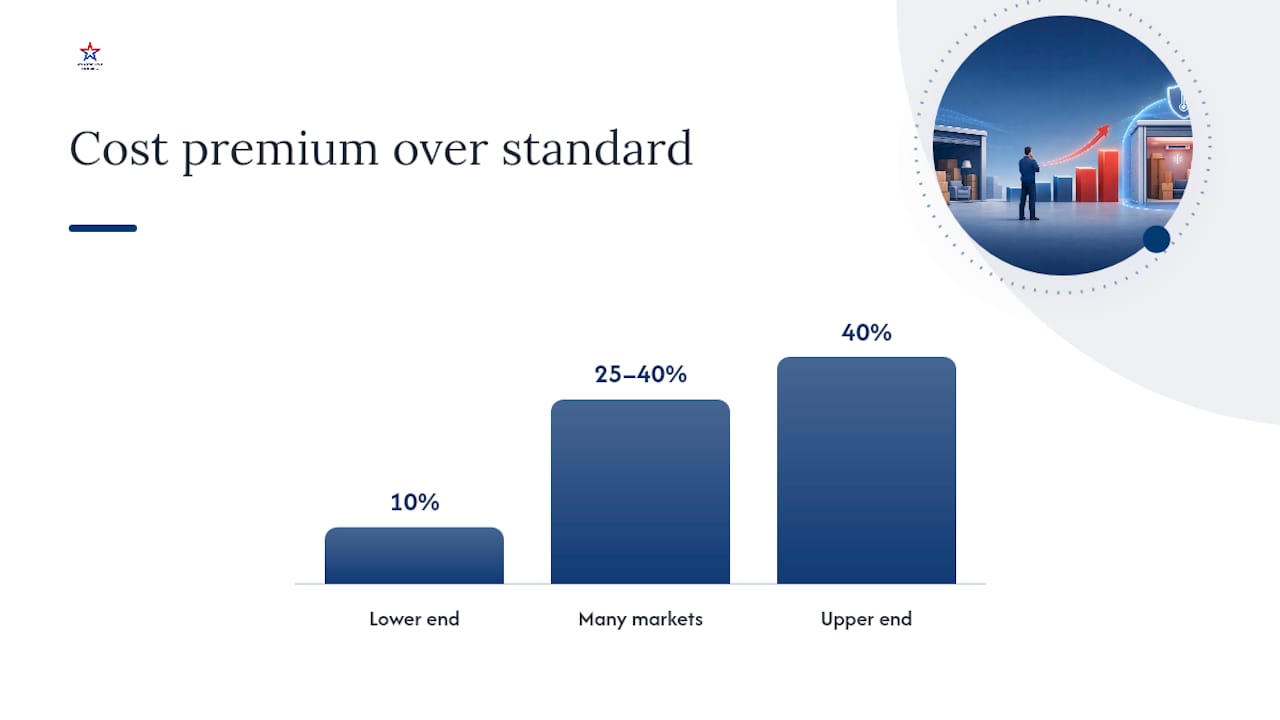
Budget for a premium in the 10% to 40% range over standard storage, with many markets landing closer to 25% to 40%. Pricing depends heavily on your region, unit size, and whether the facility manages both temperature and humidity or just one.
Storage length changes the math. A week or two in transit rarely justifies the upgrade unless the items are irreplaceable. Multi-month or seasonal storage is where uncontrolled units start doing real damage, especially across a Northeast winter into a humid summer.
Use this as a rough upgrade guide:
- Under 1 month: standard storage is usually fine for durable goods
- 1 to 3 months: upgrade if storing wood, electronics, or paper
- 3+ months, or any season change: climate control is worth the premium for almost anything sensitive
How Do You Verify a Facility's Climate Control Claims?
This is where a lot of renters get burned. A unit advertised as climate-controlled on a website can turn out to be a standard bay near the loading dock, with the "controlled" section three corridors away. Ask directly whether the specific unit you're renting sits inside the controlled envelope, not just whether the facility has climate control somewhere on the property.
Ask these questions before you sign anything:
- What temperature range is actively maintained, and is humidity managed too?
- Is there on-site monitoring or climate logs you can review?
- Is my specific unit inside the controlled section, or adjacent to it?
- What security, pest control, and insurance options come with the unit?
Watch for red flags: vague phrases like "temperature managed," seasonal heating with no summer cooling, an "indoor" label on a facility map that's actually an unconditioned annex, or no humidity control offered when you're storing anything paper or wood-based.
A short phone script works well: "Can you tell me the maintained temperature and humidity range for the specific unit I'd be renting, and do you keep monitoring logs I can see?" Facilities that manage conditions properly answer that without hesitation.
How Should You Pack Items for Climate-Controlled Storage?
Climate control reduces risk, but conditions still shift when facility doors open or HVAC systems cycle, so packing right still matters.
- Clean and fully dry every item before boxing it. Moisture sealed into a box causes more damage than a fluctuating room.
- Use acid-free archival paper for documents and photos, never regular newsprint.
- Drop silica desiccant packs into sealed boxes and instrument cases.
- Skip plastic wrap directly on wood. It traps moisture against the surface and can encourage mold.
- Store electronics and instruments in their original or padded cases, not loose in a box.
Pro Tip: Leave a few inches of space between boxes and the unit wall for airflow, and stack heavier, sturdier items on the bottom with lighter, sensitive pieces up top and away from the floor.
Before you finalize anything, confirm what your mover's insurance covers versus what the storage facility offers. Third-party coverage is worth considering for high-value items regardless of how well the unit is climate-controlled.

How Atlantic Star Relocations Coordinates Climate-Controlled Storage
Atlanticstargroup handles the parts of this process that trip most people up: vetting whether a facility's climate control claims hold up, confirming your actual unit sits inside the conditioned space, and scheduling your move so sensitive items spend as little time as possible exposed to outside temperatures during loading and transfer.
What that looks like in practice:
- Vendor and facility vetting, including confirming maintained ranges and unit placement
- Move planning that sequences climate-sensitive items last on and first off the truck
- On-site coordination so nothing sits on a loading dock longer than necessary
- One point of contact managing storage, packing, and delivery timelines together
For a Westchester family storing furniture between a summer closing and a fall move-in, or a Manhattan business relocating equipment while a new office is finished, that coordination is the difference between "stored" and "stored safely." If you're weighing whether your items need climate control, Atlantic Star's storage team can walk through your specific inventory before you commit to a unit.
A Coordinator's Note on Common Climate-Control Mistakes
I've seen moves where the "climate-controlled" unit turned out to be an unconditioned annex, and where boxes got sealed before wood furniture had fully dried from a rainy loading day. Both are avoidable. Confirming unit placement and drying time before storage starts is a five-minute conversation that saves months of regret. If you're planning a move that involves storage, talk to Atlantic Star before you book a unit, not after.
Get a Climate-Controlled Storage Plan for Your Move
Atlanticstargroup is the alternative to booking a storage unit blind. Instead of calling facilities yourself and hoping the "climate controlled" label holds up, our team verifies the maintained range, confirms your unit sits inside the conditioned space, and builds storage into your move plan from day one.

That means one point of contact managing your packing, transfer, and storage timeline together, whether you're moving locally within Westchester, relocating from Brooklyn or Queens to Connecticut, or coordinating a business move that needs short-term storage between leases. We work with vetted carriers and storage partners across the region, so you're not left chasing down facility staff for answers about temperature logs or unit placement.
If you're planning a move that includes climate-sensitive belongings, request a quote for short-term storage and we'll walk through what your specific items need before you commit to a unit.
Sources
- What Is Climate-Controlled Storage? | ConsumerAffairs
- What Does 'Climate Controlled' Mean? | StorageUnitGuide
- Move
- Moving
FAQ
What Is Climate-Controlled Storage Moving?
It refers to using a temperature and humidity managed storage unit during a relocation to protect sensitive belongings from damage while they're in transit or between homes.
Is Climate-Controlled Storage Necessary for Every Move?
No. It's most worth the cost for long-term storage, moves across extreme climates or seasons, and items like wood furniture, electronics, photos, or instruments.
How Much More Does Climate-Controlled Storage Cost?
Expect a premium of roughly 10% to 40% over standard storage, with many markets landing closer to 25% to 40%.
What Temperature Range Counts as Climate-Controlled?
Most facilities maintain somewhere between 50°F and 85°F, with relative humidity kept between 30% and 55%, though exact ranges vary by operator.
Can Atlantic Star Relocations Help Coordinate Climate-Controlled Storage?
Yes. Atlanticstargroup verifies facility claims, confirms unit placement, and builds storage timing into your overall move plan across Westchester, NYC, and surrounding areas.