

A moving timeline is a structured schedule of every task you need to complete before, during, and after your move to stay organized and avoid last-minute chaos. The industry standard recommendation is to start this schedule 6–8 weeks before your move date, giving you enough runway to book movers, sort belongings, and handle paperwork without rushing. The average American moves 11.7 times per lifetime, which means having a repeatable, structured plan pays off far beyond a single relocation. Atlanticstargroup works with clients across Westchester County, New York City, and the surrounding metro area to build exactly this kind of structured plan from day one.
What does a moving timeline mean, phase by phase?
A moving timeline divides your relocation into phases, each with a defined set of tasks. Breaking tasks into phases reduces the risk of forgetting critical steps by over 90%. That number reflects a simple truth: when everything is written down and assigned to a specific week, nothing falls through the cracks.
A typical moving timeline organizes tasks week by week, from initial planning all the way through moving day. Here is how the phases break down:
- 8+ weeks out: Decide your move date, set a budget, and begin decluttering. Donate, sell, or discard items you will not take with you. Less stuff means lower moving costs.
- 6 weeks out: Book your moving company. Booking movers at least 6 weeks prior locks in better pricing and protects you from last-minute cancellation fees.
- 4 weeks out: Start packing non-essential items. Notify your employer, school, bank, and subscription services of your new address.
- 2 weeks out: Schedule utility transfers and disconnections. Failing to plan utility timing can result in service gaps or overcharges at your old or new address.
- 1 week out: Pack your essentials bag, confirm all bookings, and do a final walkthrough of your current home.
Phase-based organization works because it spreads the workload evenly. You never face a single overwhelming week where everything needs to happen at once.
Pro Tip: Print your timeline and post it somewhere visible, like your refrigerator or a home office wall. Seeing it daily keeps tasks front of mind and prevents the "I'll do it later" trap.

How does starting early affect cost and stress?
Starting your moving timeline early is the single most effective way to control both your budget and your stress level. Starting 8 weeks ahead enables slow, steady progress that improves efficiency and eliminates last-minute panic during packing and logistics. That steady pace is the difference between a move that feels manageable and one that feels like a crisis.
Early planning delivers concrete financial benefits:
- Lower mover rates: Moving companies in Westchester and NYC fill up fast, especially from may through september. Booking early secures better pricing before peak-season surcharges kick in.
- Reduced volume: Decluttering at 8 weeks out means fewer boxes to move. Fewer boxes directly lowers your final cost.
- Flexible date selection: Mid-week and mid-month moves often cost less due to lower demand. An early timeline gives you the flexibility to choose those dates.
- Time to compare options: Rushing forces you to take the first available quote. Starting early lets you evaluate multiple service providers without pressure.
"A moving timeline is not just a to-do list. It is a financial plan. Every week you delay the start is a week of cost-saving options you lose access to."
What does it mean to "move" your timeline?
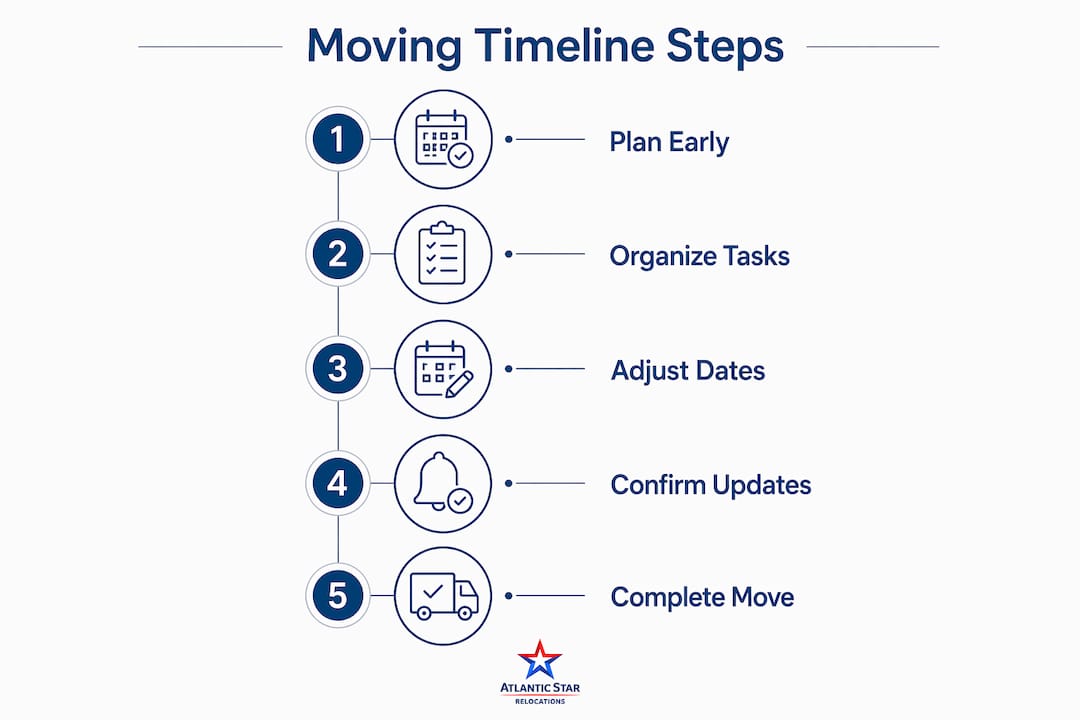
"Moving a timeline" in relocation planning means rescheduling tasks to an earlier or later date than originally planned. Moving up the schedule means shifting tasks to sooner dates, usually in response to unexpected challenges or new information. Pushing a timeline back means extending deadlines, which carries its own risks.
Common reasons to move a timeline include:
- Lease overlap: Your new home becomes available earlier than expected, so you shift packing and booking forward by two weeks.
- Contractor delays: Renovations at your new address run long, pushing your move-in date back and requiring you to arrange short-term storage for your belongings.
- Job start dates: A new employer needs you in Manhattan or Westchester sooner than planned, compressing your entire schedule.
- Weather or building restrictions: NYC buildings often have strict elevator reservation windows. A conflict forces you to reschedule loading and delivery.
Adjusting a timeline is normal. The key is to update every dependent task the moment you change one. If you move packing forward by a week, your supply orders, label printing, and storage arrangements all shift with it.
Pro Tip: Keep a digital version of your timeline in Google Sheets or a notes app. When one date changes, you can update all linked tasks in minutes instead of rewriting a paper list.
How to build a moving timeline checklist that fits your move
A personalized moving timeline checklist starts with two facts: your confirmed move date and the size of your move. From those two anchors, you work backward to assign tasks to specific weeks. Atlanticstargroup recommends this approach to every client planning a residential move in Westchester or NYC because generic templates rarely account for local factors like building access rules, co-op board approvals, or seasonal demand spikes.
The table below shows how to match your checklist format to your move complexity:
| Move type | Recommended tool | Key focus |
|---|---|---|
| Studio or 1-bedroom | Notes app or printed sheet | Task dates and mover confirmation |
| 2–3 bedroom home | Google Sheets or digital checklist app | Phase tracking and budget columns |
| Large home or long distance | Dedicated project management app | Vendor contacts, deadlines, and documents |
| Corporate or multi-location | Managed coordination service | Real-time updates and accountability |
Digital checklists and labeled binders improve organization and reduce mistakes during relocation planning. The format matters less than the habit of updating it consistently.
Prioritize tasks by consequence. Missing a utility transfer causes real disruption. Forgetting to order extra bubble wrap does not. Rank your tasks by what breaks if it is missed, and schedule those first.
Pro Tip: Add a "confirm" column to your checklist. For every booked service, write the confirmation number and the contact name. If something goes wrong on moving day, you have the information you need in one place.
Key Takeaways
A moving timeline is a phased schedule that, when started 6–8 weeks before your move date, prevents missed tasks, controls costs, and keeps your relocation on track.
| Point | Details |
|---|---|
| Start 6–8 weeks early | Industry standard timing secures better mover rates and reduces last-minute pressure. |
| Use phase-based planning | Breaking tasks into weekly phases cuts the risk of forgetting critical steps. |
| Schedule utilities at 2 weeks | Utility transfers need at least two weeks of lead time to avoid service gaps. |
| "Moving a timeline" means rescheduling | Shifting tasks earlier or later is normal; update all dependent tasks immediately when one date changes. |
| Match your tool to your move size | A studio move needs a simple list; a large home or long-distance move benefits from a structured digital tracker. |
Why I think most movers underestimate the timeline until it is too late
After working with hundreds of families and individuals relocating across Westchester County, Manhattan, Brooklyn, and into Connecticut and New Jersey, I have seen one pattern repeat itself constantly. People treat the moving timeline as a formality rather than a management tool. They write a rough list, set a move date, and assume everything will fall into place. It rarely does.
The moves that go smoothly share one trait: the client started the timeline before they felt ready. They booked movers when the date still felt far away. They packed the guest room while the living room still looked normal. That early action created a buffer for the inevitable surprises, a building that restricts weekend moves, a storage unit that needs two weeks' notice, a co-op board that requires a certificate of insurance from the moving company.
The clients who call Atlanticstargroup in a panic are almost always the ones who waited until four weeks out to start. By then, preferred dates are gone, pricing is higher, and every task feels urgent at the same time. The timeline concept is not complicated. The discipline to follow it is where most people struggle. Atlanticstargroup's logistics coordination service exists specifically to hold that structure in place when life gets in the way.
— Admin
How Atlanticstargroup supports your moving timeline from start to finish
Planning a move across Westchester County, New York City, or into New Jersey and Connecticut is manageable when you have the right team behind your timeline.

Atlanticstargroup handles the coordination that most movers find hardest: scheduling carriers, tracking deadlines, and resolving conflicts before they become problems. Whether you need labor-only moving help for a single phase of your move or full-service management from packing through delivery, the team at Atlantic Star Relocations keeps your timeline intact. Professional packing services align directly with your week-by-week schedule so nothing gets rushed. Contact Atlanticstargroup to build a moving plan that holds up from the first task to the last box.
FAQ
What does moving timeline mean?
A moving timeline is a week-by-week schedule of all tasks required to complete a relocation, from initial planning through moving day. The industry standard is to start this schedule 6–8 weeks before your move date.
How many weeks before moving should I start my timeline?
Start your moving timeline at least 6–8 weeks before your move date. This window gives you time to book movers at competitive rates, declutter, and handle administrative tasks without rushing.
What happens if I need to move my timeline earlier?
Moving a timeline earlier means rescheduling tasks to sooner dates, which requires updating all dependent tasks at the same time. For example, if your move-in date shifts forward, your packing schedule, mover booking, and utility transfer dates all need to move with it.
Should I use a digital or paper moving checklist?
Digital checklists in tools like Google Sheets are easier to update when dates change and allow you to share the plan with family members or your moving coordinator. Paper lists work for simple, single-person moves where changes are minimal.
How does a moving timeline reduce costs?
Starting your timeline early lets you book movers before peak-season rates apply, choose lower-cost mid-week move dates, and declutter before the move to reduce the total volume of items transported.