

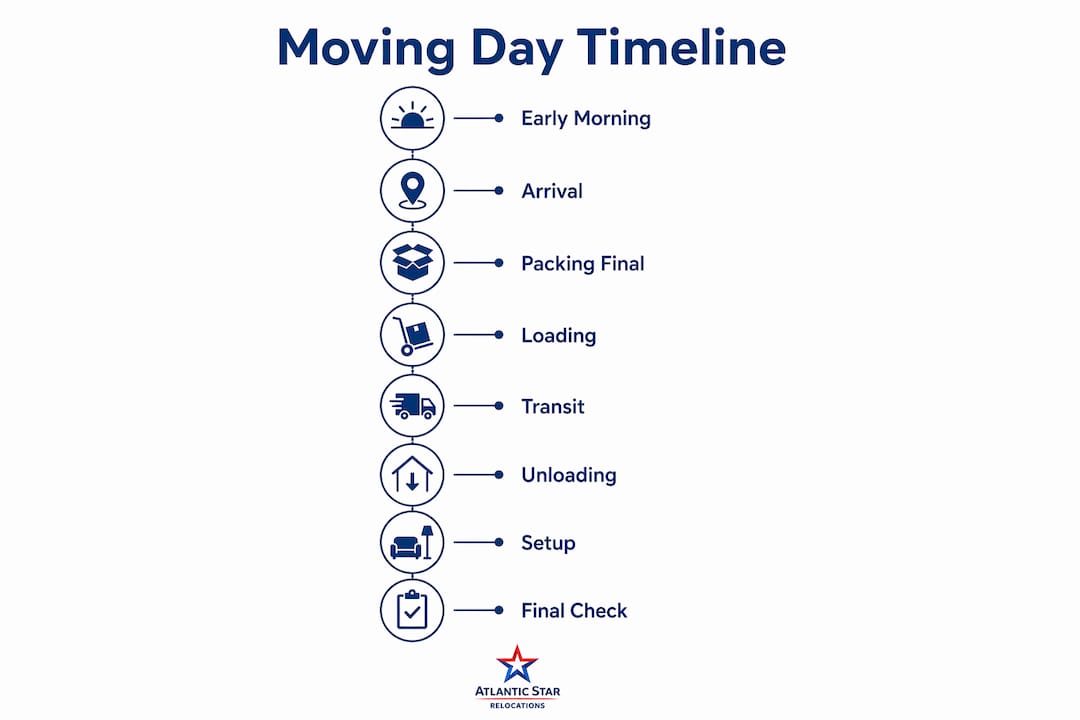
A moving day timeline is a detailed schedule that maps every required task from the morning your movers arrive to the moment the last box lands in your new home. Without one, even a short local move in Westchester County can spiral into costly delays, forgotten items, and frayed nerves. The step-by-step moving process covered here reflects the real-world standards Atlantic Star Relocations applies across residential moves in Westchester, Manhattan, Brooklyn, and throughout the NYC metro area. Follow this guide and you will walk into your new home with confidence, not chaos.
What is the moving day timeline step by step?
A moving day timeline is not a rough idea of when things happen. It is a committed schedule, locked in at least one week before the move, that covers parking logistics, mover arrival, loading sequence, transit, unloading, and final walkthrough. Professional moving consultants treat moving day as execution day only, meaning every decision about what moves, what stays, and where things go must be finalized before the truck pulls up. Last-minute sorting is the single fastest way to blow your schedule and your budget.
What are the essential preparations before moving day?
The work you do in the days before your move determines how smoothly the day itself runs. Treat this phase as building the foundation for everything that follows.
Confirm logistics at least one week out. Contact your moving company to confirm arrival windows, truck size, and crew count. If you live in a Manhattan high-rise or a building in White Plains, reserve elevator access and loading dock time through your building manager. Parking permits for oversized vehicles often require 48 to 72 hours of advance notice from your local municipality.

Finish packing before moving day. Label every box with the destination room and a brief content description. "Kitchen, pots and pans" beats "Box 14" every time. Movers work faster and place items more accurately when labels are clear, which directly reduces your labor hours and final bill.
Prepare your appliances the night before. Appliance prep delays are one of the most preventable moving day holdups. Defrost your freezer, disconnect your washer and dryer, and coil all hoses and cords. Movers cannot legally or safely load an appliance that has not been properly prepped.
Pack your essentials bag and keep it in your car. The essentials bag should cover 48 to 72 hours and include medications, IDs, phone chargers, toiletries, important documents, snacks, and a change of clothes. This bag never goes on the truck. It travels with you.
Pro Tip: Do a final walkthrough of every space in your home, including the attic, garage, shed, and under-stair storage. Forgotten items in hidden zones are one of the most common and most avoidable moving day regrets.
How does the moving day timeline unfold from arrival to loading?
Once your movers arrive, the sequence of events matters as much as the preparation. Here is how a professional loading phase runs:
- Meet the crew lead at the door. Be present and available when the truck arrives. Walk the crew lead through the home, pointing out fragile items, exclusions, and any special handling instructions. This walkthrough takes ten minutes and prevents hours of problems.
- Allow floor and door protection to be set up. Professional crews lay floor runners and pad door jambs before moving a single piece of furniture. This protects your home and reduces liability disputes.
- Review and sign the Bill of Lading before loading begins. The Bill of Lading is the legally binding contract for your move. Review it carefully before any items are moved, and keep your copy accessible throughout the day.
- Follow the correct loading sequence. Heavy furniture and appliances load first, followed by room-staged boxes, and fragile or last-minute items load last. This sequence protects your belongings and maximizes truck space.
- Keep children and pets secured. A moving crew working at full speed through a home is not a safe environment for kids or animals. Arrange for them to be elsewhere or in a secured room.
- Stay present but out of the way. Trusting your movers to handle loading logistics while remaining available for questions produces the best outcomes. Hovering slows the crew and increases stress for everyone.
"The client's job on moving day is to be available, not to manage. The crew knows how to load a truck. Your job is to answer questions and stay calm." This is the standard Atlantic Star Relocations sets for every residential move it coordinates.
Pro Tip: Photograph high-value items before they are wrapped and loaded. This creates a timestamped record that protects you if a damage claim becomes necessary.
What to expect and do during unloading at your new home?
Unloading is where many moves lose momentum. Arriving at your new home prepared makes the difference between a two-hour unload and a four-hour one.
- Arrive at the new home before the truck. Unlock the entry, confirm elevator or loading dock access, and identify legal truck parking before the crew pulls up.
- Label each room in your new home with a printed or handwritten sign. Movers matching box labels to room signs work significantly faster than movers asking questions at every doorway.
- Prioritize placement of the kitchen, bedrooms, and bathrooms first. These are the spaces you need functional within hours of moving in.
- Inspect every item against your inventory list as it comes off the truck. Note any damage or missing items immediately and in writing before signing final delivery paperwork.
- Record damages before signing. Once you sign the final delivery documents, your legal options narrow significantly.
| Unloading priority | Why it matters |
|---|---|
| Confirm truck parking first | Avoids long-carry fees and crew delays |
| Label rooms in advance | Cuts placement time and reduces errors |
| Inspect against inventory list | Protects your claim rights before signing |
| Prioritize essential rooms | Makes the home livable within hours |
| Document damages immediately | Preserves your legal and insurance options |
For long-distance moves, delivery windows span multiple days due to consolidated freight and route logistics. Build flexibility into your schedule and keep a backup contact available for the carrier.
What common challenges occur on moving day and how to avoid them?
Even well-planned moves hit friction. Knowing where problems typically appear lets you neutralize them before they cost you time or money.
- Parking and long-carry risk. Parking distance from your door directly affects labor time, damage risk, and final cost. Measure the distance from the nearest legal parking spot to your entrance in advance. Apply for a parking permit if needed.
- Elevator and hallway restrictions. Many NYC and Westchester buildings enforce strict elevator reservation windows. Missing your slot can delay your entire move by hours.
- Last-minute packing. Boxes that are not packed when the crew arrives add time to your move and often result in rushed, poorly protected loads.
- Communication confusion. Conflicting instructions from multiple people slow the crew and cause placement errors. Designate one decision-maker for the day and stick to it.
- Weather and traffic delays. Moves in the NYC metro area are subject to bridge and tunnel congestion, street closures, and seasonal weather. Build a 60 to 90 minute buffer into your schedule for transit.
"The moves that go sideways are almost always the ones where no one is in charge of decisions. Pick one person, give them authority, and let the crew work."
What I have learned from years of coordinating moving days
The single most consistent finding across hundreds of moves I have been involved with is this: the clients who stress the least are the ones who finished packing two days early and confirmed every detail with their movers by the prior Wednesday. It sounds simple because it is. The problem is that most people treat the week before a move as a continuation of normal life, and then scramble on moving morning.
I have seen a family in Scarsdale lose three hours because their freezer was not defrosted. I have seen a Brooklyn apartment move stall for 90 minutes because no one reserved the freight elevator. These are not unusual situations. They are the norm when preparation is skipped.
The other thing I tell every client: build rapport with your crew lead in the first ten minutes. Introduce yourself, walk the home together, and ask if they have any questions. Movers who feel respected work with more care and communicate problems faster. That relationship pays dividends throughout the day.
Atlantic Star Relocations builds the moving day schedule, coordinates building access, and manages crew communication so clients can focus on their family rather than logistics. That is the difference between a managed relocation and just hiring a truck.
— Admin
Plan your move with Atlantic Star Relocations
Atlantic Star Relocations coordinates residential and commercial moves across Westchester County, Manhattan, Brooklyn, Queens, the Bronx, Connecticut, New Jersey, and Florida. Every move includes a tailored moving day schedule, building protocol coordination, and a single point of accountability from first box to final delivery.

Whether you are moving locally within White Plains or relocating long distance from NYC, the Atlantic Star team manages the logistics so nothing falls through the cracks. From moving day planning to carrier coordination and real-time problem resolution, the process is handled with precision and transparency. Request your personalized moving quote today and get a moving day timeline built around your specific home, building, and schedule.
FAQ
How far in advance should I confirm my moving day details?
Confirm all moving day logistics at least one week before your move. Moving day is for execution only; last-minute decisions cause delays and added costs.
What should I pack in my essentials bag?
Your essentials bag should cover 48 to 72 hours and include medications, IDs, phone chargers, toiletries, documents, and a change of clothes. Keep it in your personal vehicle, not on the moving truck.
What is a Bill of Lading and why does it matter?
The Bill of Lading is the legally binding contract between you and your mover, covering services, pricing, and delivery terms. Review it before loading begins and again before signing at delivery.
How do I handle long-distance delivery timing?
Long-distance moves operate on delivery windows, not fixed hours, due to consolidated freight logistics. Keep a backup contact available and build flexibility into your schedule for the delivery day.
How do I avoid extra charges from parking issues?
Measure the distance from the nearest legal parking spot to your entrance before moving day. Apply for a parking permit if needed, and confirm truck access with your building manager in advance.
Key takeaways
A successful moving day depends on decisions made days before the truck arrives, not on the morning itself.
| Point | Details |
|---|---|
| Lock decisions one week out | Confirm movers, parking, and building access at least seven days before moving day. |
| Pack an essentials bag | Keep a 72-hour bag in your car with medications, IDs, and documents. |
| Review the Bill of Lading | Read and sign the contract before loading begins and inspect items before signing at delivery. |
| Designate one decision-maker | A single point of contact for placement instructions prevents crew delays and errors. |
| Build buffer time | Allow 60 to 90 minutes for traffic, weather, or building access delays in the NYC metro area. |