
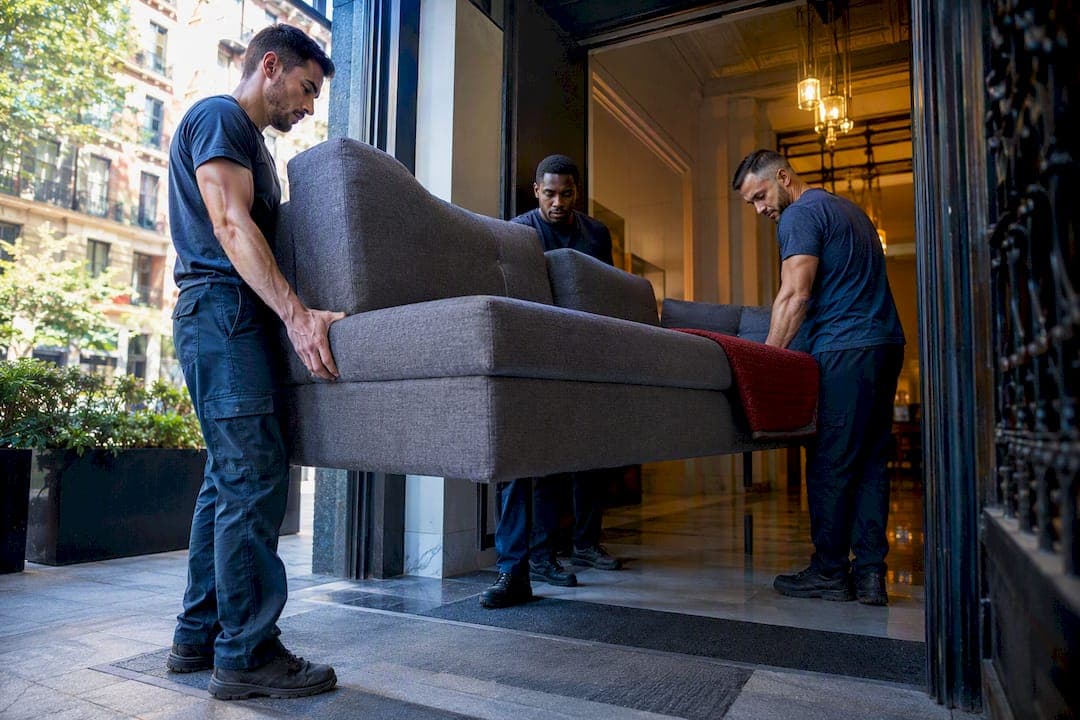
Most household moves run smoothly with 2 to 4 movers, and that number shifts based on three things: how big your home is, what your building's access looks like, and whether you own anything heavy or awkward like a piano or gun safe. A studio or one-bedroom usually needs just 2. A three or four-bedroom house often calls for 4. For complex moves across Westchester, NYC, or long distance, a managed mover like Atlantic Star Relocations can size the crew correctly the first time.
TL;DR:
- Most household moves with four bedrooms or larger typically require four or more movers to complete efficiently within an eight-hour window.
- Stairs, long carries, and limited elevator access significantly increase the crew size needed, especially in buildings with complex access restrictions.
- Heavier and high-value items like safes and pianos often demand additional specialized movers and equipment, sometimes requiring disassembly or rigging.
- Proper pre-move inspection of building access points, heavy items, and potential obstacles is crucial for accurately sizing your crew and avoiding surcharges.
- Managed relocation services can better coordinate complex moves across multiple locations and handle fluctuations in access or timing, reducing last-minute surprises.
Table of Contents
- How Many Movers Do I Need Based on Home Size?
- What Factors Increase or Decrease the Movers You Need?
- How Does Crew Size Affect Time and Cost?
- How Many Movers Do You Need for Heavy or Specialty Items?
- How to Pick the Right Number of Movers Before You Book
- Why a Managed Mover Matters for Complex Moves
- Our Take: The Crew-Size Number Matters Less Than the Access Audit
- Book a Quote With Atlantic Star Relocations
- Sources
- FAQ
How Many Movers Do I Need Based on Home Size?
The fastest way to answer "how many movers do I need" is to start with square footage and bedroom count, then adjust from there. Every additional bedroom typically adds furniture, boxes, and a bulky item or two, which is why crew-size recommendations climb steadily as homes get bigger.
For a studio or small one-bedroom apartment, two movers is the standard call. A two-person crew can usually load, transport, and unload a studio in 2 to 4 hours, assuming there's reasonable street access and no marathon staircase. One-bedroom apartments follow the same logic. Two movers handle it fine unless you're on a fourth-floor walkup or you've somehow acquired a sectional sofa that won't fit around the corner.
Two-bedroom homes are where the decision gets more interesting. Two movers can still do it, but three often makes more sense once you factor in a second bedroom's worth of furniture, a home office setup, or a dining set. Crew-size charts from moving-labor providers put two-bedroom moves at 2 to 3 movers, with the third person shaving real time off the loading phase, which almost always takes longer than unloading.
Three-bedroom houses generally need three movers as a baseline, moving to four when the home includes a finished basement, a garage full of boxes, or multiple flights of stairs. Four-bedroom homes and larger are where four or more movers becomes the practical minimum. At that size, a two or three-person crew simply can't move volume fast enough to keep the job affordable, since you're paying by the hour regardless of headcount.
| Home Type | Recommended Crew | Typical Hours |
|---|---|---|
| Studio / small apartment | 2 movers | 2 to 4 hours |
| 1-bedroom apartment | 2 movers (3 if stairs/heavy items) | 3 to 4 hours |
| 2-bedroom home | 2 to 3 movers | 4 to 7 hours |
| 3-bedroom house | 3 movers (4 if complex access) | 6 to 8 hours |
| 4+ bedroom house | 4 or more movers | 8 or more hours |
These ranges assume a local move with normal access. Add a walkup, a long carry, or a piano, and the math changes fast, which is exactly what the next section covers.
A few quick rules of thumb worth keeping in your back pocket:
- If you're not sure between two crew sizes, size up. The extra hour of cost is usually cheaper than a job that runs long and eats your evening.
- Studio and one-bedroom moves rarely justify more than 2 movers unless stairs or a piano are involved.
- Anything past 2,000 square feet almost always benefits from a 4-person crew.
- Basements and attics count as extra "rooms" when estimating crew size, even if they're not bedrooms.
What Factors Increase or Decrease the Movers You Need?
Home size gets you a baseline. Access and inventory get you the real number. This is where most people underestimate their move, because a modest two-bedroom apartment on the fifth floor of a walkup building is a fundamentally different job than the same apartment on the ground floor with a loading dock.
Stairs are the single biggest crew-size multiplier. A single flight barely changes anything. Three or more flights, especially in a tight Brooklyn or Manhattan stairwell, can justify adding a mover just to keep the pace up and reduce injury risk on turns and landings.
Elevator access cuts both ways. A building elevator sounds like a shortcut, but if the building only gives you a two-hour service elevator reservation, you may need more movers working in parallel to hit that window rather than fewer.
Parking and truck access matter more in NYC and Westchester than almost anywhere else. If the truck has to park a block away because of alternate-side rules or a tight driveway, that long carry distance eats time fast, and an extra mover on the carry route often pays for itself.
Inventory density changes things too. A home full of small boxes moves differently than one with a handful of oversized furniture pieces. Box-heavy moves benefit from a bigger crew working an assembly line. Furniture-heavy moves benefit more from strength and coordination than raw headcount.
Other factors that shift the number:
- Whether the movers are also packing (packing services add labor hours and often justify one more crew member)
- Disassembly and reassembly needs for beds, shelving units, and sectionals
- Building rules around loading dock hours, certificates of insurance, or floor protection requirements
- Weather, since a rainy moving day slows every crew down regardless of size
Pro Tip: Send your mover photos of your stairwell, elevator, and any oversized furniture before the quote, not on move day. Movers who see the access in advance almost always size the crew more accurately, and it prevents the dreaded day-of "we need to send another guy" surcharge.
How Does Crew Size Affect Time and Cost?
Movers typically charge by the hour with a minimum crew and minimum booking time, often 2 movers for a 2-hour minimum on smaller local jobs. Understanding that structure is the key to knowing when adding a mover saves you money instead of costing you more.
Take a typical two-bedroom apartment. A 2-mover crew might take 6 hours to complete the job. A 3-mover crew, working the same job, often finishes in 4 hours. If your hourly rate scales roughly with headcount, that third mover frequently pays for itself by cutting total hours enough to offset the extra hourly cost, especially once you factor in fewer hours of truck rental or parking fees.
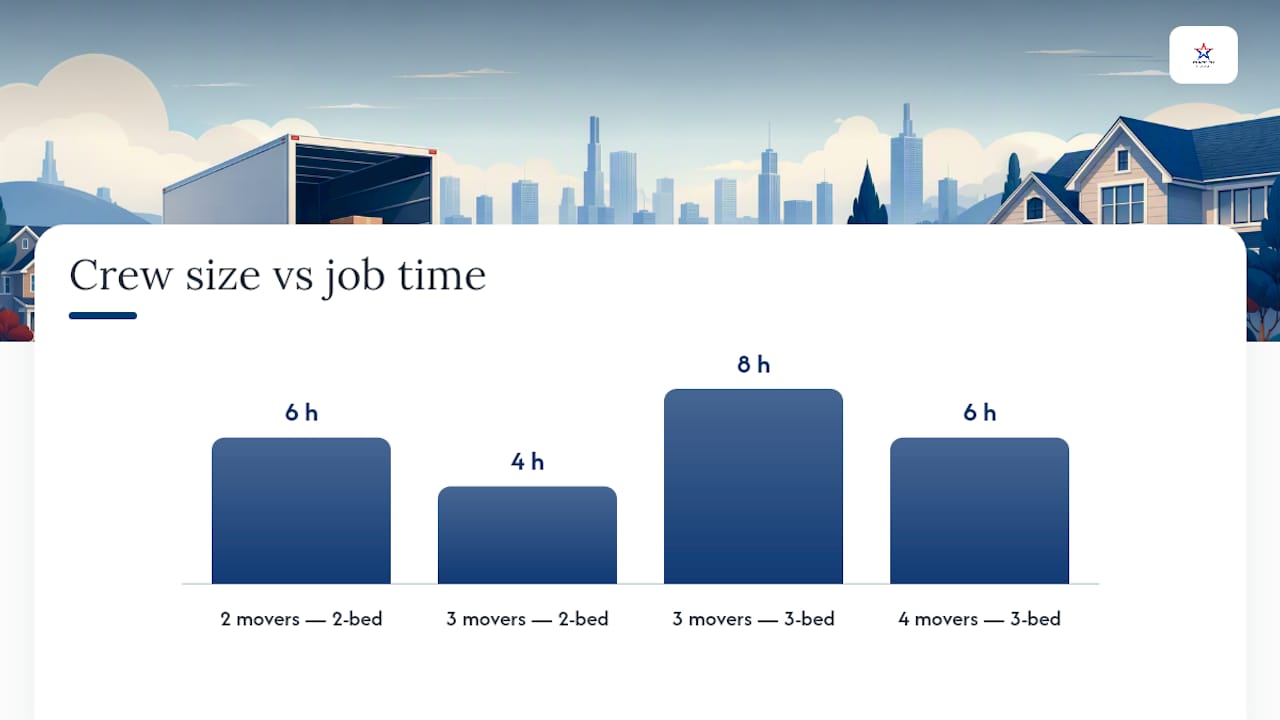
Now scale it up. A three-bedroom house with a 3-mover crew might run 8 hours. Bring in a fourth mover and that same job often drops to 6 hours. The math tends to favor the bigger crew again, particularly if you're paying for a long-distance leg where every hour on the road adds up separately from labor time.
Here's when more movers helps and when it doesn't:
- Adds value: large homes, multi-story moves, tight timelines, or jobs where a moving truck rental is billed by the day
- Doesn't help: small studio or one-bedroom moves where the job is already short. Adding a third mover to a 2-hour studio move just adds cost without meaningfully shortening the job.
The 2 to 4 mover range covers the overwhelming majority of U.S. household moves. Nearly every crew-size chart from moving labor providers, apartment movers, and national moving guides converges on that same band, which is why it's the number worth anchoring your budget around before you get a specific quote.
How Many Movers Do You Need for Heavy or Specialty Items?
Weight, not room count, decides crew size for specialty items. A safe, piano, or pool table can turn an otherwise simple 2-mover apartment move into a job that needs 4 movers and specialty equipment, and skipping that step is how walls, floors, and backs get damaged.
Rough weight bands to plan around:
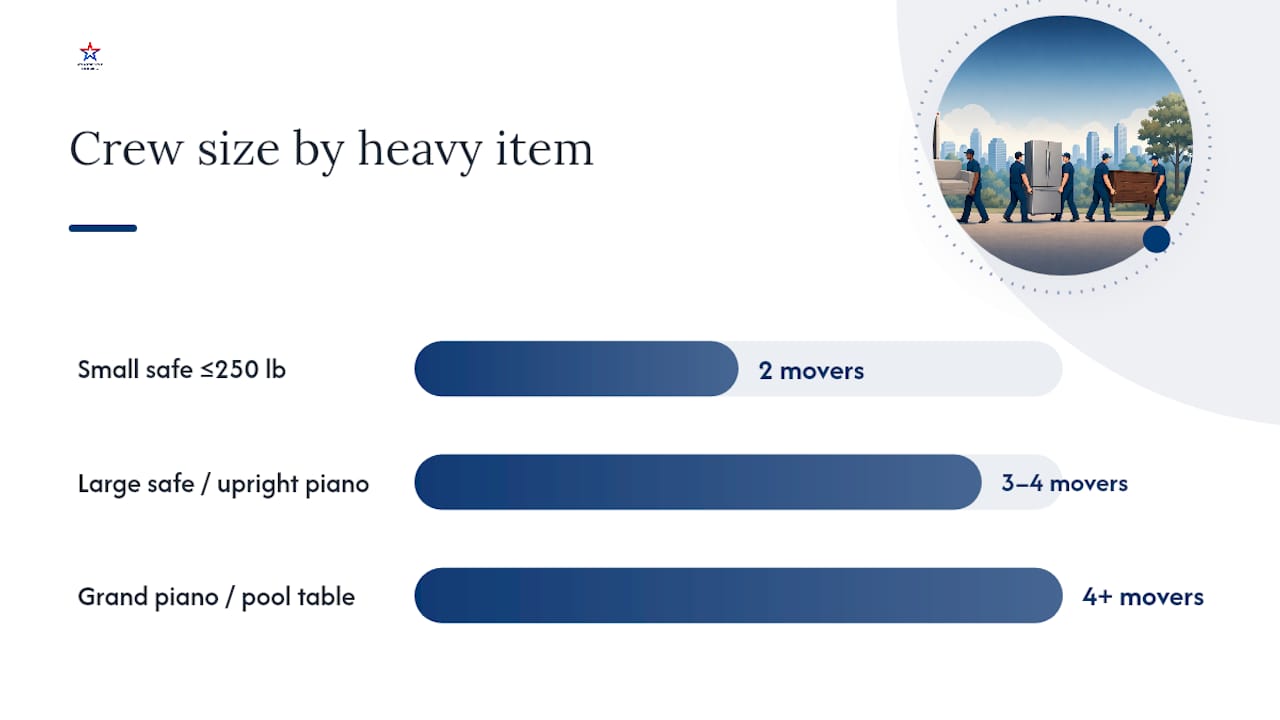
- Small safes (up to roughly 250 pounds): 2 movers can usually handle it with proper lifting technique
- Larger safes and upright pianos (300 to 600+ pounds): 3 to 4 movers, often with a piano skid or stair-climbing dolly
- Grand pianos, gun safes, and pool tables: 4 or more movers, frequently requiring disassembly (pool tables) or professional rigging (grand pianos)
Other items that commonly need extra manpower or equipment beyond the standard crew: commercial-grade appliances, gym equipment like treadmills and weight racks, antique furniture with fragile joinery, and anything that has to go through a window or over a balcony because it won't fit down the stairs.
If any of this sounds like your move, specialized handling for fragile and high-value items is worth requesting up front rather than discovering the problem on move day. A rated moving company will ask about safes and pianos during the quote process for exactly this reason, and any mover who doesn't ask is a red flag.
Insurance matters here too. Heavy specialty items carry real damage risk to floors, walls, and the item itself, so confirm your mover's coverage before move day, not after something cracks a marble stair tread.
How to Pick the Right Number of Movers Before You Book
Getting the crew-size decision right before you request a quote saves you from surcharges, delays, and the awkward moment when two movers show up for a job that clearly needs four. Work through these four steps.
- Build your inventory and heavy-item list. Walk each room and note furniture, box count, and anything over 150 pounds. Flag pianos, safes, and appliances specifically.
- Audit your access. Count stairs and flights, note whether there's an elevator and what its reservation window looks like, and measure your longest realistic carry distance from truck to door.
- Decide your service level. Are you packing yourself, or do you want full packing services? Do you need appliance disconnects or furniture disassembly? Each added service usually adds labor hours, not necessarily crew size.
- Choose your crew size and ask the right questions. Confirm the minimum crew and minimum hours, ask about surcharges for stairs or long carries, and ask what equipment they bring for heavy items.
Before you call or submit a quote request, have this ready:
- Full inventory list, including furniture dimensions for anything oversized
- Photos of stairwells, elevators, and the path from curb to door
- A note on parking restrictions or loading dock rules for your building
- A specific list of items over 150 pounds
Build in buffer time. Loading almost always takes longer than unloading, so pad your hour estimate rather than booking the tightest possible window.
Why a Managed Mover Matters for Complex Moves
A two-person crew and a rental truck works fine for a simple studio move. It stops working the moment your move involves multiple stops, a corporate relocation timeline, high-value items, or a building with access restrictions that a single crew has to navigate blind. That's the gap a managed relocation provider is built to close.
Atlantic Star Relocations provides comprehensive moving and relocation services across the United States and internationally, managing the entire process from planning through final delivery under a single point of accountability. Instead of juggling a truck rental, a separate labor crew, and a storage vendor yourself, one team oversees the whole sequence.
The company's approach centers on a few specific practices:
- Structured oversight and carrier-neutral coordination, so vendor selection isn't tied to a single truck company's availability
- Real-time issue resolution when a building's freight elevator schedule changes or a parking permit falls through
- Vendor selection, scheduling, and execution overseen directly to keep every leg of the move accountable to one team
Send photos of your stairwells, elevators, and largest items before the quote, along with a full inventory and any building access notes. That level of detail up front is what lets a managed mover size the crew correctly instead of guessing.
Consider calling in a managed mover when your move involves multiple legs (say, a Manhattan apartment to a Connecticut house with a storage stop in between), high-value furniture or art, constrained building access, or a corporate relocation with a hard deadline. Those are the situations where "just hire two guys and a truck" tends to fall apart.
Our Take: The Crew-Size Number Matters Less Than the Access Audit
Most moving advice fixates on getting the exact right headcount, as if there's a magic formula that turns a guess into certainty. There isn't. The 2 to 4 mover range covers most homes, but the number that actually determines your move day experience is how well you've audited your building's access before movers show up.
We'd argue the conventional advice underweights stairs and parking and overweights square footage. A 1,200-square-foot ground-floor apartment with curb access is an easier job than an 800-square-foot fourth-floor walkup, even though the smaller unit has less square footage. Crew-size charts don't capture that nuance well, and generic online calculators can't see your actual stairwell.
If you take one thing from this article, make it this: photograph your access points and list your heavy items before you request a quote, not after. That single habit does more to get you the right crew, at the right price, than any chart ever will.
— Admin
Book a Quote With Atlantic Star Relocations
Atlantic Star Relocations is the alternative to guessing your own crew size and hoping a rental truck and two strangers can handle your Westchester walkup or your long-distance move to Florida. Instead of piecing together a truck, a crew, and storage yourself, one accountable team sizes the job correctly and manages it start to finish, whether you're moving locally in NYC, across Westchester and Connecticut, or nationwide.

Before you request a quote, put together an inventory list, photos of your stairwells and elevator, and any parking or building notes your movers should know about. That's the same information a managed relocation team uses to size your crew accurately and avoid day-of surprises. If you only need extra hands without truck logistics, labor-only moving help is also available across NY, NJ, and CT.
Ready to get a real number instead of a guess? Request your quote and tell us about your home, your access, and anything heavy you're bringing with you.
Sources
The recommendations in this article draw on several U.S. moving-industry references. Confirm exact pricing, minimums, and local rules directly with your mover before booking.
FAQ
Is $100 Per Mover a Fair Tip?
Tipping norms vary widely depending on the complexity and difficulty of the move, with more generous tips often given for especially hard or delicate jobs such as moving pianos or navigating multiple flights of stairs in challenging conditions.
How Long Does It Take Three Movers to Move a Two-Bedroom House?
A three-person crew usually completes a two-bedroom move in about 4 to 7 hours, depending on stairs, carry distance, and how much packing is already done.
What Items Will Movers Typically Not Move?
Most moving companies won't transport hazardous materials like propane tanks, paint, and gasoline, along with perishable food, plants in some cases, and irreplaceable items like cash or important documents that you should transport yourself.
Are You Supposed to Empty Dressers Before Movers Arrive?
Light clothing and soft items can often stay in dresser drawers, but movers generally ask you to remove anything heavy, fragile, or liquid, since a full dresser is harder to carry safely and adds unnecessary weight and shifting risk during transport.