
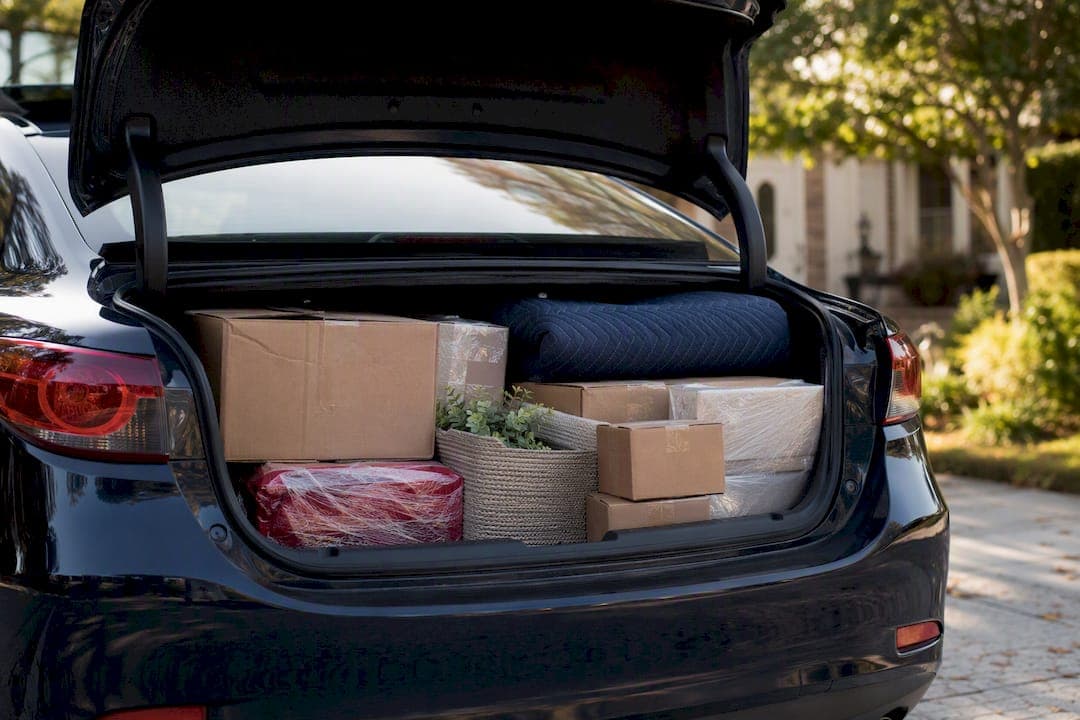
Yes, but only within limits, and only if you disclose it upfront. Most auto transport carriers allow a modest amount of personal items packed in the trunk, generally under the window line, and capped around a modest amount of personal items, typically treated as an industry courtesy rather than a contractual right. Anything beyond that is up to the driver standing in your driveway, not the quote you got online.
That's the practical answer for anyone trying to ship car with household goods packed inside rather than paying for two separate shipments. Before you load a single box, know this:
- The carrier's cargo insurance covers the vehicle, not your belongings inside it.
- Drivers can refuse pickup or charge extra fees if the load looks heavier than what you disclosed.
- Photograph the interior and exterior before pickup and get any weight allowance in writing.
TL;DR:
- Most carriers permit around 100 pounds of household items in the trunk, kept below the window line, but the driver’s discretion ultimately determines acceptability.
- Shipping household goods inside a car is at the owner's risk, as cargo insurance only covers the vehicle, not the packed items.
- Overweight loads, items above the window line, and hazardous or valuable objects can lead to extra fees or refusal at pickup.
- International and port shipments generally prohibit personal belongings, especially valuable or hazardous items, due to customs and liability restrictions.
- Proper documentation, disclosing weight, photographing the vehicle before pickup, and avoiding "interior uninspected" language help protect against damage or loss claims.
Table of Contents
- Ship Car With Household Goods: What the Rules Actually Allow
- What Do Most Car Shipping Companies Actually Allow?
- What Insurance Actually Covers When You Ship Car and Belongings Together
- How to Prepare a Car for Shipping With Household Goods Inside
- When a Managed Mover Makes More Sense Than DIY Car Shipping
- Why the "Just Throw It in the Trunk" Advice Falls Short
- Combine Your Car Shipment With a Fully Managed Household Move
- Sources
- FAQ
Ship Car With Household Goods: What the Rules Actually Allow
Auto transport companies aren't moving companies, even when they'll tolerate a few boxes in your trunk. That distinction shapes everything about what you're allowed to pack.
Household goods movers operate under 49 CFR Part 375, the federal regulation governing interstate moves of personal belongings. It requires a written estimate, a bill of lading, and specific consumer protections before a mover can legally transport your possessions. Auto transporters operate under a completely different authority. They're licensed to haul vehicles, not furniture, electronics, or boxed kitchenware, which is why so many carriers treat any household items inside a car as an accommodation rather than a service they're contracted to provide.

That distinction also connects to weight. Commercial trucking operates under a federal 80,000-pound gross vehicle weight limit for standard configurations, and car haulers loading six or more vehicles per trailer run close to that ceiling on long routes. A few hundred extra pounds scattered across several vehicles adds up fast, which is part of why dispatchers get nervous about undisclosed cargo.
The FMCSA's Protect Your Move program exists because movers historically exploited gaps between what's promised and what's delivered. If a driver marks your bill of lading "interior uninspected," you've effectively signed away your ability to dispute what happened to the contents once the truck pulls away.
What Do Most Car Shipping Companies Actually Allow?
Ask five carriers about packing your car for shipment and you'll get five slightly different answers, but a common pattern shows up across the industry.
The informal 100-pound rule. Most carriers that permit personal items at all cap the allowance around 100 pounds, kept in the trunk, stacked below the window line so the driver can still see through the glass during loading and transport. This isn't a federal regulation. It's an industry courtesy that individual carriers extend at their own discretion, and the driver who shows up on pickup day has the final say regardless of what a phone rep told you.
What triggers extra charges or refusal:
- Weight that exceeds the disclosed estimate by a noticeable margin
- Items visible above the window line, which can obstruct inspection or shift during transit
- Anything that looks hazardous, valuable, or improperly secured
Overweight loads may incur additional charges set by the carrier when allowed, often involving a surcharge for extra weight. Plenty won't.
Port and international shipments are stricter. If your vehicle is heading overseas or through a shipping port, expect a near-total ban on personal contents. Customs inspections and liability rules make port carriers far less flexible than a driver running a domestic route from New Jersey to Florida.
Absolute no-go items across virtually every carrier: firearms and ammunition, hazardous materials like propane or gasoline containers, perishable food, and high-value items such as jewelry or electronics you'd hate to lose.
What Insurance Actually Covers When You Ship Car and Belongings Together
Here's the gap that catches people off guard: carrier cargo insurance protects the vehicle. It does not protect what's inside it.

That means if a laptop goes missing at a truck stop in Ohio, or a box of dishes shatters when the car shifts during a hard brake on I-95, you're largely on your own. The bill of lading often includes language like "packed with personal items, interior as-is," and once you sign that, disputing interior damage becomes nearly impossible. The carrier's insurer will point straight to that line.
Real scenarios play out often enough that brokers warn about them by name:
- Theft during an overnight stop, especially at unsecured lots
- Interior scuffing or cracked trim from unsecured boxes sliding during transport
- Heat damage to electronics left in a car sitting on an open trailer in July
Pro Tip: Call your homeowners or renters insurer before you ship anything. Some policies extend limited off-premises coverage to personal property in transit, but the terms vary enough that you need it confirmed in writing, not assumed.
The real insurance question isn't "does the carrier cover this?" It's "does my own policy pick up where theirs stops?" Most people never ask, and most carriers never volunteer the answer.
For anything genuinely valuable, dedicated cargo insurance or short-term storage beats gambling on a trunk full of belongings riding cross-country unsupervised. Ship it separately, or don't ship it at all.
How to Prepare a Car for Shipping With Household Goods Inside
Getting this right comes down to disclosure, documentation, and packing discipline, in that order.
- Strip out valuables and prohibited items first. No firearms, no fuel containers, no jewelry, no anything you'd genuinely mourn losing.
- Photograph the interior and exterior before pickup, with a timestamp. Get the dashboard, seats, trunk contents, and any existing scratches or dings on record.
- Pack soft goods only, trunk-only, secured below the window line. Loose items that shift during transport cause the damage claims carriers hate dealing with.
- Remove toll transponders and dash cams. EZ-Pass tags can rack up tolls on a truck you're not driving, and cameras sometimes trigger recording or battery issues in transit.
- Weigh what you're packing, even roughly, and disclose that number when you book. A bathroom scale under a box works fine. This is what keeps your quote accurate instead of surprising you at pickup.
- Expect a formal condition report at pickup. Read the bill of lading before you sign it. If you see "interior uninspected" or similar language, ask the driver to actually inspect and note the contents instead.
Pro Tip: Keep a printed copy of whatever weight allowance the carrier confirmed in writing. Verbal promises from a call center rep mean nothing to the driver who shows up three weeks later.
When a Managed Mover Makes More Sense Than DIY Car Shipping
If your car is just one piece of a larger household move, packing loose boxes into a trunk and hoping for the best starts to look like the wrong strategy. That's the scenario where a coordinated approach pays off.
Atlantic Star Relocations manages the pieces that individual auto carriers won't touch:
- Selecting carriers who genuinely accept personal items, not just ones who say they might
- Making sure the bill of lading reflects accurate weight and condition, so you're not stuck with an "interior uninspected" notation
- Coordinating packing, storage, and delivery timing across a multi-leg move
- Standing as a single point of accountability if something goes wrong with a claim
This matters most when you're shipping more than the informal 100-pound allowance, moving fragile or high-value contents, coordinating a multi-leg relocation, or dealing with a port or international leg where personal items usually aren't allowed at all. A managed long-distance move starts with a request for a coordinated quote, where you tell the team what you're shipping, how much it weighs, and where it's headed.
| Point | Details |
|---|---|
| Verdict on shipping goods in a car | Most carriers allow roughly 100 pounds of items, trunk only, below the window line, at owner's risk. |
| Legal drivers and carrier authority | FMCSA Part 375 governs household goods movers; auto transporters operate under separate rules and driver discretion. |
| Insurance gap | Carrier cargo insurance covers the vehicle only; personal items inside need separate coverage or homeowner policy confirmation. |
| Preparation matters | Photographing condition, disclosing weight, and avoiding "interior uninspected" language protects you if a claim comes up. |
| Managed alternative | Atlantic Star Relocations coordinates carriers, documentation, and claims support for complex or high-value combined car and household goods moves. |
Shipping a car with household goods inside works only when the packed weight stays under roughly 100 pounds, gets disclosed before pickup, and gets documented in writing on the bill of lading.
Why the "Just Throw It in the Trunk" Advice Falls Short
Most articles on this topic treat the 100-pound rule like a settled fact, but it's a courtesy extended at a driver's discretion, not a guarantee written into any contract. That gap between what people expect and what actually happens at pickup causes most of the frustration I see discussed around this topic.
The regulatory language matters more than people give it credit for. When a bill of lading says "interior uninspected," that phrase does real legal work. It shifts the entire burden of proof onto you if something goes missing or gets damaged, and most people sign it without reading past the vehicle description.
What actually protects you isn't hoping the driver is generous about weight. It's disclosing what you're packing before the truck shows up, getting the allowance in writing, and photographing everything. For a single vehicle with a few soft bags, doing this yourself is manageable. For a full household relocation where the car is one piece of a bigger logistics puzzle, coordinating that disclosure across multiple vendors is exactly the kind of friction a managed relocation service is built to absorb.
— Admin
Combine Your Car Shipment With a Fully Managed Household Move
Shipping a car and packing your household goods separately usually means juggling two vendors, two contracts, and two chances for something to fall through the cracks. Atlantic Star Relocations handles both under one coordinated plan, with a single point of accountability if a carrier runs late or a claim needs to be filed.

For homeowners and renters across Westchester County, New York City, Brooklyn, Queens, the Bronx, Connecticut, New Jersey, and Florida, that means one team managing carrier selection, accurate bill of lading documentation, and packing services for the household goods that shouldn't ride in a trunk at all. Long distance moving clients get the added benefit of carrier-neutral coordination, so the vehicle and the furniture aren't at the mercy of separate schedules. If you're weighing flat rate movers against a patchwork of individual bookings, request a coordinated moving quote and tell the team what you're shipping, how much it weighs, and where it's headed. Atlantic Star will handle the rest.
Sources
- Appendix A to Part 375 — Cornell Law / CFR text
- Can You Put Stuff In a Car When Shipping? | Sherpa Auto Transport
- Ship a Car With Personal Items (2026 Rules & Costs) | TCI
FAQ
Can you legally ship your household goods inside a car?
Yes, within limits. Most carriers allow a modest amount, typically capped around 100 pounds, packed in the trunk below the window line, but the driver has final discretion at pickup.
How much does it typically cost to ship a car?
Cost depends heavily on distance, vehicle type, and transport method, and varies by route and carrier. Adding packed household items rarely changes the base quote unless the weight exceeds the disclosed allowance, which can add a surcharge.
How much does it cost to ship your household goods separately?
Pricing depends on the volume and weight of your belongings, the distance, and whether you need packing services. A coordinated quote from a managed mover like Atlantic Star Relocations accounts for both the vehicle and the household goods together, which often simplifies the total cost picture.
How much does it cost to deliver a car 500 miles?
Pricing for a car shipment varies by carrier type, vehicle size, and whether you choose open or enclosed transport. Getting a written estimate before booking, as required under FMCSA rules for household goods carriers, protects you from surprise charges either way.
What items are never allowed inside a shipped vehicle?
Firearms, ammunition, hazardous materials, perishable food, and high-value items like jewelry or electronics are off-limits across nearly every carrier, with port and international shipments enforcing zero tolerance for any personal items at all.