

Yes, you can move a personal wine collection in the United States, but the rules and risks depend on where you're going and how you transport it. Federal law generally leaves personal moves alone, while state alcohol boards and carrier policies fill in the gaps. Before anything gets packed, photograph and inventory every bottle, lock in a plan for temperature control, and if your collection runs into the hundreds of bottles or carries real value, bring in a specialist like Atlantic Star Relocations.
TL;DR:
- Federal laws primarily exempt personal wine moves from regulation, but state rules on quantity, permits, and shipment methods can significantly restrict or complicate the process.
- Proper packing with wine-specific materials, upright positioning, and clear labeling reduces breakage risk and ensures traceability in case of claims.
- Climate-controlled transportation is crucial for valuable collections, with temperatures between 55 and 65 degrees Fahrenheit, to prevent heat damage during long-distance moves.
- Hiring a specialist with a documented process and chain-of-custody control offers the best protection against temperature fluctuations and handling mishaps.
- Legal compliance is less of a threat compared to risks from exposure to heat in unconditioned trucks or storage, which causes more bottle damage annually than permit violations.
Table of Contents
- What Are the Rules for Moving a Wine Collection?
- How Do You Pack Wine Bottles for a Move?
- Should You Drive, Hire Movers, or Use a Licensed Shipper?
- What Insurance and Appraisal Do You Need?
- What Temperature Should Wine Travel At?
- Should You Move the Wine Yourself or Hire a Specialist?
- How Atlantic Star Relocations Handles a Wine Collection Move
- The Real Risk Isn't the Law. It's the Truck.
- Get a Quote for Your Wine Collection Move
- Sources
- FAQ
What Are the Rules for Moving a Wine Collection?
Federal oversight is lighter than most collectors expect. The Alcohol and Tobacco Tax and Trade Bureau focuses its rules on commercial importation, not personal moves, so a household relocating its cellar from Westchester to Connecticut isn't tripping federal alcohol law in most cases. That doesn't mean you're in the clear. State alcohol control boards set their own limits on quantity, permits, and direct shipment, and those rules shift the moment you cross a border, whether you're headed to New Jersey, Florida, or anywhere in between.
Before you schedule a truck, work through these checks:
- Confirm the destination state's alcohol transport limits, and check any state you'll pass through if your route crosses several borders.
- Avoid patterns that read as commercial activity, like repeated shipments or consolidating multiple people's wine into one delivery.
- If you're bringing bottles into the U.S. from abroad, contact CBP ahead of time. Discretion at the port of entry varies, and duties can apply even when TTB rules don't.
- Build a documented inventory with photos, purchase receipts, and provenance records, flagging any bottles worth appraising separately.
- Time the move around the weather. A July move through Georgia calls for different handling than a February relocation from Scarsdale to Greenwich.
TTB's Sec. 24.75 guidance on personal wine production makes the underlying point clearly: federal exemptions never override state or local law. Treat that as the operating rule for the whole move, not just the production side.
How Do You Pack Wine Bottles for a Move?
Packing wine wrong is how a $200 bottle becomes a $200 mess on your new hardwood floors. The materials matter as much as the technique.
- Start with wine-specific boxes. Cardboard shippers with molded foam inserts or corrugated cell dividers hold each bottle separately and absorb shock far better than a liquor store box someone handed you for free.
- Pack bottles upright when possible. Lying bottles flat keeps corks moist during long-term storage, but for a move measured in days, upright reduces leak risk and pressure on the cork. If you're using a case designed for horizontal transport, that's fine too. Just don't mix the two approaches in the same box.
- Cushion the neck, not just the body. Bottle necks and shoulders are the weakest points. Wrap them individually before boxing.
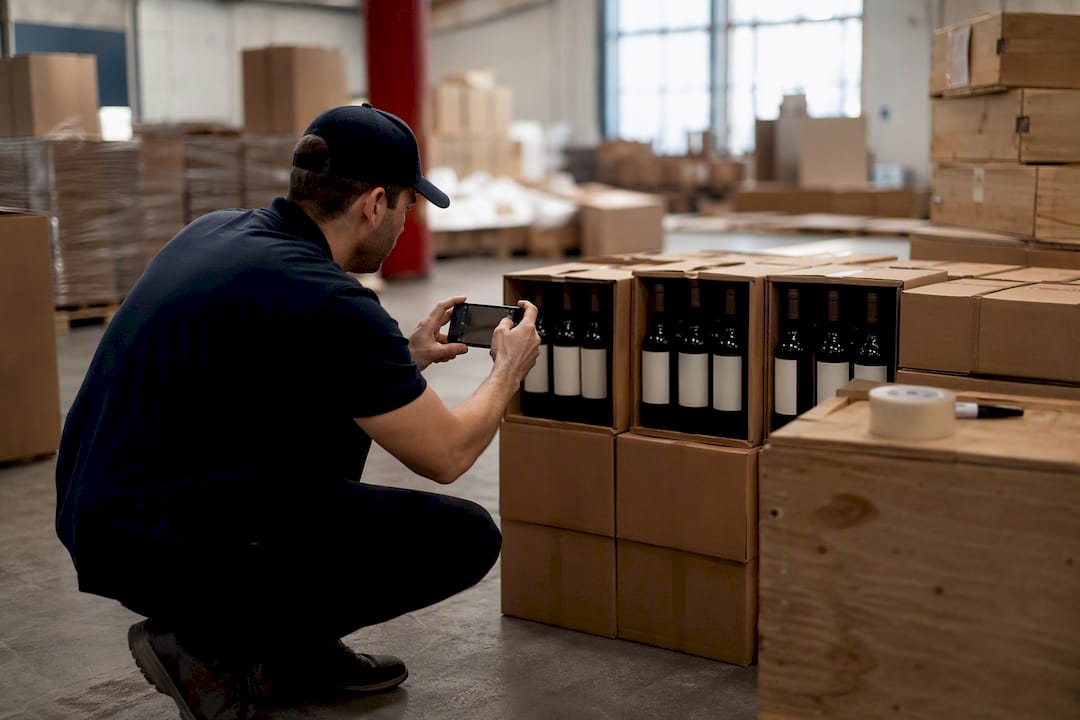
- Seal and label each case. Mark "Fragile," note which direction is up, and flag any case containing bottles worth more than a few hundred dollars so movers know to handle it separately.
- Wrap glassware and decanters on their own. Never let stemware ride in the same box as bottles.
- Handle open or partial bottles carefully. Reseal with a proper wine stopper, wrap upright, and keep them in a small, clearly marked box you can monitor personally. Magnums need their own reinforced compartment since standard dividers rarely fit them.
Skip retail liquor boxes entirely for anything you care about. They're built for a five-minute car ride home, not a 12-hour truck trip. Atlantic Star Relocations's packing services use wine-grade materials specifically because standard packing paper and generic boxes don't hold up over distance.
Pro Tip: Photograph each case before sealing it, labels facing out. If a claim ever comes up, that photo settles disputes faster than any receipt.
Should You Drive, Hire Movers, or Use a Licensed Shipper?
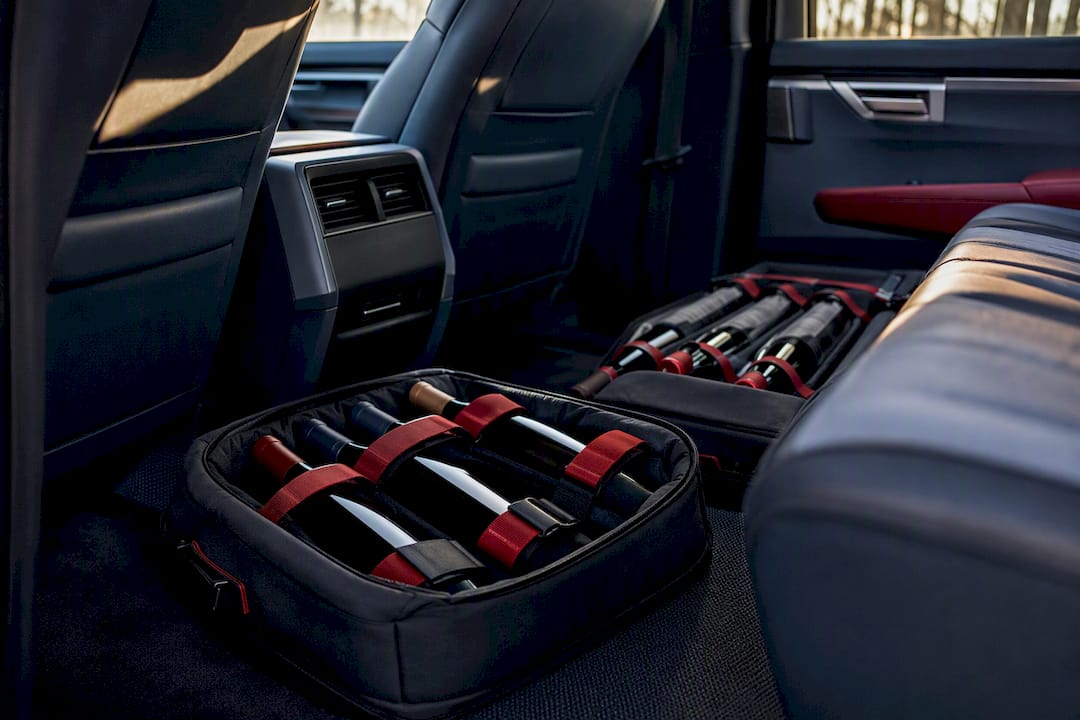
Each option carries a real tradeoff. Self-transport in your own vehicle gives you the most control over temperature and handling, and it's what industry moving guides generally recommend for smaller collections. You keep the bottles in the climate-controlled cabin, not a hot trunk, and you're never wondering who else touched the boxes. The catch: open-container laws still apply, so keep every bottle sealed and stored in the cargo area, never within reach of the driver's seat.
Professional movers and moving-container companies (think PODS-style services) are a different story. Many of them ban alcohol outright or require written approval and insured handling before they'll take it. Get that policy in writing before you hand over a single case. Verbal assurances from a driver don't count for anything when a claim shows up later.
For collections crossing into or out of the U.S., or moving in bulk, licensed alcohol shippers become the safer route. State-by-state transport rules on permits and quantity limits vary enough that a consolidated shipment legal in one state can trigger a permit requirement in the next.
Before booking anyone, confirm in writing:
- Their stated policy on transporting alcohol
- Whether the vehicle offers climate control, not just a sealed container
- Who's liable if a bottle breaks or a case overheats
What Insurance and Appraisal Do You Need?
A collection worth documenting is a collection worth appraising. Bring in a professional appraiser once your cellar passes roughly a few dozen bottles of meaningful value, especially anything rare, allocated, or purchased more than a decade ago. Appraisers provide dated valuations and condition notes that carry weight with insurers and, if it ever comes to that, with a claims adjuster.
Build your inventory around three things: clear photos of every label, provenance paperwork (receipts, auction records, certificates), and condition notes on fill level and cork state. Then check your coverage:
- Standard homeowner's policies often cap alcohol coverage far below what a serious collection is worth.
- Scheduled personal property riders or a dedicated floater can insure specific bottles at appraised value.
- Ask movers directly whether their liability coverage excludes temperature-related damage. Many standard moving policies do, which leaves a heat-damaged case uncovered even when the bottles arrive physically intact.
What Temperature Should Wine Travel At?
Wine tolerates brief temperature swings better than most people assume, but sustained heat above 70°F for hours accelerates aging and can push corks partway out. The safe transit range mirrors long-term storage: roughly 55 to 65 degrees Fahrenheit, with stability mattering more than hitting an exact number.
That's why climate control isn't optional once you're moving more than a case or two:
- Require a climate-controlled van or refrigerated container for any leg of the trip longer than an hour in extreme weather.
- Skip PODS-style containers and unconditioned warehouses for anything valuable. They sit outside, in direct sun, for days at a time.
- On arrival, let bottles rest for 24 to 48 hours before opening or serving. Temperature and vibration both need time to settle out.
Pro Tip: Ask any storage facility for their actual logged temperature range, not just a marketing claim of "climate-controlled." A range of 50 to 75 degrees is not the same promise as 55 to 65.
Should You Move the Wine Yourself or Hire a Specialist?
DIY works fine for small, everyday-value collections on a short local move, say, a few cases going from an apartment in Queens to a house in Westchester. Once you're dealing with hundreds of bottles, rare vintages, or a cross-country trip, the math tips toward hiring help.
Before signing with anyone, run through this checklist:
- Get their alcohol-handling policy in writing, not a verbal promise.
- Confirm climate-controlled transport is included, not an upcharge added later.
- Ask how they document chain of custody from pickup to delivery.
- Clarify liability limits specifically for temperature and breakage damage.
- Walk away from anyone who can't answer these questions directly. Vague answers on liability are the biggest red flag in this business.
Atlantic Star Relocations builds its wine-collection moves around exactly this checklist, with carrier-neutral coordination that keeps one team accountable from pickup to final placement.
How Atlantic Star Relocations Handles a Wine Collection Move
A managed wine move runs on process, not improvisation. Atlantic Star's approach starts with a pre-move inventory and photo documentation, moves into wine-specific packing standards, and stays on climate-controlled transport the entire route, whether that's Westchester to Manhattan or a long-distance run to Florida.
What that looks like in practice:
- Itemized inventory and photos completed before a single box is sealed.
- Carrier-neutral coordination, so one team stays accountable even when specialty carriers are involved.
- Climate-controlled storage available if delivery dates don't line up with pickup.
- On-arrival unpacking and placement support, including acclimation time before bottles go back into a cellar or rack.
For a multi-leg or interstate move, that kind of chain-of-custody discipline is what keeps a valuable collection traceable from the moment it leaves your old house to the moment it's shelved in the new one.
The Real Risk Isn't the Law. It's the Truck.
Most of the anxiety around moving wine gets pointed at the wrong target. Collectors worry about state permits and legal gray areas, and those concerns are valid, but they're rarely what actually damages a collection. The real damage comes from a hot cargo hold, a rental truck with no climate control sitting on a loading dock for six hours, or a driver who has no idea a case of 2015 Barolo is riding next to the water heater they're also delivering.
Conventional moving advice treats wine like any other fragile item: wrap it, box it, hope for the best. That's not good enough once a collection has real value attached to it. The temperature question deserves more attention than the legal question, because in practice, heat exposure destroys more bottles every year than any permit violation does.
If there's one thing worth prioritizing above all else, it's this: get a written climate-control commitment before you get a moving quote. Everything else, the boxes, the inventory, the insurance, matters. But none of it protects a bottle that spent an afternoon at 95 degrees in a parked truck.
— Admin
Get a Quote for Your Wine Collection Move
Atlantic Star Relocations gives collectors something a generic moving company can't: a single accountable team managing packing, climate control, and delivery from start to finish, instead of handing your wine off between three different vendors who've never spoken to each other.

To get an accurate quote, have a few things ready: rough bottle count, photos of your current storage setup, pickup and delivery ZIP codes, and your target moving window. From there, Atlantic Star provides an on-site or virtual assessment, confirms climate-controlled transport options, and walks through insurance coordination so temperature-related damage isn't a coverage gap you discover after the fact. If your move also involves other fragile or high-value items, the same fragile and artwork moving standards apply. Request a quote from Atlantic Star Relocations today and get a plan built around your collection specifically, not a generic moving checklist.
Sources
- Personal importation of beverage alcohol products | Alcohol and Tobacco Tax and Trade Bureau
- What you need to know about transporting alcohol during a move | HireAHelper
- How to move your wine collection to your new home | SpareFoot Blog
FAQ
Can I Drive My Own Wine Collection Across State Lines?
Yes, in most cases. Personal transport is generally allowed under federal rules, but you still need to confirm the destination state's alcohol transport limits and obey open-container laws by keeping bottles sealed in the cargo area.
What Is the 75 Rule for Wine?
There's no single federal "75 rule" for personal wine transport. The number collectors usually mean varies by context (like some states' shipping limits), so always confirm the specific quantity limit with your destination state's alcohol control board rather than relying on a general rule.
What Is the 20 Minute Wine Rule?
This isn't a legal or shipping rule. It typically refers to letting a bottle breathe or reach serving temperature after storage, not a transport guideline, so it doesn't affect how you pack or move a collection.
What Is the 30 Minute Rule for Wine?
Like some serving practices that allow a bottle to warm slightly or breathe before drinking, this does not apply to moving or transport timing. During a move, focus instead on the 24 to 48 hour acclimation window after bottles arrive.
Do Movers Allow Wine on the Truck?
Not always. Many moving companies and container services restrict or ban alcohol transport for liability and safety reasons, so get a carrier's policy in writing before your move date, and consider a specialist like Atlantic Star Relocations if a standard mover won't take it.