
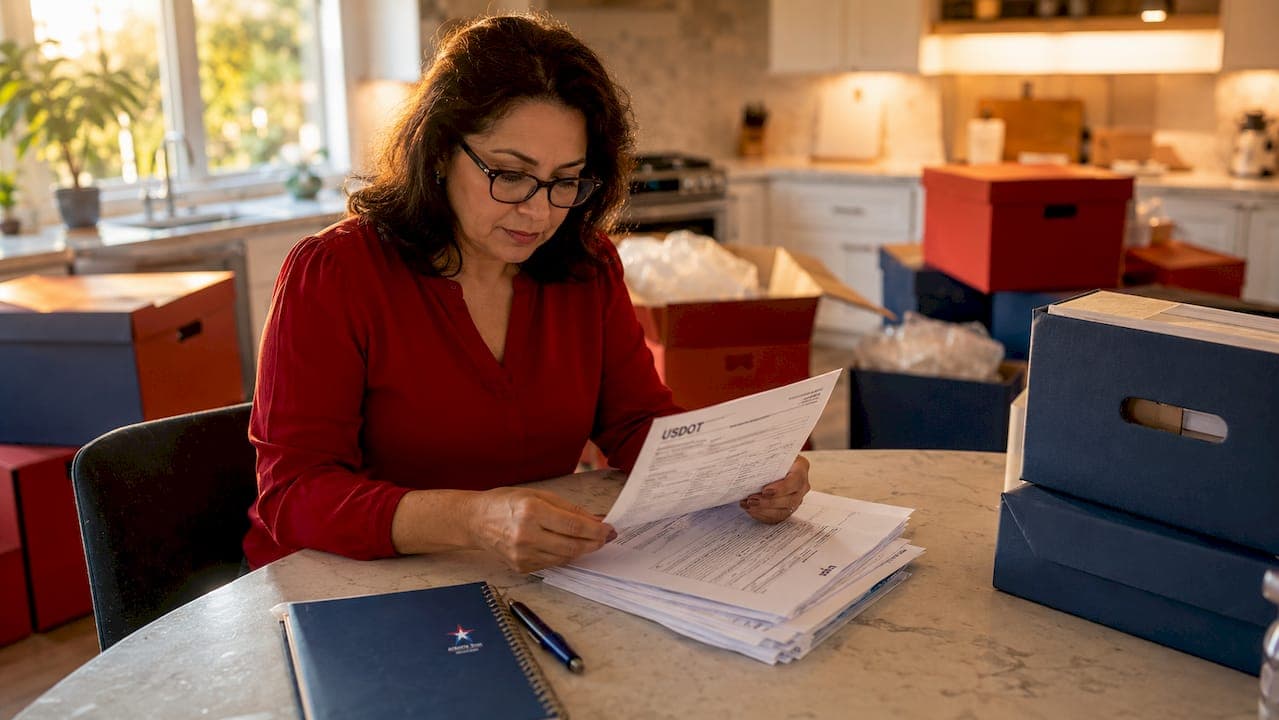
Hiring a reliable moving company means choosing one that holds valid USDOT licensing, carries full liability insurance, and provides a binding written estimate before touching a single box. These are not optional extras. They are the minimum standards that separate legitimate professional movers from the operators who cause thousands of dollars in damage, delays, or outright fraud each year. Families relocating across Westchester County, New York City, New Jersey, or Connecticut face a market full of options, and not all of them are trustworthy. This guide gives you a clear, step-by-step process to verify credentials, compare estimates, ask the right questions, and spot red flags before you sign anything.
How to hire a reliable moving company: credentials that matter first
The single most important step when vetting any mover is confirming their legal credentials. For interstate moves, every carrier must hold a USDOT number issued by the Federal Motor Carrier Safety Administration. Verifying a USDOT number on the official federal safety portal takes under two minutes. You search by company name or number and immediately see carrier status, safety ratings, and any "out of service" flags.
For moves within New York, New Jersey, or Connecticut, state-level licensing applies separately from federal registration. New York State requires intrastate movers to hold a NYDOT certificate. New Jersey and Connecticut each maintain their own carrier registries. A mover operating locally without state authorization is breaking the law, and your belongings have no legal protection if something goes wrong.
Insurance is equally non-negotiable. Every reputable mover carries general liability insurance and workers' compensation coverage. Full Value Protection is the insurance standard you want. Released Value coverage, the default option, pays only $0.60 per pound per item. That means a 50-pound flat-screen television is worth $30 in a claim. Federal law requires movers to offer Full Value Protection as an upgrade, and any mover who does not mention it is cutting corners.

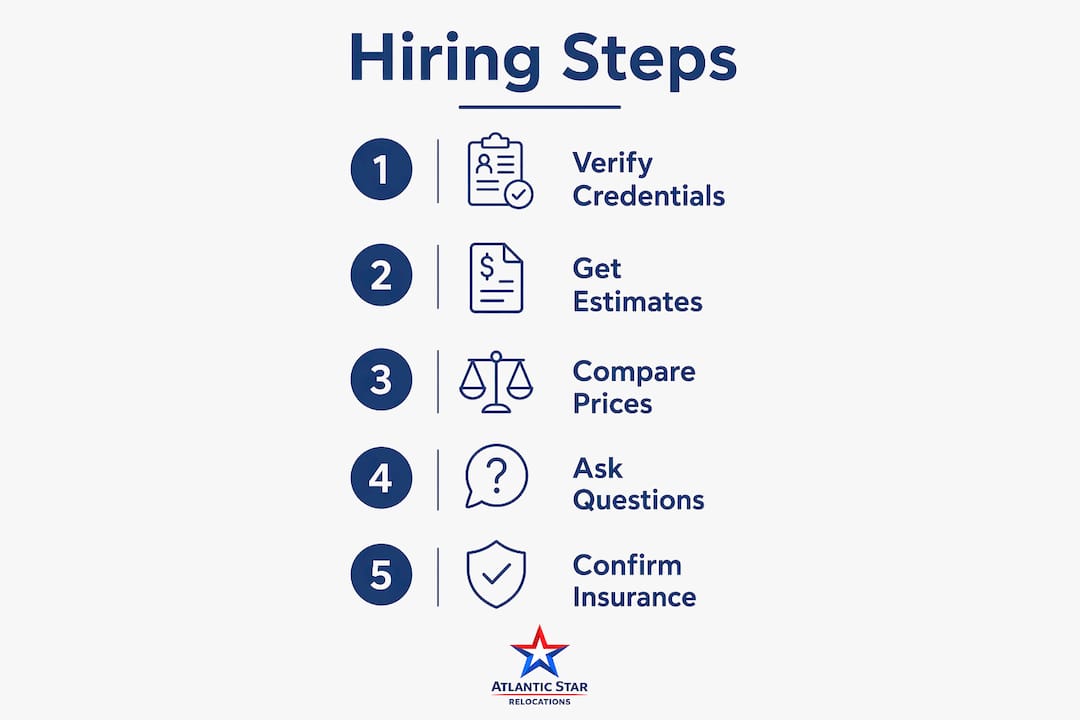
A mover that clears all eight credential checks, including federal and state licensing, a BBB grade of B or higher, binding estimate clarity, and a documented claims process, is operating inside the regulated industry. Missing any single check is a warning sign worth acting on.
Pro Tip: Search the FMCSA's "Protect Your Move" portal at protectyourmove.gov to verify any interstate mover's license and complaint history in under two minutes.
- Confirm USDOT number on the FMCSA portal
- Request state-level license numbers for NY, NJ, or CT moves
- Ask for certificates of general liability and workers' compensation insurance
- Verify BBB rating and check for unresolved complaints
- Confirm the mover is a carrier, not just a broker passing your job to an unknown crew
Why you need at least three written estimates
Always obtain at least three written estimates before committing to any mover. Three quotes give you a realistic picture of fair market pricing for your specific move. One quote gives you nothing to compare against.
A thorough estimate covers more than a dollar figure. It should include the full scope of work, packing materials if applicable, the timeline from pickup to delivery, any storage fees, and the total cost with no hidden line items. If an estimate arrives as a single number with no breakdown, reject it. Understanding why moving estimates differ helps you read each quote critically and catch inconsistencies before they become disputes.
The difference between a binding and a non-binding estimate is significant. A binding estimate locks in your price after the mover assesses your inventory. A non-binding estimate is a guess that can legally increase on moving day. Non-binding estimates are the mechanism behind "hostage load" scams, where a mover loads your belongings and then demands a higher payment before unloading. Reputable movers offer binding or "not-to-exceed" estimates as standard practice.
| Estimate type | Price locked in? | Risk level |
|---|---|---|
| Binding | Yes | Low |
| Not-to-exceed | Yes, at or below cap | Low |
| Non-binding | No | High |
| Phone-only quote | No | Very high |
Red flags in the estimate process include quotes that are dramatically lower than the other two, estimates given over the phone without any inventory review, and refusal to provide anything in writing. Atlanticstargroup conducts in-person or virtual walkthroughs before issuing any estimate, which is the standard every professional mover should meet.
What questions to ask before you book any mover
Legitimate movers answer 15 specific questions confidently and without hesitation. Evasive or vague answers are a direct signal of risk. Use the questions below as your screening checklist.
- What is your USDOT number, and are you a licensed carrier or a broker?
- Do you provide binding or not-to-exceed estimates?
- What valuation protection options do you offer, and what does Full Value Protection cost?
- Will the crew handling my move be your employees or subcontractors?
- What is your claims process if items are damaged or lost?
- Can you provide references from moves similar to mine in size or distance?
- Do you have experience with moves in Westchester County, Manhattan, or the tri-state area?
The carrier-versus-broker question matters more than most families realize. A broker does not own trucks or employ movers. They sell your job to a third-party carrier, and you have no control over who shows up. If that carrier is unlicensed or underinsured, you bear the consequences. Always confirm you are booking directly with a carrier.
Pro Tip: If a mover hesitates, deflects, or gives a non-answer to any of the seven questions above, treat it the same as a "no." A trustworthy mover answers these questions before you even finish asking.
Red flags and mistakes that cost families money
Pressure tactics, refusal to provide written estimates, and demands for large cash deposits are the clearest warning signs of an unreliable mover. These behaviors consistently precede service disputes, damaged property, and outright scams.
"A mover who won't put the price in writing before loading your truck is not a mover you should trust with your home. The written estimate is your only legal protection once the truck leaves your driveway."
Watch for these specific red flags before you commit:
- Quotes given by phone with no physical or virtual inventory review. Phone-only quotes are almost always predatory.
- Estimates that are significantly lower than every other quote you received.
- No physical address, no branded trucks, or a website created within the last few months.
- Requests for a large cash deposit before the move date.
- Verbal-only agreements with no written contract.
- No mention of valuation protection or insurance options.
Skipping the verification steps because a mover seems friendly or offers a low price is the most common mistake families make. No single credential is sufficient on its own. Multiple layers of verification are necessary to minimize risk. Check licensing, insurance, reviews, and estimates together, not in isolation.
Key Takeaways
Hiring a reliable mover requires verifying USDOT credentials, securing at least three binding written estimates, and screening movers with direct questions before any contract is signed.
| Point | Details |
|---|---|
| Verify credentials first | Confirm USDOT number, state license, and insurance certificates before any other step. |
| Get three written estimates | Compare at least three binding quotes that include scope, timeline, and total cost. |
| Ask direct screening questions | Confirm carrier status, valuation protection, and claims process before booking. |
| Recognize red flags early | Reject any mover who quotes by phone only, refuses written estimates, or demands cash deposits. |
| Layer your verification | No single check is enough. Combine licensing, BBB rating, reviews, and estimate quality. |
What I've learned after years of watching moves go wrong
The families who have the worst moving experiences share one thing in common. They made their decision based on price alone. A quote that is $400 lower than every other estimate is not a deal. It is a signal that something is missing, whether that is insurance, a licensed crew, or any intention of honoring the original price.
The Westchester and NYC market is particularly unforgiving in this regard. The volume of moves in this region attracts a steady stream of unlicensed operators who know that most families are too busy, too stressed, or too trusting to check credentials. I have seen families in White Plains and Yonkers lose irreplaceable furniture to movers who vanished after collecting a deposit. I have seen Brooklyn families held hostage on moving day when a non-binding estimate doubled at the door.
The good news is that the vetting process is not complicated. It takes about 90 minutes to verify a USDOT number, request three estimates, check a BBB rating, and ask seven direct questions. That 90 minutes is the difference between a smooth move and a dispute that drags on for months. The movers who resist this process are telling you everything you need to know.
— Admin
Atlanticstargroup is ready when you are
Atlanticstargroup operates as a fully licensed and insured carrier serving Westchester County, New York City, New Jersey, and Connecticut. Every client receives a binding written estimate after a thorough in-home or virtual walkthrough, never a phone-only guess.

The service portfolio covers residential house moves, labor-only moving help, professional packing, short-term and long-term storage, and corporate relocation. Whether you are moving a studio apartment from the Bronx or a full household from Westchester to Florida, Atlanticstargroup provides a single point of accountability from the first estimate to the final delivery. Request a free quote today at atlanticstargroup.com and get a binding estimate from a carrier you can verify.
FAQ
What credentials should I verify before hiring a mover?
Confirm the mover's USDOT number on the FMCSA portal, check state-level licensing for NY, NJ, or CT moves, and request certificates of general liability and workers' compensation insurance. A BBB grade of B or higher adds a further layer of confidence.
What is a binding estimate and why does it matter?
A binding estimate locks in your final price after the mover assesses your inventory, so the cost cannot increase on moving day. Non-binding estimates can legally rise after your belongings are loaded, which is the mechanism behind hostage load scams.
How many moving quotes should I get?
Get at least three written estimates from separate carriers. Three quotes establish a fair price range and make it easy to spot bids that are suspiciously low or missing key line items.
What is Full Value Protection for a move?
Full Value Protection is the insurance standard that covers the actual replacement value of damaged or lost items. The default Released Value coverage pays only $0.60 per pound, which is inadequate for most household goods.
How do I find trusted movers near me in Westchester or NYC?
Search the FMCSA portal to verify USDOT numbers, check the BBB for complaint history, and request in-home or virtual estimates from at least three licensed carriers. Atlanticstargroup serves the full Westchester, NYC, NJ, and CT region with verified credentials and binding estimates.