
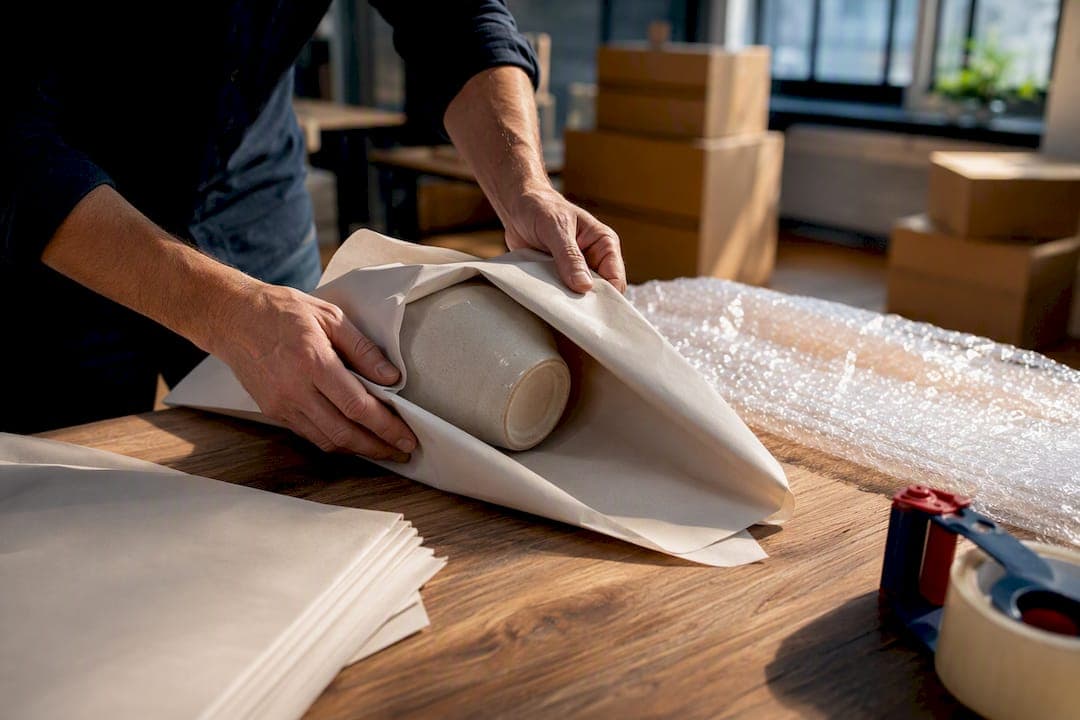
Use packing paper when you need surface protection and stackability, and reach for bubble wrap when you need cushioning against drops and impacts. For genuinely fragile or high-value pieces, the two aren't competitors, they're a team: paper against the surface, bubble wrap around the outside. That's the exact sequence Atlanticstargroup's packing crews follow on moves across Westchester County and New York City every week.
TL;DR:
- Bubble wrap is essential for cushioning fragile or irregularly shaped items and in long-distance moves where impact absorption is critical.
- Packing paper is best for surface protection, stacking dishes vertically, and filling empty space efficiently in short local moves.
- Using a combination of paper for surface safety and bubble wrap for shock absorption is the industry standard among professional packers.
- Reusing bubble wrap is economical if it remains unpunctured, while paper is the cheapest and easiest to recycle after use.
- Hiring professional packers is recommended for complex, high-value, or time-constrained moves to ensure proper packing and minimize damage risk.
Table of Contents
- Bubble Wrap vs Packing Paper: The Quick Comparison
- Pros and Cons of Bubble Wrap and Packing Paper
- Which Material Fits Your Items?
- How to Pack a Box the Right Way
- What Does It Cost You in Money and Space?
- The Professional Packer's Take on Material Choice
- Get Your Fragile Items Packed Right the First Time
- Sources
- FAQ
Bubble Wrap vs Packing Paper: The Quick Comparison
Neither material wins outright because they solve different problems. Bubble wrap absorbs shock through trapped air pockets, which is why it's the go-to for oddly shaped or fragile objects that need real cushioning during a bumpy truck ride. Packing paper does something else entirely: it guards finishes, prevents scratches, and packs down flat so your boxes don't balloon with air you're paying to move.
Here's how they stack up on the factors that actually matter when you're packing for a move or a shipment:
- Cushioning: Bubble wrap absorbs impact through air pockets; packing paper mainly guards surfaces from scuffs and scratches.
- Volume in the truck: Bubble wrap takes up real space even when compressed; crumpled paper collapses down small.
- Reusability: Bubble wrap survives multiple moves if it doesn't puncture; packing paper is usually a one-time use item.
- Recycling: Paper goes in most curbside bins; bubble wrap typically needs a specialty plastic-film drop-off.
- Short local move: Paper alone often covers dishes and glassware for a same-day, short-distance move.
- Long-distance or storage: Bubble wrap earns its bulk when boxes sit in transit for days or in a storage unit for months.
If you're weighing plastic bins against cardboard boxes for the move itself, the same logic applies: bins protect contents from moisture and crushing better, but cardboard is cheaper, lighter, and easier to recycle once you're done.
Pros and Cons of Bubble Wrap and Packing Paper
Bubble wrap and packing paper each carry real trade-offs, and knowing them upfront saves you from a cracked lamp or a torn box on moving day.
- Bubble wrap pros: It adapts to odd shapes, weighs almost nothing, and comes in an anti-static version that's genuinely useful for electronics.
- Bubble wrap cons: It's bulky in a truck, can puncture under sharp corners, and offers limited curbside recycling options.
- Packing paper pros: It's surface-safe, crushes into a soft filler around any gap, stacks flat, and recycles easily afterward.
- Packing paper cons: It gives minimal shock absorption on its own, tears if a heavy item presses on one point, and struggles with very irregular shapes.
One detail people miss: standard packing paper won't transfer ink onto your dishes the way old newsprint will, which is exactly why professional packers avoid newspaper for anything you plan to eat off of again. If you're deciding between bubble wrap alternatives for a delicate finish, plain packing paper is often the safer first layer before anything else touches the item.
Which Material Fits Your Items?
Matching the material to the object saves both money and heartbreak. Here's how it breaks down by category:
- Dishes and plates: Wrap each piece in packing paper first, then stack them vertically in a dish-pack box, never flat. Add an outer layer of bubble wrap only if the move is long-distance or the china is genuinely valuable.
- Electronics: Anti-static bubble wrap is the safer call here, since it reduces the risk of static discharge that regular bubble wrap can't prevent. Packing paper can go underneath first if the screen or casing scratches easily.
- Artwork and mirrors: Paper protects the surface from smudges and light scuffs; bubble wrap or foam corner protectors absorb the shock of an accidental bump. Framed pieces almost always need both.
- Oddly shaped items: Bubble wrap conforms around curves and protrusions in a way flat paper simply can't. Wrap in paper first if the surface finish matters, then wrap bubble wrap around that.
- Large furniture: Padding blankets handle most of the job. Reserve bubble wrap or paper for glass inserts, trim, or hardware that could scratch during transit.
How to Pack a Box the Right Way
A reliable packing sequence matters more than which material you grab first. Follow this order and most breakage risk disappears:
- Cushion the bottom of the box with crumpled paper or a layer of bubble wrap, about two inches deep.
- Wrap each item individually in packing paper for surface protection.
- Add one to two layers of bubble wrap around anything fragile, delicate, or heading on a long-distance trip.
- Fill every remaining void with crumpled paper or loose-fill bubble wrap so nothing shifts in transit.
- Seal the box and label it clearly, including "fragile" and which room it belongs to.
U-Haul's packing guidance recommends leaving roughly two to three inches of protective padding around fragile items inside the box, and that number holds up whether you're using paper, bubble wrap, or both. Crumpled paper works fine as void-fill for lighter items; loose-fill bubble wrap earns its cost on anything heavy enough to shift and crush what's underneath it.
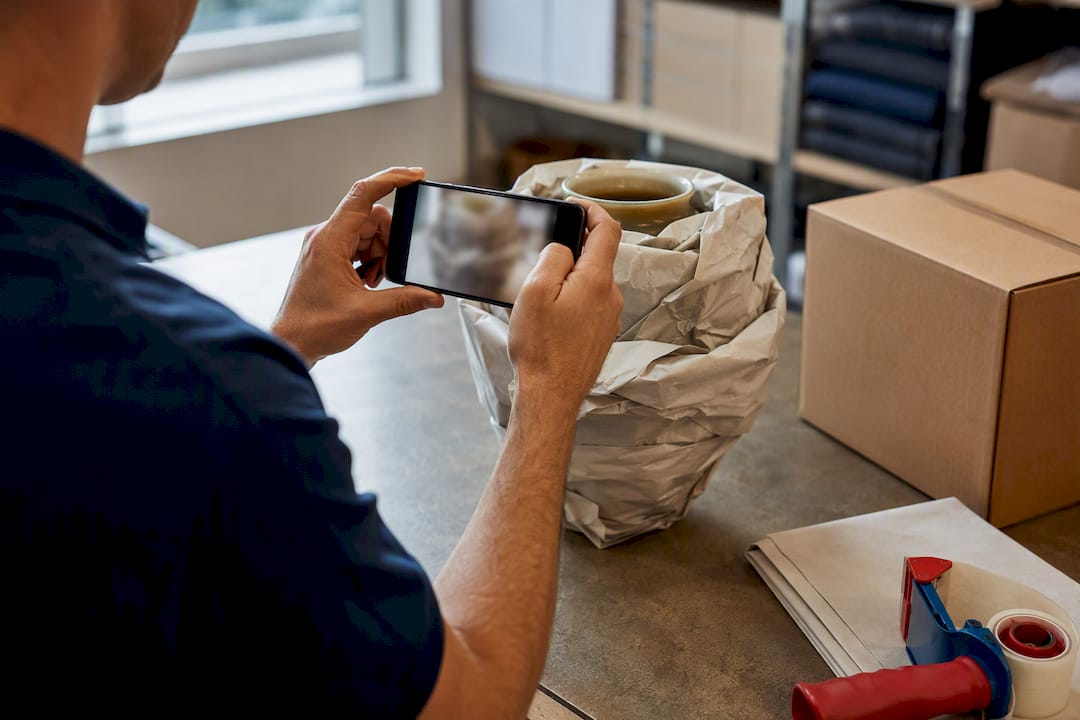
Pro Tip: Atlanticstargroup's packers photograph high-value items before sealing the box and label the outside with a reference number, so if a claim ever comes up, there's a documented record of exactly how it was packed.
What Does It Cost You in Money and Space?
Packing paper is the cheaper material per box, and it compresses down to almost nothing once you're done, which matters if you're renting a truck by cubic foot. Bubble wrap costs more per square foot and eats up real cargo space even rolled tight, though smaller bubble sizes compress better than the large-bubble variety.
- Buy paper in bulk if you're packing an entire household; it's the material you'll burn through fastest.
- Use bubble wrap selectively, on the pieces that actually need shock protection, rather than wrapping everything in it by default.
- Reusing bubble wrap from previous deliveries is smart economics, as long as it hasn't lost its air pockets.
- If the packing job involves a lot of high-value or fragile inventory, hiring pros often costs less than replacing what breaks.
Industry moving guides consistently point to the same combined approach: paper for the surface, bubble wrap layered over it, especially for anything expensive or irreplaceable. That's standard practice among professional packers, not a marketing angle.
The Professional Packer's Take on Material Choice
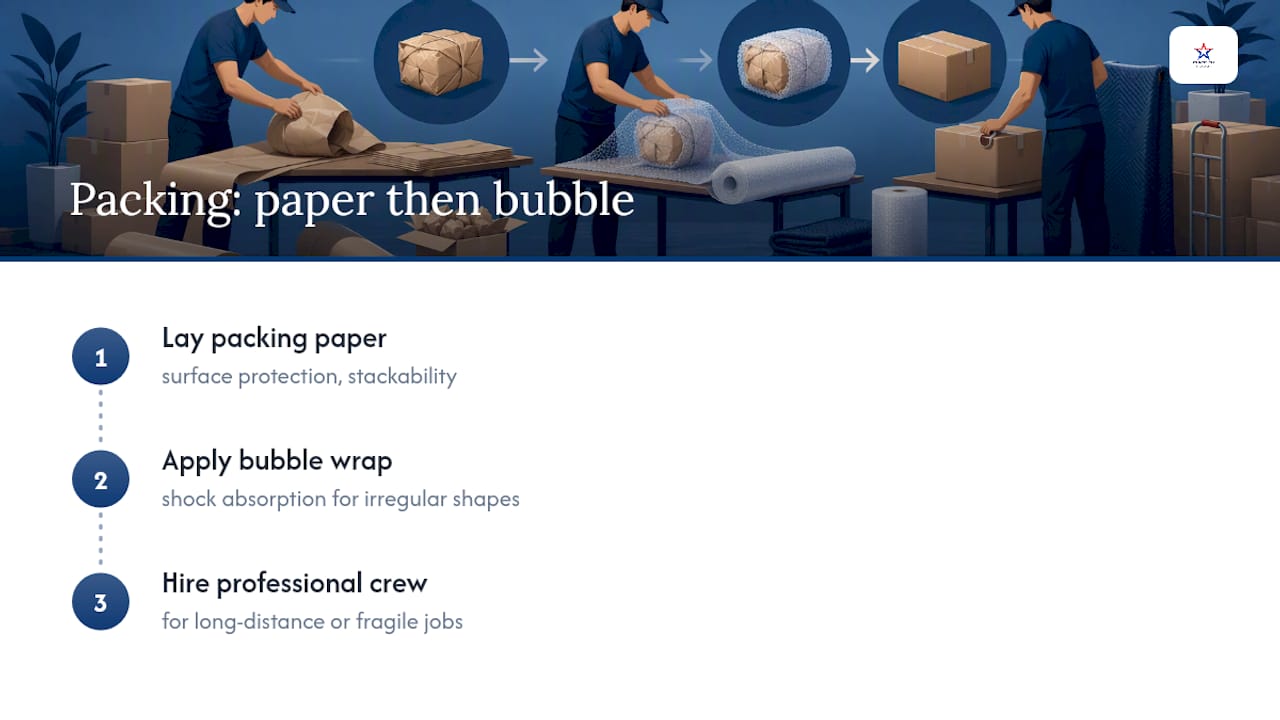
Most DIY packing disasters don't come from choosing the wrong material. They come from skipping a step, under padding a box, or rushing the last few boxes at 11 p.m. the night before the move. Atlanticstargroup's crews combine paper and bubble wrap as standard procedure on every fragile-item job, not as an upsell. Paper goes down first for surface protection and stackability. Bubble wrap goes around anything that needs shock absorption or has an irregular shape.
Where this gets tested is on long-distance moves and complex jobs, moving out of Manhattan or Brooklyn walk-ups, coordinating storage in between, or handling framed artwork and mirrors that can't be replaced. That's when hiring a crew that handles fragile packing professionally beats a weekend of trial and error with a roll of tape and good intentions.
— Admin
Get Your Fragile Items Packed Right the First Time
You could spend a weekend buying rolls of bubble wrap and reams of packing paper, guessing at how much of each you actually need. Or you could book a crew that already knows the answer, because they pack fragile items every single day across Westchester County, Manhattan, Brooklyn, Queens, the Bronx, Connecticut, and New Jersey.

Atlanticstargroup's packing services in Westchester cover everything from a single box of grandma's china to an entire household headed out of state. If your timeline is tight, your inventory includes high-value pieces, or you're coordinating a long-distance move with a storage stop in between, that's exactly when a professional pack team earns its cost. Get a flat rate quote for your move and find out what full-service packing actually costs before you buy a single roll of anything.
Request your quote today and let a crew that packs for a living handle the parts that keep you up at night.
Sources
A few sources back the packing advice throughout this guide, and they're worth a second look if you want more detail. Boxes And Bubble breaks down which items genuinely need bubble wrap's impact protection versus which ones don't. Eurosender covers why packing paper beats newspaper for anything that touches food. U-Haul's fragile-packing guide sets the padding standard most professional movers still follow. For readers curious about service tiers, Atlanticstargroup's rundown of packing service types explains when full-service packing makes more sense than doing it yourself.
- Bubble Wrap vs Packing Paper: Which Is Better for Different Items? - Boxes And Bubble
- Bubble Wrap vs Packing Paper: What to Use? - Eurosender
- How to Pack Fragile Items for Shipping | U-Haul
FAQ
Is Packing Paper or Bubble Wrap Better for Dishes?
Packing paper is the better first layer for dishes because it protects the surface without leaving ink marks, and dishes should always be packed vertically in a dish-pack box. Add bubble wrap as an outer layer only for long-distance moves or particularly valuable china.
Can I Ship Something Wrapped Only in Bubble Wrap?
You can, but it's risky for anything with a delicate finish, since bubble wrap alone doesn't stop scuffs or scratches the way a paper layer does. Most professional packing guidance recommends wrapping in paper first, then adding bubble wrap around it for shock protection.
What Are the Disadvantages of Bubble Wrap?
Bubble wrap takes up more space in a truck or storage unit than paper, can puncture on sharp corners, and isn't accepted in most curbside recycling programs. It also offers no scratch protection on its own, which is why packers layer it over paper rather than using it alone.
Is Honeycomb Packing Paper as Effective as Bubble Wrap?
Honeycomb paper offers decent cushioning for lighter items because its structure creates its own air pockets, but it doesn't match bubble wrap's shock absorption for heavier or more fragile pieces. For anything genuinely fragile, pairing paper wrapping with a bubble wrap outer layer still performs more reliably.
When Should I Hire a Professional Packer Instead of Doing It Myself?
Hire a professional pack team when you're facing a tight timeline, a long-distance move, or an inventory with high-value or irreplaceable items like artwork and electronics. Atlanticstargroup's packing crews handle these situations daily across Westchester County, NYC, and beyond, using the same combined paper-and-bubble-wrap method covered throughout this guide.